 English
 Español
 русский
 中文简体
中文简体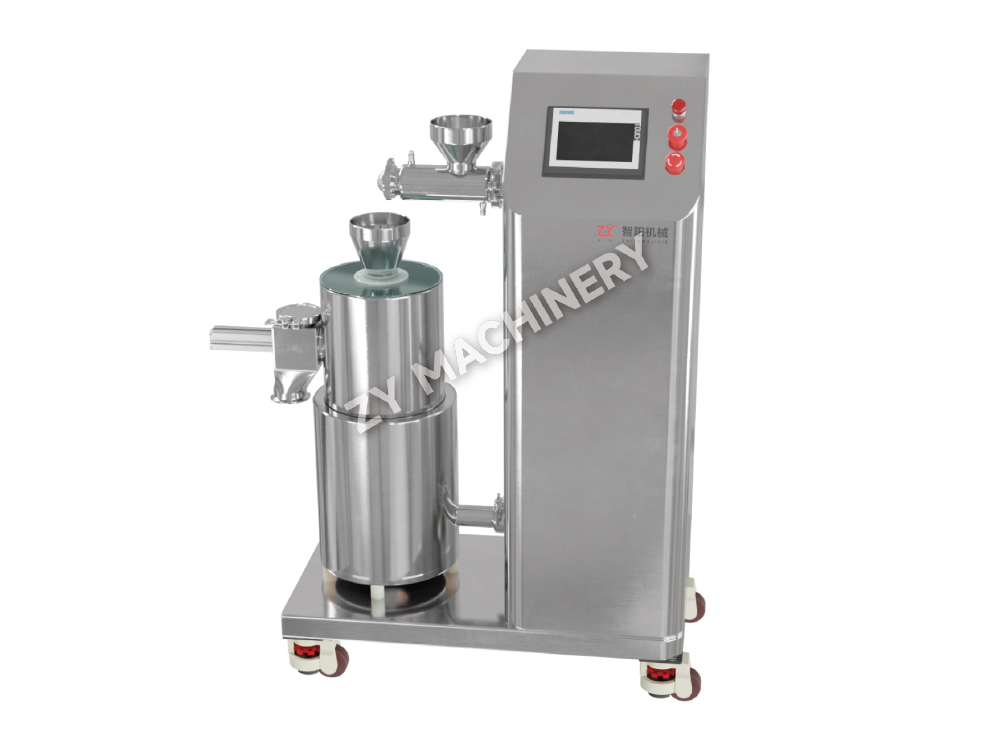
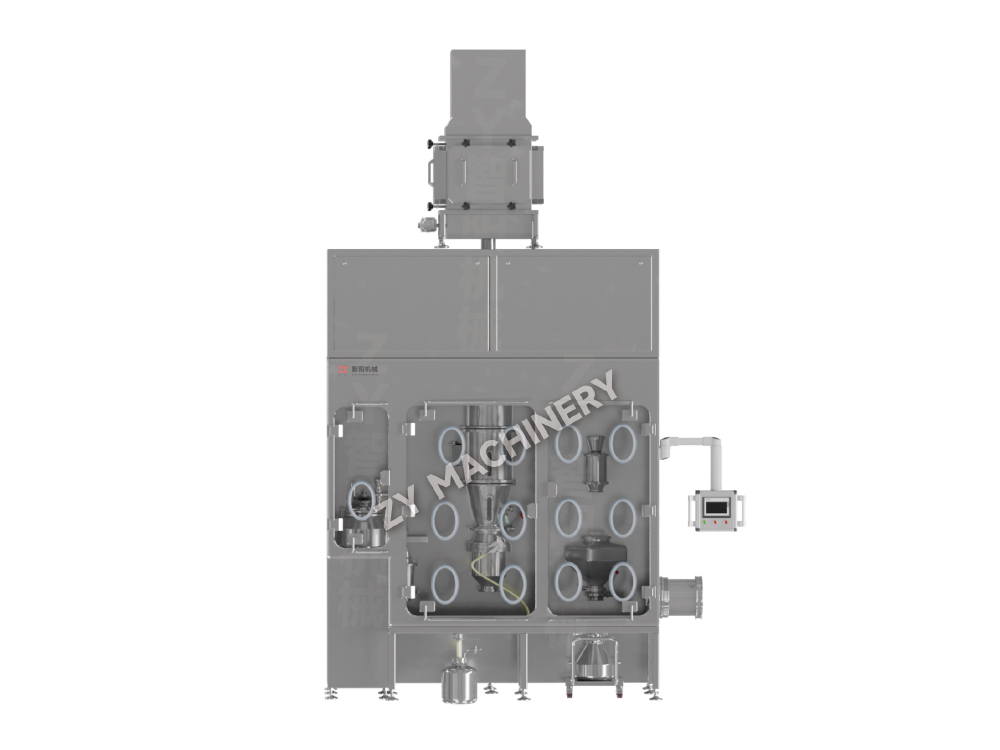
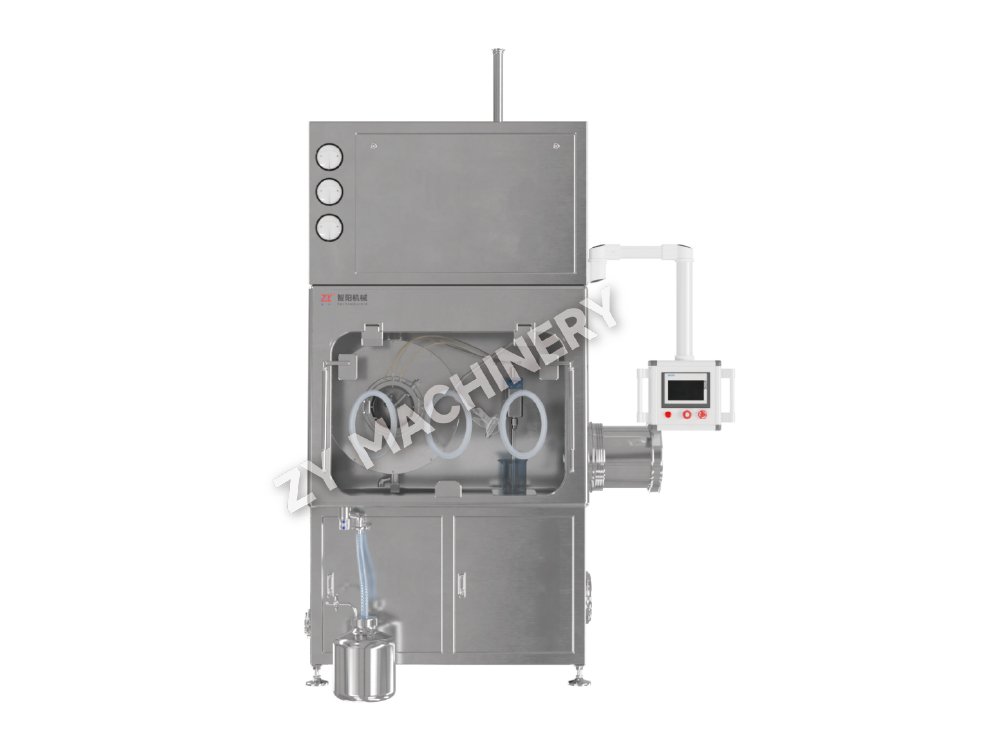
GFH R&D High-Containment Solid Dosage Production Line
The GFH R&D High-Containment Solid Dosage Production Line is designed f.....

Content
In 2026, over 70% of oncology pipeline candidates are classified as high potent APIs (HPAPIs) — compounds with an occupational exposure limit (OEL) below 10 µg/m³. A single milligram of some HPAPIs can trigger therapeutic effects in a 70 kg patient, but the same dose inhaled or absorbed by a production operator can cause irreversible harm. This dual nature — exceptional potency paired with extreme toxicity — forces every decision in facility design, equipment selection, and cleaning validation to be data-driven and risk-weighted.
HPAPI manufacturing does not tolerate generic solutions. A 200-liter open-lid reactor has no place in a process where one airborne particle can exceed the 8-hour time-weighted average exposure limit. This guide dissects the containment technologies, scale-up protocols, and cleaning strategies that separate successful HPAPI production lines from dangerous ones — with decision matrices, equipment comparisons, and a real-world case study that moved a cytotoxic compound from 10 kg clinical batches to 500 kg commercial supply without a single operator exposure incident.
A high potent API is any pharmaceutical compound that produces a biological response at a dose of less than 10 mg per day or has an OEL at or below 10 µg/m³ as an 8-hour time-weighted average. The European Medicines Agency (EMA) ties HPAPI classification to the acceptable daily exposure (ADE), where values below 10 µg/day flag a compound as potent, while the U.S. FDA's draft guidance on potent compound safety leans on OEL bands and pharmacological activity. Regulatory definitions vary, but the industry has largely standardized around performance-based exposure control bands (ECBs).
Most manufacturers use a four- or five-tier banding system, often called OEB 1 through OEB 5, to link compound toxicity to containment requirements. The higher the OEB number, the lower the permissible airborne concentration — and the more engineered controls become mandatory.
Typical OEB 5 compounds include antibody-drug conjugate (ADC) payloads and specific cytotoxics like monomethyl auristatin E (MMAE). These substances demand containment solutions that achieve airborne concentrations below 0.1 µg/m³ — a regime where glove integrity testing, continuous air monitoring, and material airlocks stop being optional and become the backbone of operator safety.
Three interconnected risks define HPAPI manufacturing. First, direct toxicity to operators — acute and cumulative — if engineering controls fail. Second, containment breaches that release potent dusts or vapors into production suites, exposing personnel during routine tasks like sampling, dispensing, or cleaning. Third, cross-contamination into non-potent products manufactured in shared facilities, which can trigger costly batch rejections or harm patients if not caught. These risks are not theoretical: in one FDA warning letter, a facility received a citation after wipe samples from a non-potent line revealed cytotoxic residues from an adjacent HPAPI process.
| Risk Source | Impact Radius | Mitigation |
|---|---|---|
| Operator toxicity | Individual and immediate team | Containment isolators, powered air-purifying respirators (PAPRs), real-time air monitoring |
| Containment failure | Suite-wide, multi-batch | High-containment equipment (OEB 4/5), double-door pass-throughs, pressure cascades |
| Cross-contamination | Entire facility, multiple products | Dedicated suites, verified cleaning protocols, 10 ppm carryover limits, analytical method sensitivity |
Risk mitigation starts with the equipment itself. Open transfers — manually scooping powder from a drum into a granulator or mixer — are unacceptable beyond OEB 2. Instead, high-containment granulators with integrated isolator gloves and closed transfer ports must create a sealed environment where all material contact happens behind validated barrier systems. This shift from personal protective equipment (PPE)-only reliance to engineered containment is the single most impactful decision a manufacturer makes when moving into HPAPI production.
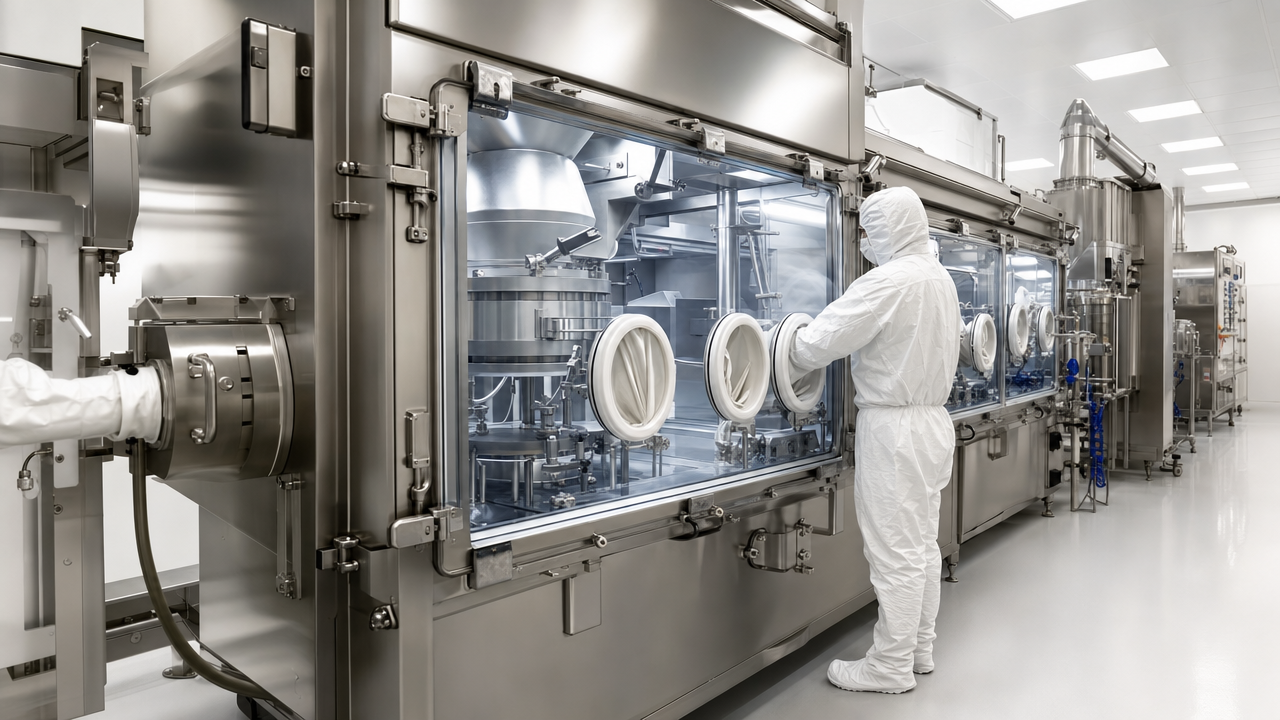
Oral solid dosage (OSD) forms — tablets and capsules — account for a growing share of HPAPI products. Yet producing them safely demands a different containment philosophy than sterile injectables. OSD processes involving granulation, blending, compression, and coating generate significant dust, often at particle sizes below 100 microns that stay airborne for hours. The right equipment selection converts this hazard from a constant threat into a controlled event.
Three unit operations dominate OSD HPAPI lines: wet or dry granulation, mixing and blending, and tablet coating. Each has specialized high-containment variants. A high-containment mixer, for example, must achieve airtight sealing during charging and discharging, typically through split butterfly valves or continuous liners. A high-containment coater requires negative-pressure enclosures with HEPA-filtered exhaust and wash-in-place (WIP) capabilities to avoid manual cleaning interventions. Granulators, the most dust-intensive step, must be chosen with OEL performance verifiable by industrial hygiene monitoring, not just vendor promises.
The decision matrix below compares key equipment categories for a typical OSD HPAPI process targeting OEB 4 (1–10 µg/m³). Batch sizes assume a mid-volume commercial line.
| Equipment Type | Typical OEL Achievable | CIP/WIP Capability | Batch Range (kg) | Key Feature |
|---|---|---|---|---|
| High-containment granulator (wet) | 0.5–5 µg/m³ | WIP + manual wipe | 5–500 | Isolator-integrated bowl and discharge |
| High-containment granulator (dry) | 1–10 µg/m³ | Limited, high dust risk | 2–200 | Roller compaction with contained milling |
| High-containment mixer blender | 0.3–3 µg/m³ | WIP through spray balls | 10–1000 | Split valve docking for IBCs |
| High-containment tablet coater | 0.5–5 µg/m³ | Fully CIP | 50–600 | Negative-pressure drum seals |
Connecting these unit ops requires contained material transfer systems. Intermediate bulk containers (IBCs) with alpha-beta split valves dominate OEB 3–4 setups, while passive continuous liners (PCLs) are gaining traction for OEB 5 because they eliminate the valve-to-valve interface that is a common leak point. The choice cascades into cleaning validation too: IBC-based lines need separate cleaning stations, while PCLs are single-use and remove cleaning validation burden entirely — but at a higher consumable cost.
A practical selection sequence starts with the highest-risk step — usually granulation. If the granulator cannot hold its OEL target, even a perfect downstream coater won't rescue the suite. For that reason, many facilities begin their HPAPI equipment investment with a high-containment granulator line, then phase in contained mixing systems and finally a high-spec coater.
Scaling an HPAPI process from a 1-liter lab reactor to a 500 kg commercial line is not just an engineering problem — it is a containment problem that tightens with every order of magnitude increase. A lab fume hood that works at 50 grams offers zero protection at 50 kilograms, where powder transfer generates airborne concentrations that can spike 1000-fold during bag dumping or scooping.
The scale-up path must be segmented into three distinct containment regimes, each with its own equipment set and verification requirements.
A critical scale-up activity is the containability assessment. It maps every open operation — charging, sampling, discharging, filter changes — to a containment solution and rates the residual risk after controls. For a cytotoxic HPAPI scaled from 10 kg to 500 kg, the containability assessment identified five high-risk steps, of which three required engineering modifications (adding a contained sampling port, upgrading to a dual-valve IBC docking station, and installing an automated bag slitter). Post-implementation, personal air samples dropped from a geometric mean of 12 ng/m³ to 0.8 ng/m³ — a 15-fold improvement that cleared the OEL-based alert limit.
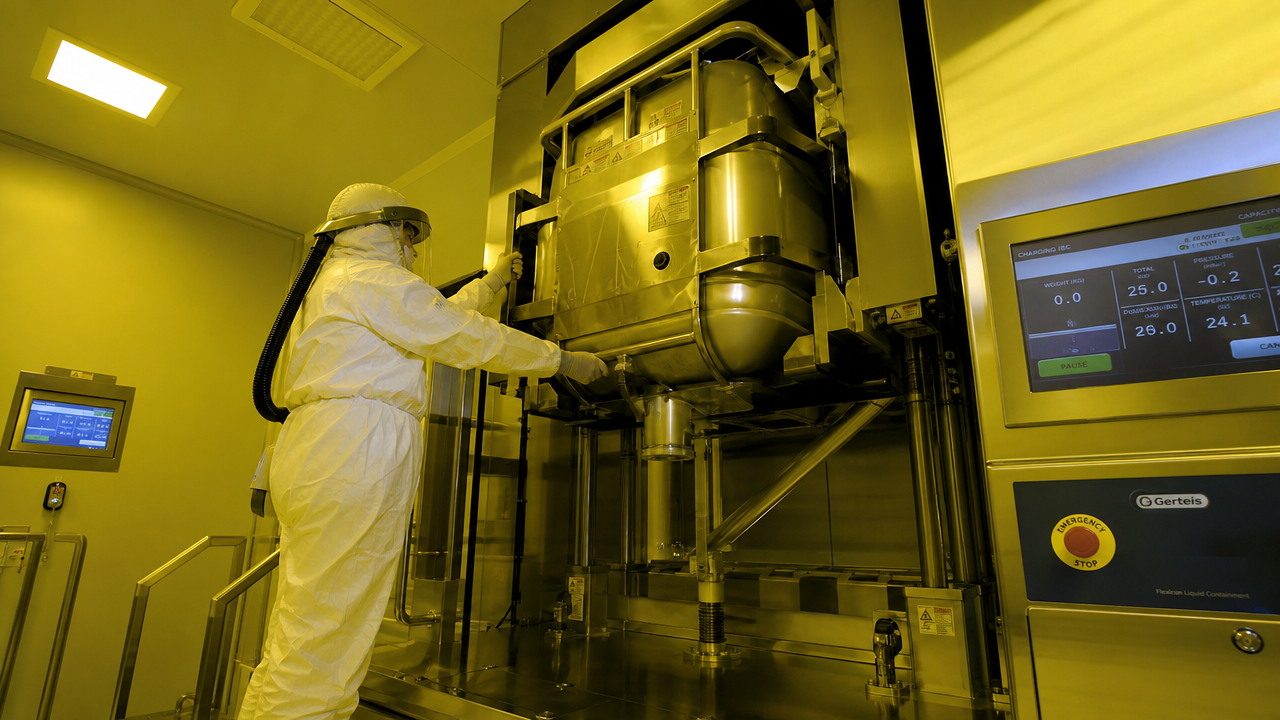
No HPAPI line is safe without cleaning validation that proves the removal of potent residues to levels that do not pose cross-contamination risks to the next product. The baseline metric is the health-based exposure limit (HBEL), often expressed as a permitted daily exposure (PDE) or ADE. A common carryover limit is 10 ppm of the previous product in the next maximum daily dose, but for HPAPIs, that 10 ppm figure is often orders of magnitude too high. For a compound with an ADE of 1 µg/day, a 10 ppm carryover into a 500 mg tablet would deliver 5 µg — five times the safe limit. Thus, cleaning limits must be calculated specifically per compound, not borrowed from non-potent programs.
Cleaning strategy splits into automated clean-in-place (CIP) and manual cleaning. CIP dominates HPAPI equipment because it eliminates operator exposure during cleaning. Spray balls, rotating jet heads, and high-velocity nozzles reach internal surfaces without breaking containment. Yet CIP alone cannot remove all residues from seals, gaskets, and dead legs — those require manual wipe-downs, which must be performed inside isolators or through glove ports with full PPE.
| Sampling Method | Advantages | Limitations | Best Application |
|---|---|---|---|
| Surface wipe (swab) | Directly measures residues on equipment surfaces; can target worst-case locations | Technique-dependent recovery; cannot sample inaccessible areas | Post-CIP verification of critical surfaces (bowl, discharge chute) |
| Rinse water sampling | Integrates residues from large surfaces; non-intrusive | Must assume uniform dissolution; may miss insoluble residues | Final rinse of tanks, blenders, and transfer lines |
| Online TOC monitoring | Real-time data; reduces lab turnaround; trendable | Not compound-specific; false positives from cleaning agents | Continuous verification of rinse cycles and CIP water returns |
Acceptance criteria are set at the PDE level, translated into a maximum allowable carryover (MAC) per surface area. For a 500-liter granulator with an internal surface area of 12 m² and a MAC of 1 mg total, the per-area limit is 0.083 mg/100 cm². Wipe samples must show residues below that limit, with recovery factors applied. Any excursion triggers a root-cause analysis — often pointing to a dead leg not contacted by CIP spray, or a gasket that traps API. Redesigning those areas to be drainable and smooth (Ra < 0.8 µm) prevents recurrence.
A successful HPAPI cleaning validation program runs a minimum of three consecutive successful runs, includes both visual inspection and analytical testing, and revalidates whenever batch size, cleaning parameters, or equipment configuration changes. Sites that integrate online TOC monitoring after CIP cut their lab swab testing load by 40–60%, accelerating batch release without sacrificing safety.
To test these principles, a mid-sized CDMO took a BCS Class II cytotoxic HPAPI from late-stage clinical production (10 kg batch) to commercial scale (500 kg batch) over an 18-month period. The compound had an OEL of 0.3 µg/m³ — firmly in OEB 5 territory — and the existing pilot line, using open-front isolators and manual IBC transfers, recorded personal exposure levels averaging 1.5 ng/m³ but with spikes to 22 ng/m³ during filter changes.
The scale-up design replaced the manual charging step with an automated bag slitter inside a high-integrity isolator. The wet granulation step moved to a contained high-shear granulator with a split-valve bowl discharge that docked directly onto a 500 kg IBC mixer. The coater was upgraded to a negative-pressure, CIP-capable unit, and all filter housings were redesigned for bag-in/bag-out (BIBO) change-out with continuous liner containment.
After commissioning, environmental monitoring showed a geometric mean personal exposure of 0.09 ng/m³ — an 85% reduction from the pilot data. Zero excursions above the 0.3 ng/m³ alert limit occurred across 22 commercial batches. Cleaning validation passed three consecutive runs with rinse water results below the PDE-derived MAC, and swab recoveries averaged 92% for the target compound. The total capital investment was $4.2 million, but the project reached commercial output 9 months ahead of schedule because containment failures — which had caused two 6-week shutdowns during pilot campaigns — were completely eliminated.
Many operations managers view high-containment equipment as a cost centre. That perspective ignores the hidden expenses of open handling: personal protective equipment burn rates, environmental monitoring excursions, batch losses from cross-contamination, and regulatory downtime. A total cost of ownership (TCO) comparison over a 5-year period for a 200 kg batch size OEB 4 HPAPI line reveals a striking inversion: the containment line costs 18% more in capital but reduces annual operating expenses by 37%.
| Cost Category | Containment Line | Open Line |
|---|---|---|
| Capital equipment + installation | 3,200 | 2,600 |
| Annual PPE and consumables | 80 | 340 |
| Annual cleaning validation (swabs, lab) | 45 | 120 |
| Annual downtime (containment failures) | 0 (projected) | 210 |
| Total 5-year cost (incl. capital) | 3,825 | 5,950 |
The largest saving comes from avoided downtime. Open line operations spent an average of 14 days per year investigating and remediating containment excursions, while the closed line’s engineered controls eliminated excursion risks at the source. The single-use consumables cost for contained transfer systems — such as passive continuous liners — was offset entirely by the 65% reduction in PPE consumption and the 60% drop in swab testing volume. For a contract manufacturer billing $2,000 per production hour, 14 additional production days translates to over $670,000 in annual revenue recovery.
Facility cost is another dimension. A contained line with negative-pressure isolation can reasonably share a building with non-potent operations without requiring complete physical segregation. An open HPAPI line routinely demands a dedicated wing with separate HVAC, gowning, and material flow — adding $1.5–2 million in facility capital, which the TCO calculation above already folds into the open-line capital figure. The result: containment is not a premium option but a long-term cost optimization strategy for any HPAPI product expecting more than three years of commercial supply.
Want to stay up to date?
Contact us via the email address below.
Don't worry about spam. We hate it too!
Mobile Client

Video Account
Phone:+86-15161130178
Tel:+86-519-88674267
Email:czzy188@163.com
Phone:+86-15161132798
Email:zy@zy-drying.com

WeChat ID

Copyright 2026 Changzhou Zhiyang Machinery Equipment Co., Ltd. All Rights Reserved  Oral Solid Dosage Equipment Manufacturer