English
 Español
 русский
 中文简体
中文简体

Industry Knowledge
Containment Performance Should Be Matched to the Actual Process Route
For highly active, toxic, volatile, or sensitizing materials, containment is not determined by a single sealed chamber. The practical result depends on how materials are charged, transferred, mixed, discharged, sampled, cleaned, and recovered throughout the complete laboratory process.
A buyer should first identify the points where powder escape, solvent vapor release, or external contamination is most likely to occur. In many applications, the greatest exposure risk is created during material transfer and discharge rather than during the main processing step itself.
Process points that deserve containment review
- Feeding of active powders, catalysts, or fine chemical intermediates into the processing unit.
- Sampling operations that may interrupt a sealed process environment.
- Discharge and collection of processed materials, especially fine or low-density powders.
- Cleaning, filter replacement, residue removal, and solvent handling after operation.
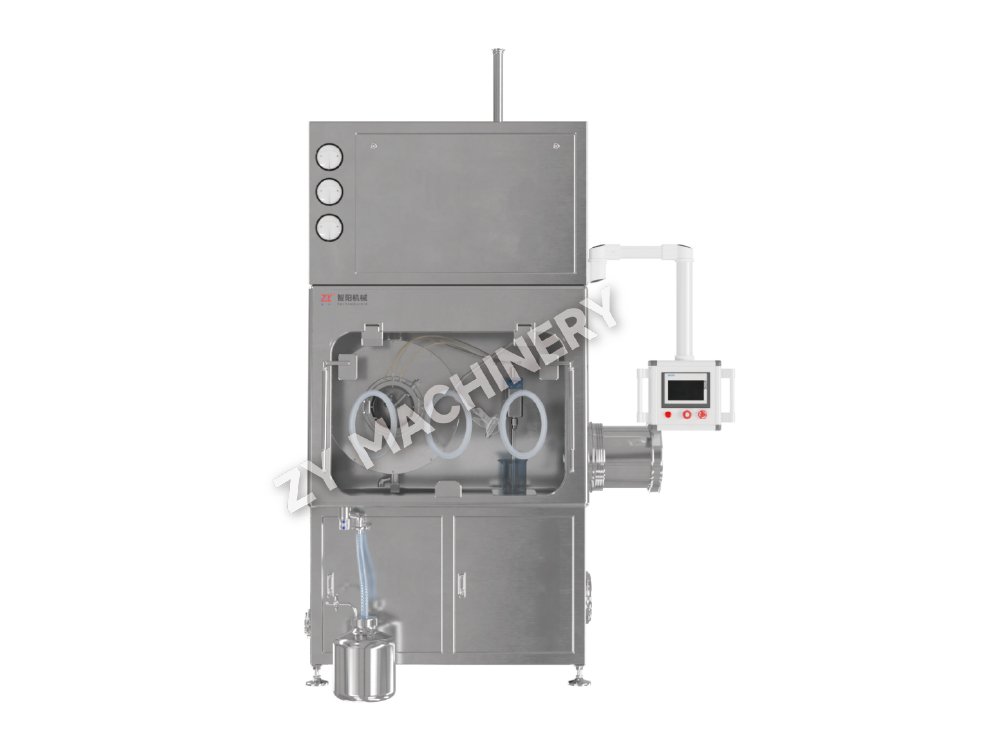
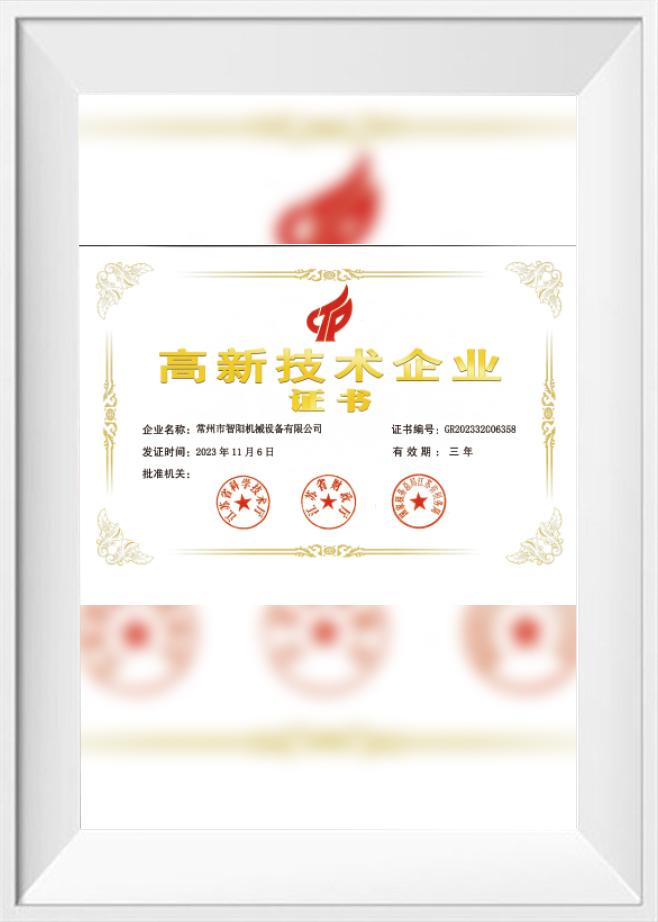
A high-containment solution is effective only when containment continuity is maintained across every necessary operation. At ZY, we evaluate Laboratory High-Containment Unit Equipment configuration around the material path and operating steps, rather than treating sealing as an isolated machine feature.
Dust Collection and Solvent Recovery Influence Both Safety and Product Quality
Laboratory processing of potent powders and volatile materials may create two different containment challenges: airborne particulate release and vapor emission. A sealed processing unit should therefore be assessed together with its dust collection and solvent recovery arrangement.
| System Area | Buyer Review Point | Practical Value |
|---|---|---|
| Dust collection | Collection location, filter access, residue handling method | Reduces powder accumulation and personnel exposure risk |
| Solvent recovery | Recovery route, condensation efficiency, discharge control | Controls vapor release and supports cleaner operation |
| Sealed transfer | Connection integrity between processing and collection units | Avoids leakage at interfaces between process steps |
| Cleaning arrangement | Residue removal and cleaning access under controlled conditions | Helps limit cross-contamination and operator contact |
When evaluating equipment, buyers should confirm that auxiliary systems are integrated into the intended process flow instead of being considered optional add-ons. Powder control and vapor control are directly related to containment reliability, cleaning efficiency, and repeatable product quality.
ZY can combine processing, dust control, solvent recovery, and sealed transfer requirements into one workable laboratory-scale configuration for materials that require disciplined handling.
Laboratory Mixing Data Becomes More Valuable When Collected Under Contained Conditions
In formulation development and small-batch validation, laboratory mixing is used to assess uniformity, compatibility, mixing time, rotational speed, moisture response, and material flow behavior. For highly active or sensitive materials, these results should be obtained without exposing the operator or allowing uncontrolled external impurities to enter the process.
Parameters worth recording during contained mixing trials
- Material characteristics, including bulk density, particle size tendency, cohesiveness, and sensitivity to moisture or solvent.
- Fill ratio and batch size, because excessive or insufficient loading may reduce mixing consistency.
- Mixing time and rotational speed, supported by uniformity sampling at defined process points.
- Discharge behavior and residual material level after the batch is completed.
- Cleaning effort and the possibility of cross-contamination before the next formulation trial.
Laboratory results are more transferable when the trial equipment reflects the containment, transfer, and cleaning conditions expected in later production. Bin-type laboratory mixers and wet mixing laboratory machines can therefore serve not only as development tools, but also as process verification platforms.
For pharmaceutical, food powder, and chemical additive applications, ZY focuses on equipment combinations that help users verify practical parameters before scaling to pilot or production capacity.
GMP-Oriented Purchasing Should Consider Cleaning, Documentation, and Scale-Up Early
For buyers working with potent APIs, bio-pharmaceutical materials, nutraceutical powders, veterinary products, or fine chemicals, equipment selection should extend beyond processing capability. GMP-oriented operation requires attention to cleanability, material contact surfaces, containment during maintenance, process traceability, and future scale-up requirements.
Constructive questions to include in a technical evaluation
- Can charging, sampling, discharge, and cleaning be completed without unnecessarily opening the contained process path?
- Are product-contact parts designed for efficient residue removal and material changeover?
- Can dust collection and solvent recovery components be accessed and maintained under controlled conditions?
- Does the laboratory configuration provide useful operating data for future pilot-scale or production-scale equipment selection?
- Can the equipment layout be adapted to site space, utility conditions, capacity targets, and material hazards?
A Laboratory High-Containment Unit Equipment is often the starting point for establishing a safer and more stable production route. Early consideration of cleaning strategy, operator protection, recovery systems, and scale-up logic can reduce later engineering changes and validation pressure.
ZY develops standalone equipment, modular systems, and integrated processing lines around material characteristics and process objectives, helping customers move from laboratory verification toward reliable implementation.