English
 Español
 русский
 中文简体
中文简体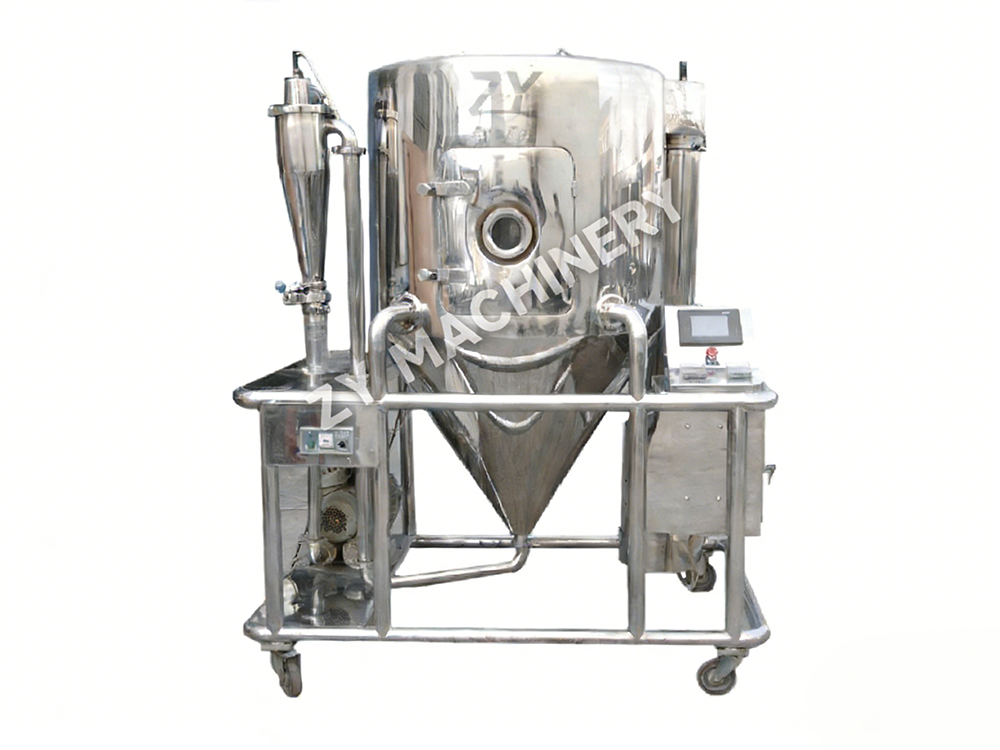

Industry Knowledge
How Material Properties Influence Spray Drying Results
For buyers evaluating a spray dryer, the most important starting point is not only evaporation capacity, but also how the feed behaves during atomization and rapid moisture removal. Viscosity, solids concentration, heat sensitivity, stickiness, and emulsion or suspension stability can directly affect powder recovery, wall deposition, particle shape, and cleaning frequency.
Key feed characteristics to verify before equipment selection
- Viscosity and flowability: Feed that is too viscous may reduce atomization quality, resulting in larger droplets, uneven drying, or unstable spraying.
- Solids content: Increasing solids content can improve production efficiency, but may also raise viscosity and increase the risk of nozzle blockage or wall adhesion.
- Heat sensitivity: Pharmaceutical, biological, and nutraceutical materials often require careful control of inlet temperature, outlet temperature, and residence time.
- Stickiness tendency: Sugars, extracts, proteins, and certain additives may soften during drying and deposit on the chamber wall unless process conditions are matched correctly.
- Feed stability: Suspensions and emulsions should remain sufficiently uniform during feeding so that the powder composition stays consistent.
At ZY, we typically begin solution planning from material characteristics and target powder performance, because a suitable process route is often more valuable than simply selecting a larger machine.
Atomization Choice and Its Effect on Powder Quality
Atomization determines the initial droplet size distribution, which strongly influences drying speed, powder fineness, bulk density, dispersibility, and recovery performance. A buyer should therefore evaluate atomizer selection together with feed properties and final product requirements.
| Atomization Method | Typical Processing Focus | Buyer Evaluation Points |
|---|---|---|
| Pressure nozzle | Stable production with pressurized liquid feeding | Nozzle wear, blockage risk, feed filtration, pressure stability |
| Two-fluid nozzle | Flexible laboratory or pilot processing and fine droplets | Compressed air consumption, scale-up consistency, droplet control |
| Rotary atomizer | Continuous processing with adjustable droplet formation | Disc speed range, maintenance access, chamber matching |
Process Parameters That Buyers Should Evaluate in a Trial Run
A successful spray dryer trial is not limited to producing dry powder. It should help establish an operating window that can be transferred to pilot or production scale with predictable quality and acceptable operating cost.
| Parameter | What It Influences | Practical Observation |
|---|---|---|
| Inlet air temperature | Drying intensity and initial moisture removal | Check drying speed together with product heat exposure risk |
| Outlet air temperature | Residual moisture and product condition | Use as an important indicator of drying balance |
| Feed rate | Moisture level, chamber loading, and throughput | Observe whether increasing capacity creates wet deposition |
| Airflow volume | Heat transfer, powder movement, and collection behavior | Confirm powder transport without excessive product loss |
| Atomization setting | Particle size and drying uniformity | Compare powder consistency at different settings |
A useful trial report should include powder moisture, recovery yield, flowability, bulk density, appearance, cleaning observations, and any chamber deposition. Stable repeatability across batches is often more important than a single high-yield result.
With ZY, we focus on converting trial observations into practical parameter ranges and equipment configuration recommendations for later implementation.
From Laboratory Trials to Production-Line Integration
Moving from laboratory-scale drying to stable production involves more than increasing chamber size. The feed preparation system, pumping accuracy, air treatment, powder collection, cleaning method, material transfer, and downstream processing route should be considered as one connected process.
Questions worth resolving before purchasing
- Will the material require pre-filtration, homogenization, controlled agitation, or temperature management before atomization?
- Is the required powder intended for direct packaging, further blending, granulation, tablet production, capsule filling, or another downstream operation?
- How will powder recovery be handled where fine particles, sensitive materials, or valuable active ingredients are involved?
- What cleaning approach is appropriate for batch changeover, cross-contamination control, and routine maintenance?
- Does the site have sufficient utilities, installation space, airflow management, and operational access for the proposed system?
Useful purchasing documentation
- Material data, target moisture, target capacity, powder handling requirements, and cleaning expectations.
- Trial results or samples that clarify product quality requirements and processing limitations.
- Available installation layout, utility conditions, and intended connection with upstream or downstream equipment.
For pharmaceutical, bio-pharmaceutical, nutraceutical, veterinary, additive, and related applications, a spray dryer should be assessed as part of a workable processing route rather than as an isolated unit.
ZY supplies standalone equipment, modular systems, and complete production-line solutions from laboratory and pilot applications to full production. Our aim is to help customers translate product requirements into reliable engineering execution.