English
 Español
 русский
 中文简体
中文简体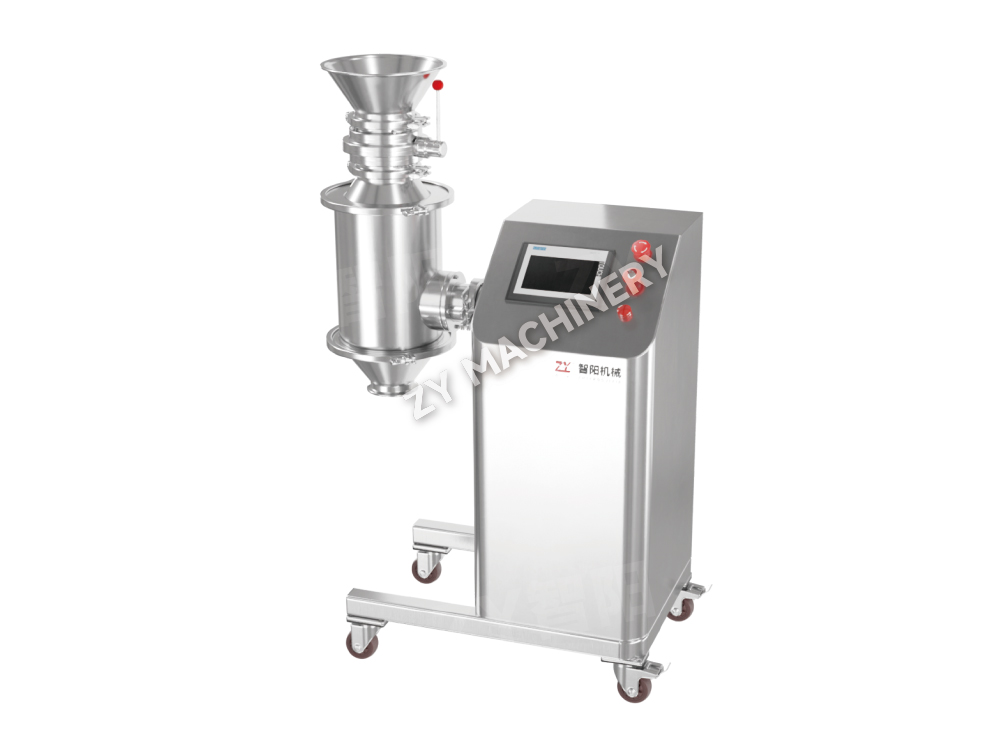


Industry Knowledge
How Screen Selection Changes Granule Quality and Downstream Stability
For milling and sizing machines, the screen is not only a discharge component; it is one of the main process controls affecting particle size distribution, flowability, bulk density, and the repeatability of later operations. A screen opening that is too large may allow oversize particles to pass into blending or tableting, while an excessively small opening can increase fines, heat generation, and throughput loss.
Screen selection should be evaluated together with material condition. Fragile dry granules may break easily and produce excess powder under aggressive sizing conditions. Soft, sticky, or moisture-sensitive materials may smear across the screen surface, reducing available open area and creating unstable output. In practice, the correct screen is the one that produces an acceptable particle-size distribution at a stable output rate, not simply the smallest available aperture.
| Observed Result | Possible Process Cause | Practical Adjustment Direction |
|---|---|---|
| Too many coarse particles | Screen opening too large or insufficient breakage force | Evaluate a smaller screen or optimized rotor condition |
| Excess fines | Over-processing, excessive speed, or fragile granules | Reduce mechanical intensity and verify feed uniformity |
| Output fluctuates during operation | Irregular feeding or partial screen blockage | Stabilize feeding and assess material adhesion |
| Material temperature rises | High resistance, repeated impact, or prolonged retention | Review aperture, speed, loading, and process duration |
At ZY, we normally evaluate screen configuration together with product characteristics, required output, and downstream acceptance criteria, so sizing performance supports the complete granulation process rather than becoming an isolated adjustment.
Managing Fines, Heat, and Material Damage During Sizing
A milling and sizing machine should reduce oversized or caked material without unnecessarily changing the functional characteristics of the product. This is especially important for pharmaceutical, nutraceutical, and additive formulations where excessive fines can affect flow, segregation tendency, compression behavior, dust generation, and yield recovery.
Indicators that the process is too aggressive
- The proportion of fine powder increases noticeably after sizing.
- Product temperature increases during continuous operation.
- Previously free-flowing granules become dusty or less uniform.
- Screen loading becomes unstable, even when the incoming material appears consistent.
Useful process checks before increasing machine intensity
- Confirm whether the feed material contains hard lumps, soft agglomerates, or irregular moisture distribution.
- Compare particle-size results before and after sizing rather than judging only by visual appearance.
- Observe whether material is passing efficiently through the screen or circulating longer than necessary.
- Review whether rotor speed, screen opening, and feed rate are balanced for the material.
More mechanical force does not automatically mean better sizing. For many products, controlled passage through the screen with limited repeated impact gives a more usable granule distribution and helps protect downstream process consistency.
ZY focuses on practical process routes: we aim to achieve the required granule range while reducing avoidable powder generation, overheating risk, and unnecessary product loss.
Where Milling and Sizing Should Be Positioned in a Granulation Line
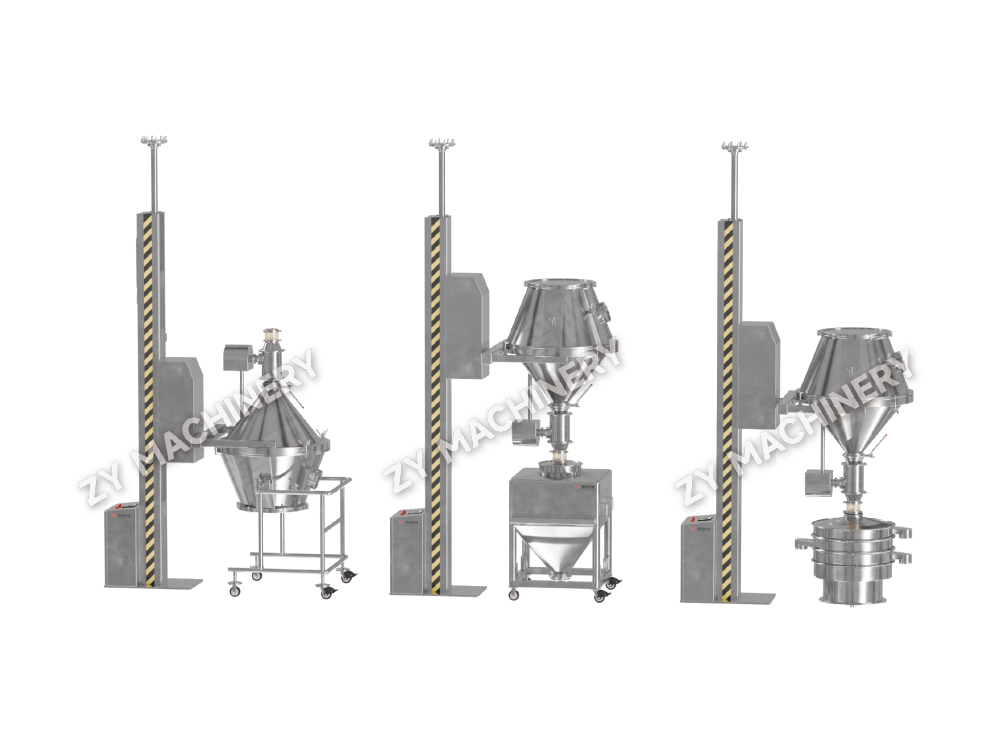
The same machine can serve different process purposes depending on where it is installed. Before granulation, it may condition lumpy raw materials and improve feeding consistency. After drying or granulation, it may control oversized granules and prepare the product for blending, compression, capsule filling, or packaging. The correct position is determined by what problem must be corrected and what product property must be protected.
| Installation Position | Typical Material Condition | Main Objective | Buyer Focus |
|---|---|---|---|
| Before mixing or granulation | Caked powders or irregular raw material lumps | Improve feed uniformity and reduce large agglomerates | Reliable de-lumping with limited fines |
| After wet granulation and drying | Dried granules containing oversized pieces | Control granule size before final blending | Uniform sizing and reduced over-milling |
| Before compression or capsule filling | Finished granules requiring final size control | Support flowability and feeding consistency | Stable product handling and clean transfer |
For a buyer, the important question is not simply whether a machine can mill material, but whether it can do so at the correct process stage without creating a new quality problem. Machine configuration should follow the material pathway, required granule specification, and connection method with upstream and downstream equipment.
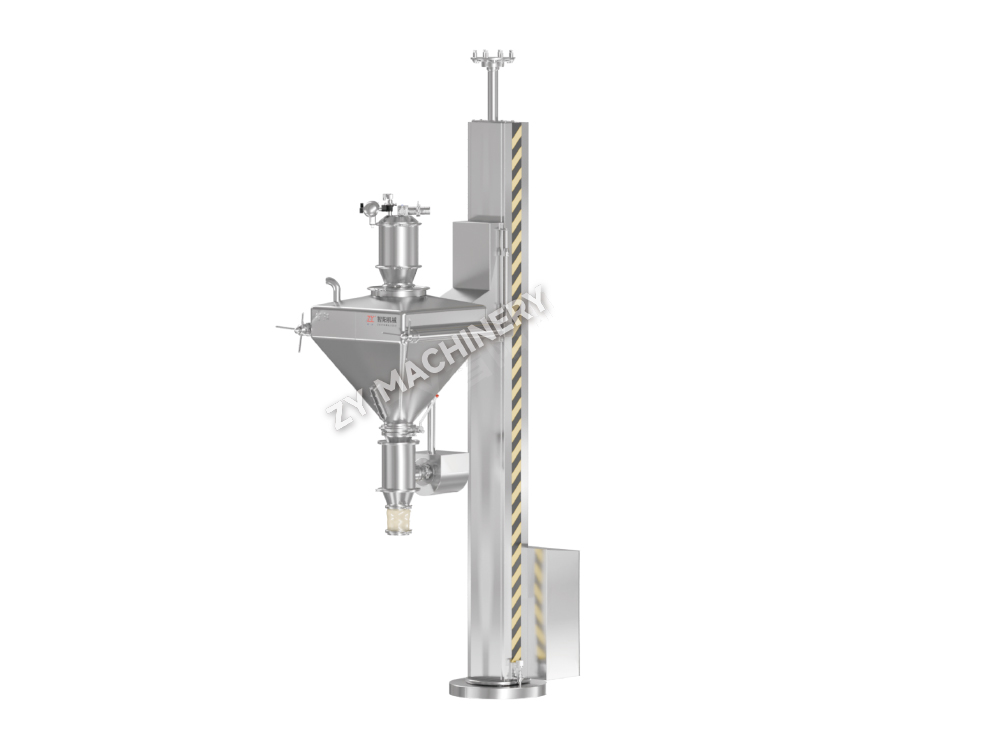
ZY develops standalone equipment and integrated production-line solutions around actual site conditions, making it easier to connect sizing performance with transfer, cleaning, containment, and capacity requirements.
Information Buyers Should Prepare Before Equipment Selection
Equipment selection becomes more reliable when it is based on actual material behavior instead of nominal capacity alone. Two products with the same target output may require different screen designs, operating conditions, feeding arrangements, or cleaning strategies because of differences in hardness, stickiness, density, moisture sensitivity, and dust characteristics.
Material and product requirements
- Incoming material form: dry granules, dried wet granules, caked powder, soft lumps, or rejected oversized product.
- Required particle-size range and acceptable limit for fines or oversized granules.
- Sensitivity to temperature rise, repeated impact, moisture pickup, or dust generation.
- Expected batch size, hourly capacity, and frequency of product changeover.
Installation and operating requirements
- Whether the machine will be used independently or integrated below a dryer, granulator, bin, or transfer system.
- Available installation height, access space, discharge arrangement, and mobility requirements.
- Cleaning expectations, change-part handling, and product-contact material requirements.
- Need for closed operation, reduced dust exposure, or production-line process integration.
A meaningful sizing trial should verify particle-size distribution, output stability, fines generation, material temperature, cleaning practicality, and compatibility with the intended production route. This gives buyers a stronger basis for selecting equipment than relying on capacity figures alone.
With experience from laboratory and pilot applications through full production, ZY works from material evaluation to engineering implementation, helping customers select a milling and sizing solution that is workable in daily operation.