English
 Español
 русский
 中文简体
中文简体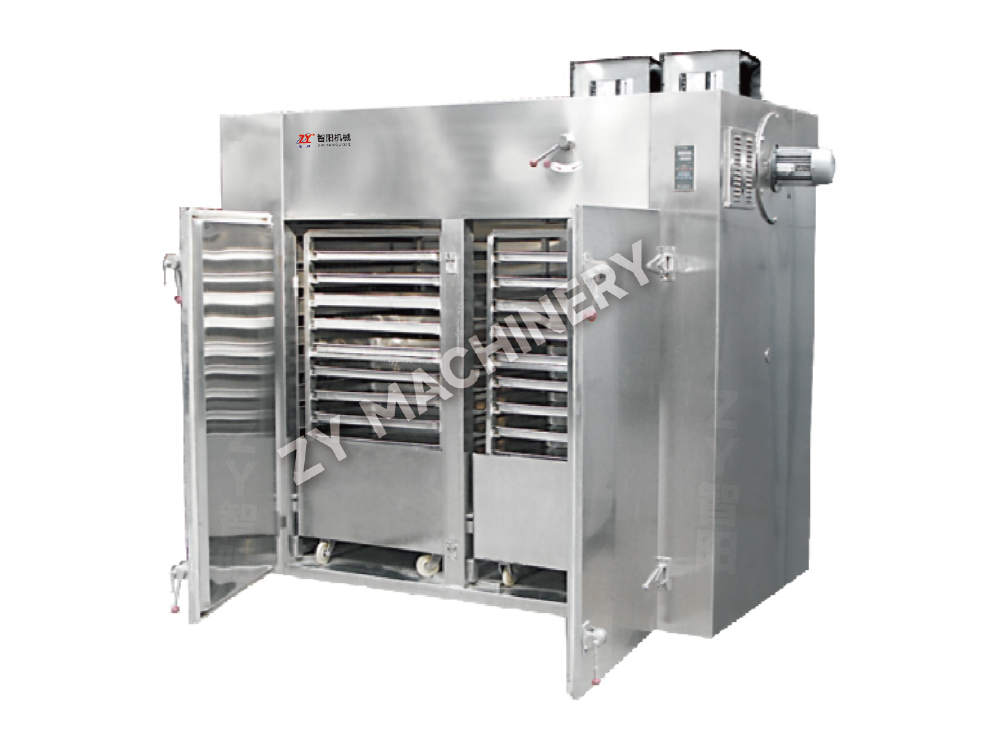



Industry Knowledge
Drying End Point Should Be Defined by Product Performance, Not Only by Time
For powders, granules, herbal extracts, food ingredients, and additive materials, an identical drying time does not guarantee an identical result. Initial moisture content, particle size distribution, bulk density, hygroscopicity, and tray loading depth all influence how rapidly moisture migrates from the material interior to the surface.
A practical drying study should evaluate the relationship between inlet air temperature, exhaust air condition, product moisture, and final handling properties. For oral solid dosage materials, over-drying can reduce compressibility or increase dust generation, while insufficient drying may contribute to agglomeration, sticking, microbial risk, or reduced storage stability.
Useful end-point verification items
- Moisture content or loss on drying measured at representative tray positions.
- Appearance, flowability, tendency to form lumps, and ease of discharge after cooling.
- Product temperature at discharge, especially for heat-sensitive formulations.
- Consistency between batches rather than relying on a fixed timer setting alone.
Buyer takeaway: drying equipment should support repeatable moisture control and sampling access, because the real target is a stable material condition for the next process step. At ZY, we consider the downstream use of the dried material when developing a workable drying route.
Air Distribution and Loading Method Directly Affect Batch Uniformity
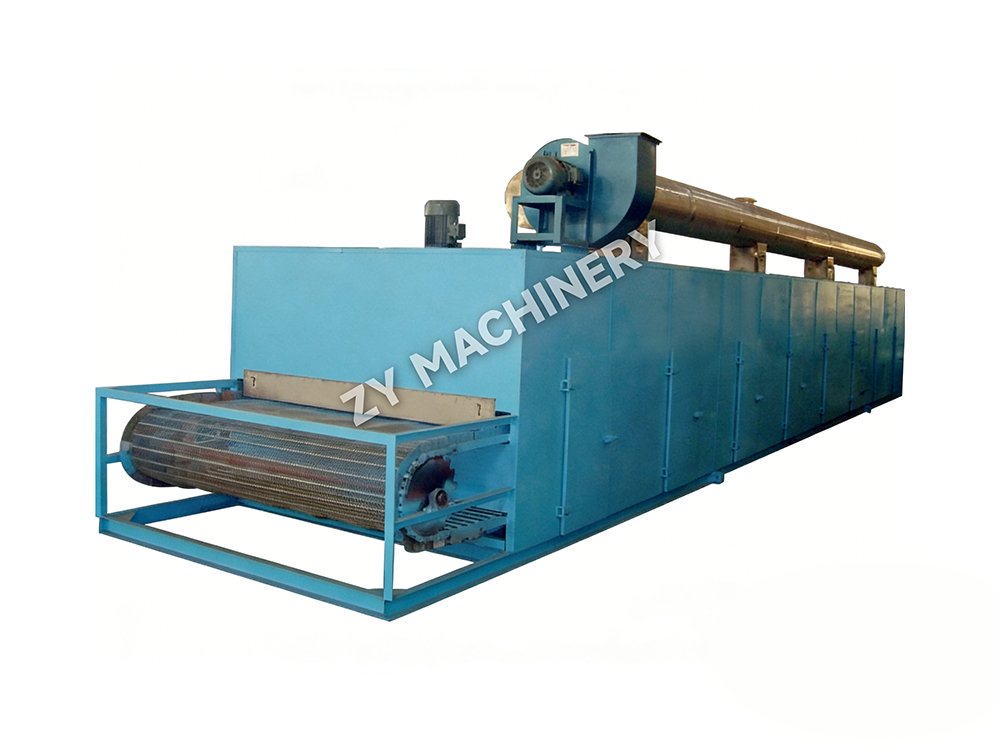
In tray-based hot air drying, the most common source of batch inconsistency is not insufficient heating power, but uneven contact between circulating hot air and the loaded material. Air may preferentially pass through low-resistance areas, leaving deeper or denser portions with slower moisture removal.
For purchasing evaluation, attention should be paid to air circulation structure, tray arrangement, chamber sealing, filter configuration, and whether loading practices can be standardized. A larger nominal chamber capacity is only useful when acceptable uniformity can be achieved under the intended working load.
| Operating Factor | Possible Drying Risk | Practical Control Point |
|---|---|---|
| Excessive tray layer thickness | Wet material remains in the lower layer | Specify a validated loading depth by material type |
| Uneven tray loading | Variable drying time across positions | Use defined loading weight and spreading practice |
| Poor airflow balance | Hot spots or slow-drying zones | Evaluate temperature distribution under loaded conditions |
| High material stickiness | Caking and difficult discharge | Confirm tray surface, temperature window, and cleaning method |
ZY evaluates material characteristics and production capacity together, helping customers avoid selecting equipment capacity that cannot be effectively used in daily operation.
Cleanability, Cross-Contamination Control, and Heat-Sensitive Materials
When hot air drying equipment is used for pharmaceutical, nutraceutical, veterinary, biotechnology, or additive products, cleaning access and contamination control are closely related to production efficiency. Powders can accumulate in tray corners, door sealing areas, air ducts, filter zones, and chamber joints if these details are not considered during equipment selection.
Questions worth asking during technical confirmation
- Are product-contact surfaces smooth, accessible, and suitable for the intended cleaning procedure?
- Can trays, racks, and filters be removed efficiently for cleaning and inspection?
- Is filtered inlet air required for the hygiene level of the product?
- How will dust, odor, or residue from one product be prevented from affecting the next batch?
- Does the material require lower-temperature drying with longer residence time to protect color, potency, aroma, or active ingredients?
Heat-sensitive products should not be assessed only by the maximum temperature the dryer can reach. The more useful question is whether the equipment can maintain a stable, controllable drying environment within the product's acceptable temperature range.
For multi-product production, easy cleaning and reliable process control may create more long-term value than maximum heating capacity alone. We at ZY integrate equipment configuration with practical cleaning and material-handling requirements.
From Laboratory Trials to Production Drying: What Should Be Confirmed Before Purchase
Scale-up is not simply a matter of increasing chamber volume. A material that dries successfully in a small trial can behave differently in full production because the loaded layer is thicker, airflow paths are longer, moisture discharge is greater, and operational handling is more complex.
For buyers planning laboratory, pilot, or production deployment, useful technical discussions should begin with material data and process objectives rather than equipment dimensions alone.
- Provide the material name, initial moisture range, target residual moisture, bulk density, stickiness, and temperature sensitivity.
- Define expected batch capacity, working frequency, available utilities, room conditions, and cleaning requirements.
- Confirm whether the dried material will proceed to blending, granulation, compression, encapsulation, packing, or another downstream process.
- Request trial-based evidence or process assumptions for drying temperature, loading depth, estimated cycle time, and uniformity checks.
- Evaluate installation space, exhaust arrangement, operator access, tray transfer method, and maintenance convenience.
A well-defined process route reduces unnecessary oversizing, shortens commissioning work, and improves batch repeatability after installation. The most suitable hot air drying equipment is the one matched to actual material behavior, required output, and site conditions.
ZY supplies standalone dryers, modular systems, and integrated production solutions built around practical process requirements from development through production.