English
 Español
 русский
 中文简体
中文简体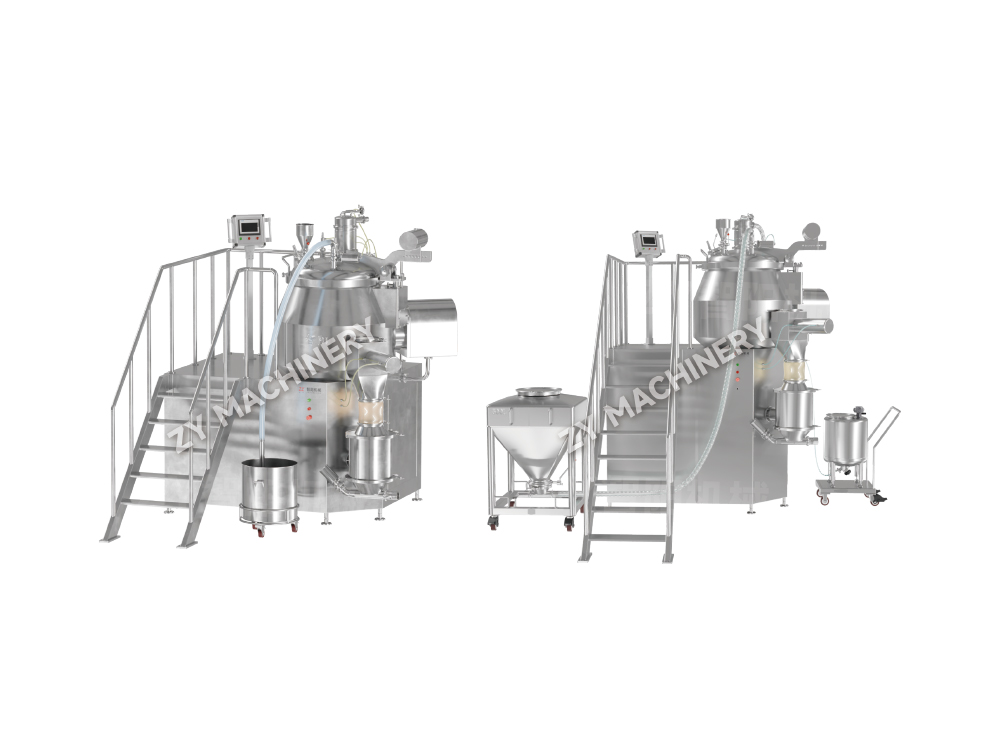



Industry Knowledge
What Should Be Verified Before Scaling Up a Small-Batch Mixing Process?
Laboratory trials are valuable because they reveal whether a formulation can reach acceptable uniformity before larger batches introduce greater filling variation, longer transfer paths, and more difficult sampling conditions. For buyers evaluating high-speed mixing equipment, the useful question is not only whether powders can be blended, but whether the equipment can establish a repeatable process window.
Parameters worth recording during formulation trials
- Loading ratio and usable working volume, especially when batch sizes vary frequently.
- Impeller or agitator speed used for pre-blending, dispersion, or wet mass formation.
- Mixing time required before samples meet the target uniformity criterion.
- Evidence of agglomeration, wall adhesion, dead zones, or excessive powder heating.
- Discharge behavior and material recovery after mixing is completed.
A successful laboratory result should define repeatable operating parameters, not merely produce one acceptable batch. At ZY, we use small-batch testing information to support more practical equipment configuration and process planning for later production stages.
How Powder Characteristics Affect Mixing Uniformity
Active ingredients, excipients, flavoring powders, nutritional blends, and chemical additives may have significantly different particle sizes, densities, flowability, or moisture sensitivity. These differences can cause segregation during charging, mixing, transfer, or discharge, even when the mixer operates normally.
| Material Condition | Possible Mixing Risk | Trial Focus |
|---|---|---|
| Large particle size difference | Segregation after blending | Charging sequence and discharge sampling |
| Cohesive or fine powders | Agglomerates and wall adhesion | Shear intensity and mixing time |
| Low-dose active ingredients | Poor content uniformity | Pre-blending method and sampling strategy |
| Moisture-sensitive material | Caking or unstable flow | Processing time and environmental control |
For difficult formulations, increasing speed alone is not always the correct response. Higher shear may improve deagglomeration, but it may also increase temperature, compact certain powders, or change subsequent granulation behavior. Material properties should determine the mixing route and parameter range.
When Wet Mixing Trials Provide More Useful Data Than Dry Blending Alone
In oral solid dosage processing and similar powder applications, a dry blend may appear uniform but still perform poorly once liquid binder or moisture is introduced. Wet mixing laboratory machines are useful when the buyer needs to evaluate how rapidly a powder bed absorbs liquid, forms granules, changes torque, or becomes difficult to discharge.
Observations that support process development
- Confirm whether the liquid addition method creates even wetting or localized lumps.
- Record the speed and time at which agglomerates begin to break down or granules begin to form.
- Check whether the endpoint is broad and controllable or narrow and easy to exceed.
- Evaluate residue on contact surfaces and the ease of cleaning after the trial.
- Compare discharged material consistency across repeated batches using the same parameters.
Wet mixing tests are most useful when they identify a stable endpoint range that can be reproduced batch after batch. We at ZY focus on connecting laboratory observations with workable equipment and process integration decisions, rather than treating testing as an isolated step.
Equipment Details That Influence Daily Use, Cleaning, and Future Expansion
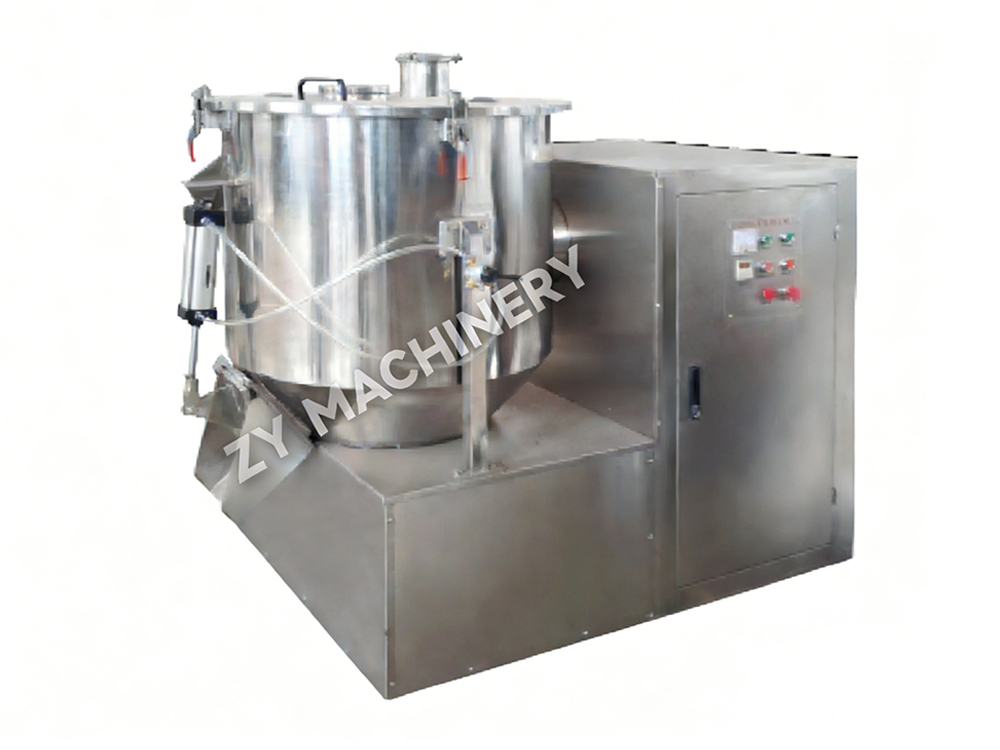
For laboratories and pilot facilities, purchasing decisions often involve more than mixing performance. High-speed mixing equipment must also fit frequent product changes, limited installation space, cleaning requirements, sampling needs, and possible transition to larger production capacity.
Practical points to discuss with the supplier
- Whether the selected container size matches the minimum and maximum intended batch volumes.
- Whether product-contact parts are accessible for inspection, cleaning, and changeover.
- Whether speed adjustment allows process exploration for different powder behaviors.
- Whether sampling and discharge arrangements reduce material loss and segregation risk.
- Whether laboratory parameters can be meaningfully referenced during pilot or production-scale planning.
A bin-type laboratory mixer may be suitable for dry blending verification, while a wet mixing laboratory machine may be required when binder addition, granulation behavior, or agglomerate breakup must be assessed. The appropriate choice depends on the process question that the trial must answer.
Founded in 2010, ZY develops powder processing and oral solid dosage equipment around material characteristics, capacity targets, and site conditions. For customers selecting high-speed mixing equipment, we aim to provide a practical route from small-batch verification to reliable production implementation.