English
 Español
 русский
 中文简体
中文简体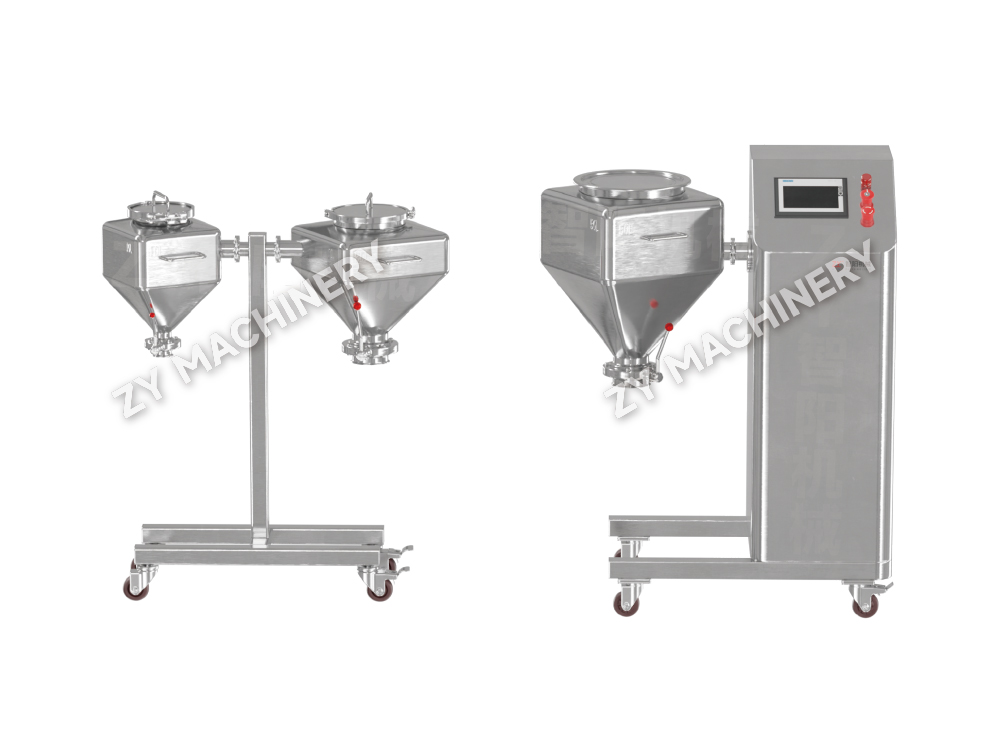

Industry Knowledge
How to Interpret Mixing Uniformity in Small-Batch Verification
For laboratory and pilot-scale work, the value of a tumble mixer is not simply whether powder appears visually blended. Buyers should focus on whether the equipment can generate repeatable data for formulation compatibility, mixing time, rotational speed, and scale-up decisions.
What should be verified during trials?
- Content uniformity at different sampling positions, especially for formulations containing low-dose active ingredients.
- The shortest effective mixing time, avoiding both insufficient blending and unnecessary over-mixing.
- Sensitivity of the blend to speed changes, fill level changes, and differences in powder flowability.
- Whether agglomerated or cohesive components remain uniformly dispersed after discharge and handling.
A practical trial should produce measurable uniformity results, not only a visually acceptable blend. At ZY, we use material characteristics and target batch requirements as the basis for recommending a workable laboratory mixing route.
Fill Level, Motion Pattern, and Powder Behavior Are Closely Linked
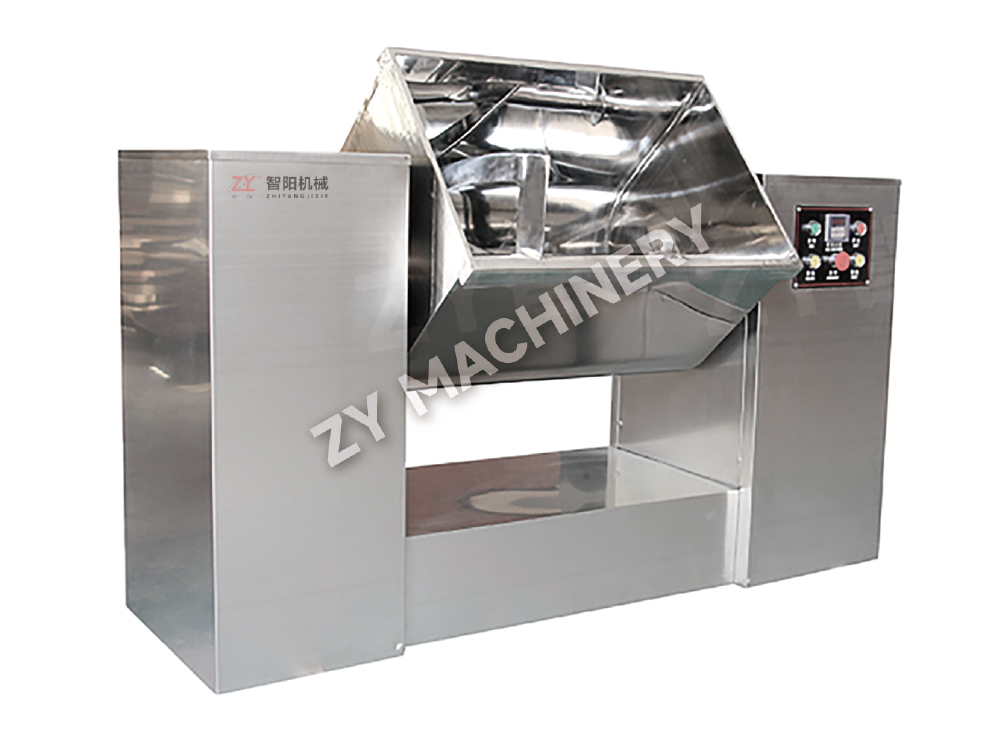
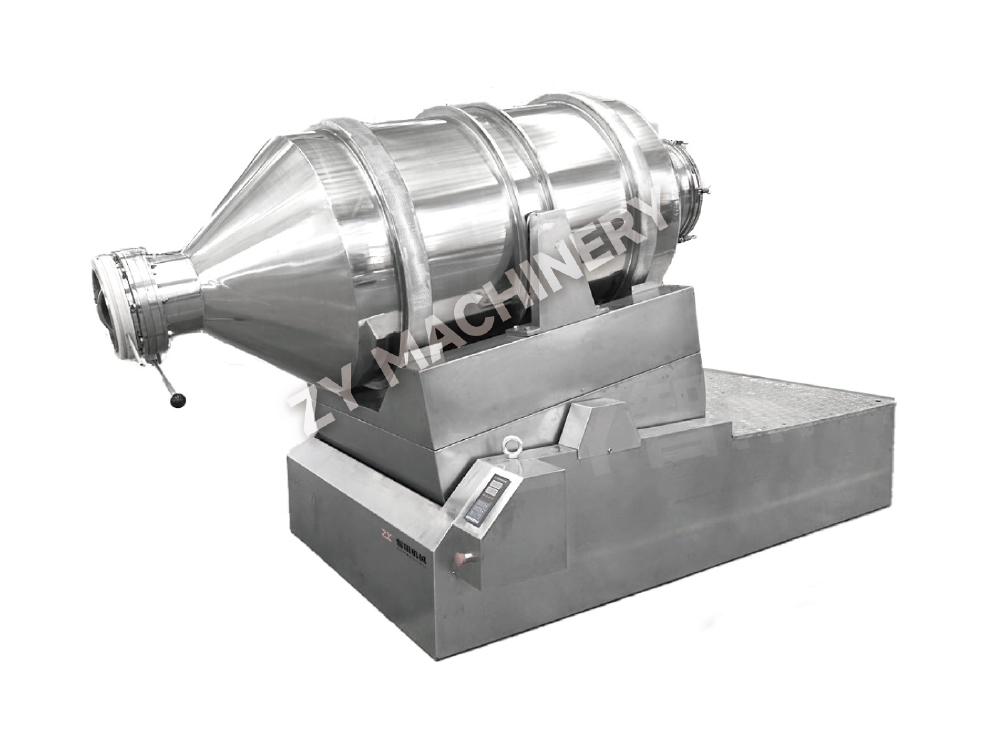
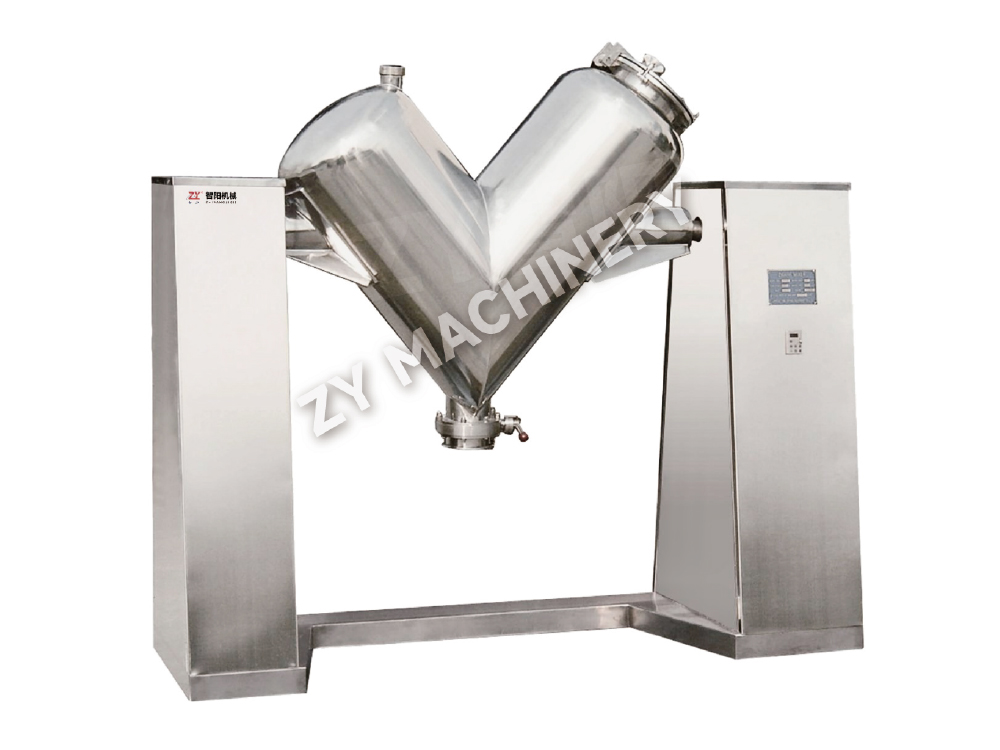
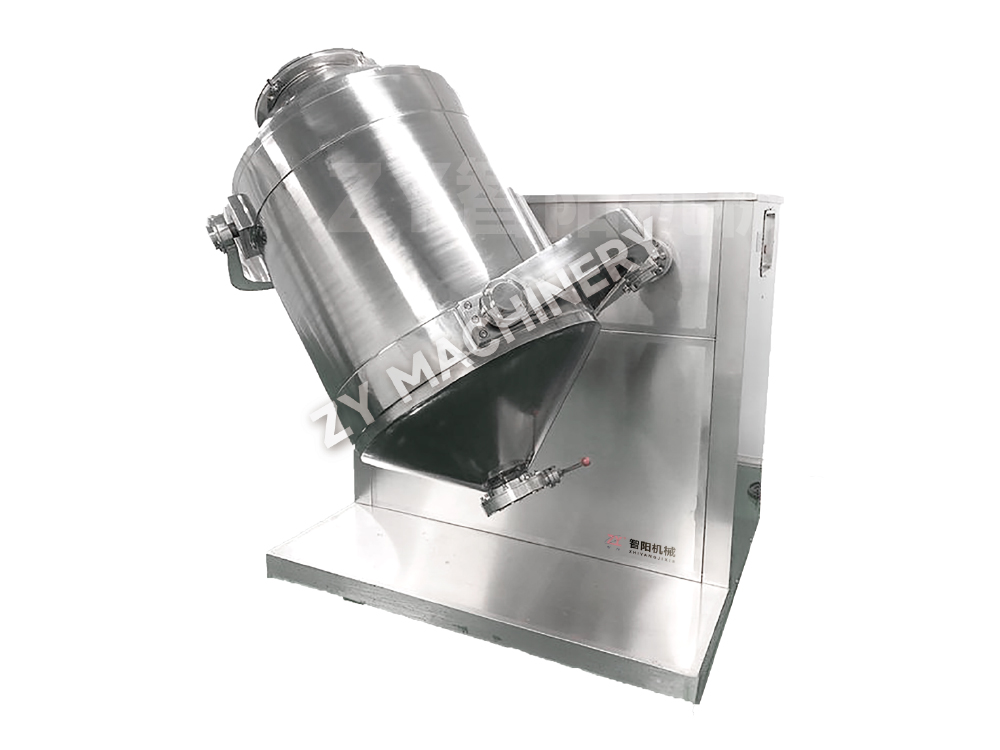
Tumble mixing relies on repeated movement of the powder bed through rotation, tilting, rocking, or combined three-dimensional motion. In small batches, the available movement space inside the chamber has a direct effect on particle rearrangement and dispersion efficiency.
| Operating Factor | Possible Mixing Effect | Buyer Evaluation Focus |
|---|---|---|
| Very low fill level | Insufficient powder-bed interaction or unstable sampling results | Minimum reliable batch size |
| Suitable fill level | Effective cascading and redistribution of materials | Uniformity and repeatability |
| Excessive fill level | Restricted movement and longer mixing time | Usable capacity rather than nominal capacity |
| Cohesive or easily agglomerated powder | Local concentration differences may remain | Need for suitable motion intensity and process testing |
Nominal chamber volume does not equal effective process capacity. Buyers should confirm the operating fill range with their actual materials before finalizing equipment selection. ZY helps customers evaluate capacity around real powder behavior rather than theoretical volume alone.
Designing a Useful Mixing Trial Before Equipment Purchase
A well-planned trial can reduce later process adjustments and provide a clearer foundation for production-scale decisions. This is especially important for pharmaceutical premixes, seasoning blends, meal replacement powders, and additive formulations where minor distribution differences may affect quality or performance.
Recommended trial sequence
- Define the formulation components, target batch weight, critical ingredient proportion, and expected uniformity standard.
- Record important material properties, such as bulk density, flowability, particle-size difference, moisture sensitivity, and agglomeration tendency.
- Select an initial mixing time and rotational speed, then take samples from multiple positions after discharge.
- Compare results across adjusted mixing times or speeds to identify a stable operating window.
- Review cleaning, discharge, containment, and transfer procedures, since post-mixing handling can influence the final result.
For low-dose formulations, the trial should pay particular attention to segregation risks caused by differences in particle size or density. For food and chemical powders, attention may shift toward discharge completeness, easy cleaning, and prevention of visible agglomerates.
We at ZY can combine test objectives, capacity targets, and site conditions into a more practical equipment and process proposal, helping customers move from trial data to implementation decisions.
Questions That Improve Laboratory Mixer Selection
Different laboratory tumble mixer may appear suitable for small-batch blending, but their usefulness depends on the intended process route. A bin-type laboratory mixer is often considered when enclosed powder blending, material transfer convenience, and formulation verification are priorities. Wet mixing laboratory equipment becomes relevant when liquid addition, granulation preparation, or cohesive mass formation is part of the process.
| Question to Confirm | Why It Matters |
|---|---|
| Is the process dry blending only, or is liquid addition required? | Determines whether tumble blending or wet mixing equipment is more suitable. |
| What is the smallest and largest intended batch? | Helps confirm usable fill range and repeatable mixing conditions. |
| Do materials require enclosed transfer or strict contamination control? | Affects container design, discharge method, and cleaning arrangement. |
| Will laboratory results support future pilot or production scaling? | Encourages selection of process parameters and equipment logic that remain useful at larger capacity. |
The most appropriate mixer is the one that supports the required process evidence and future implementation route. ZY provides standalone machines, modular systems, and integrated processing solutions according to customer materials, output objectives, and production conditions.