English
 Español
 русский
 中文简体
中文简体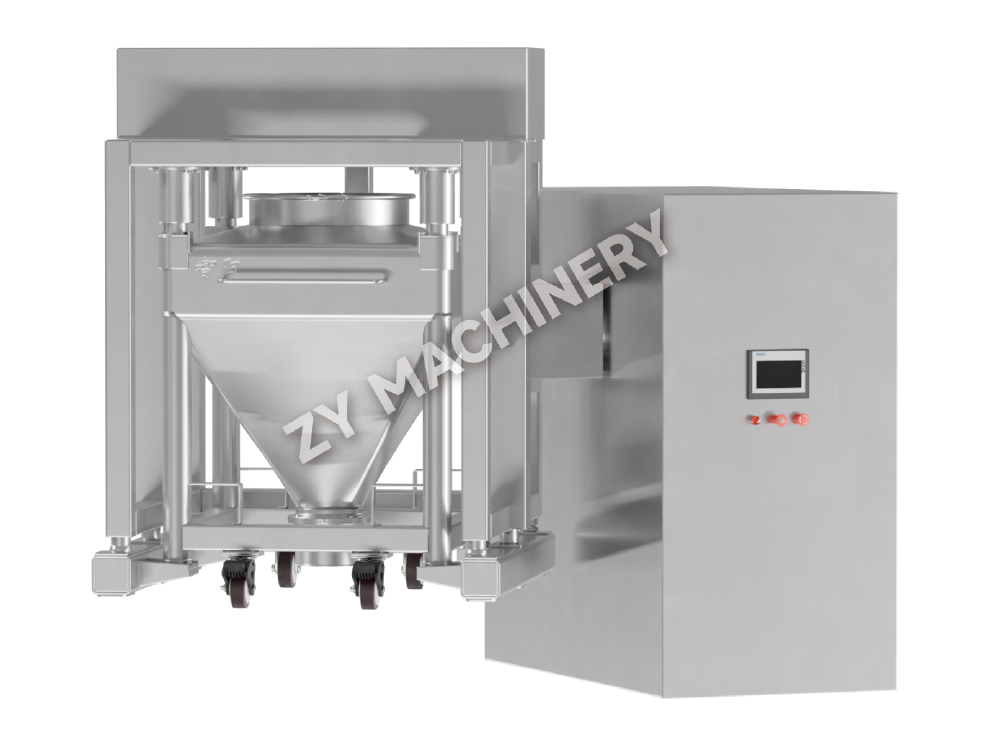


Industry Knowledge
How Filling Ratio Affects Mixing Uniformity in Bin Mixers
For small-batch powder processing, the effective filling ratio of the bin has a direct influence on particle movement. When the bin is overfilled, powders may rotate as a compact mass with insufficient cascading. When it is underfilled, the material may tumble freely but without enough repeated interaction between active ingredients and excipients. In both cases, blend uniformity can become difficult to reproduce.
A practical development approach is to evaluate the usable filling range with the actual formulation rather than relying only on nominal bin volume. Differences in bulk density, flowability, particle size distribution, and electrostatic behavior can change the effective mixing volume significantly.
| Observed Condition | Possible Cause | Constructive Check |
|---|---|---|
| Blend variation remains high after longer mixing | Excessive filling or poor material movement | Reduce batch load and compare sample uniformity |
| Low-dose component distribution is inconsistent | Insufficient interaction between minor and major ingredients | Review pre-blending strategy and loading sequence |
| Results change when the batch size changes | Mixing mechanism altered by fill level | Establish a validated operating fill range |
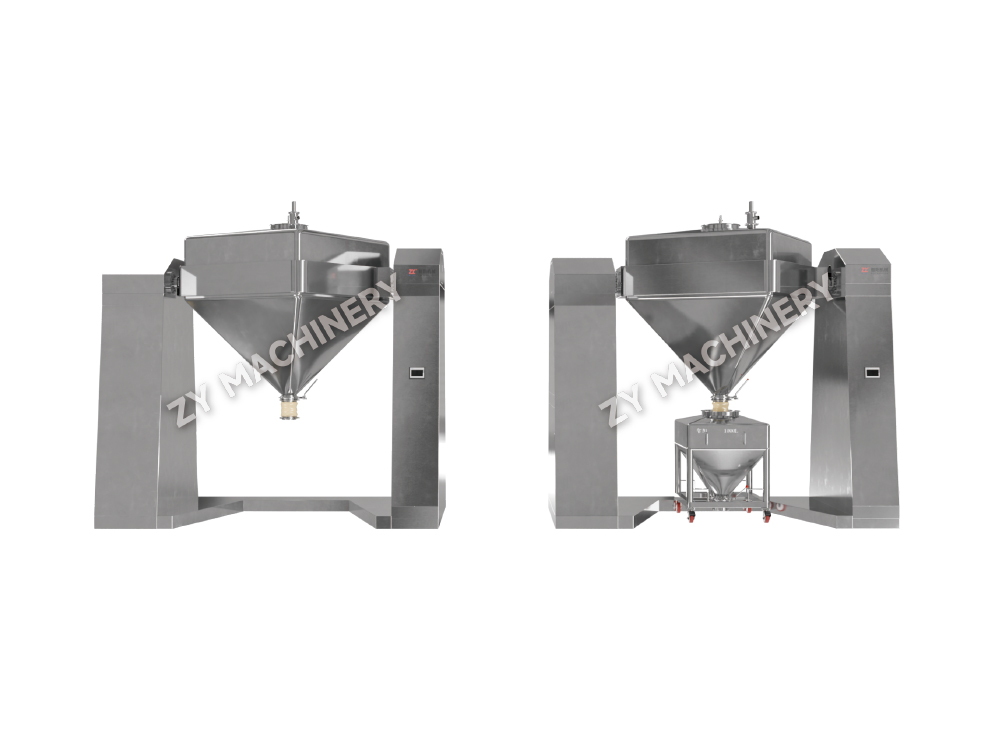
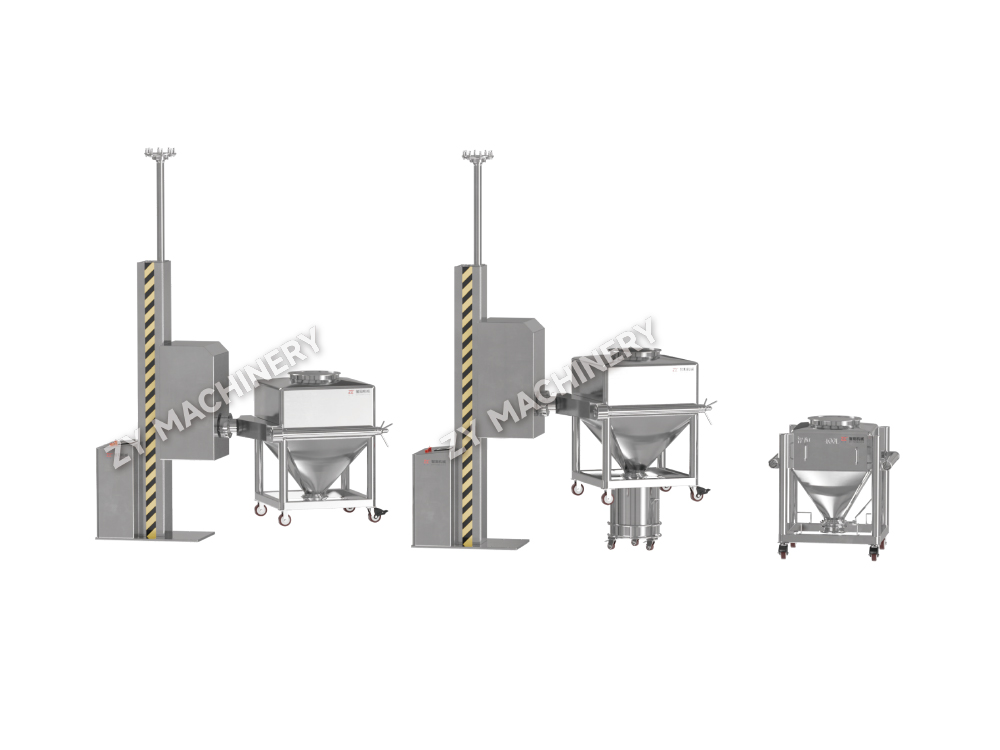
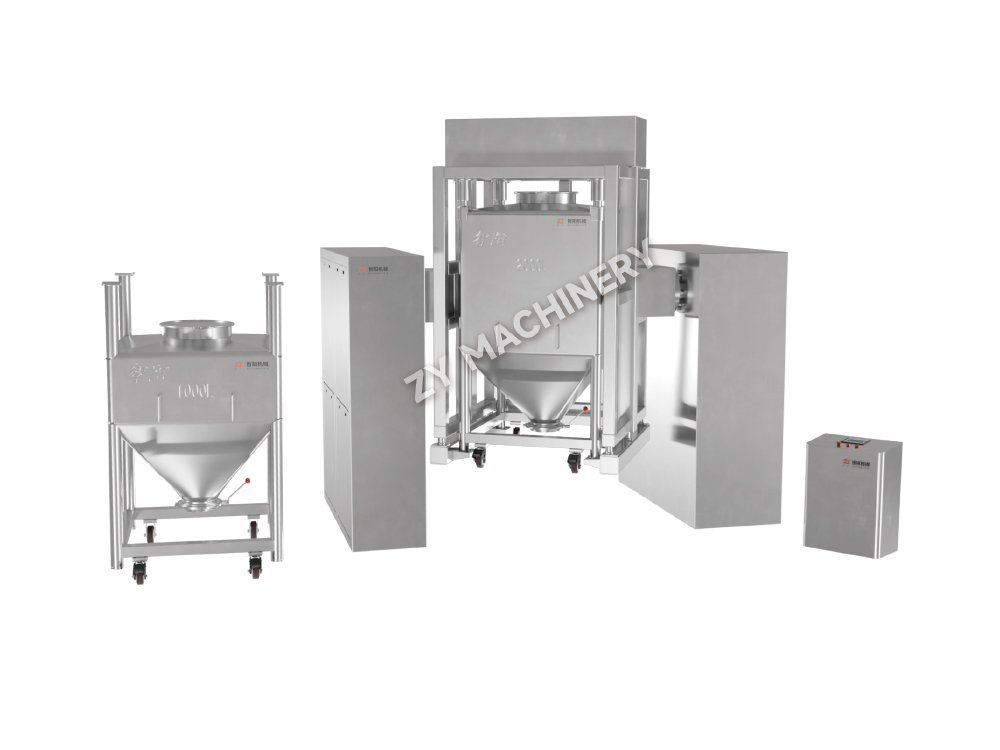
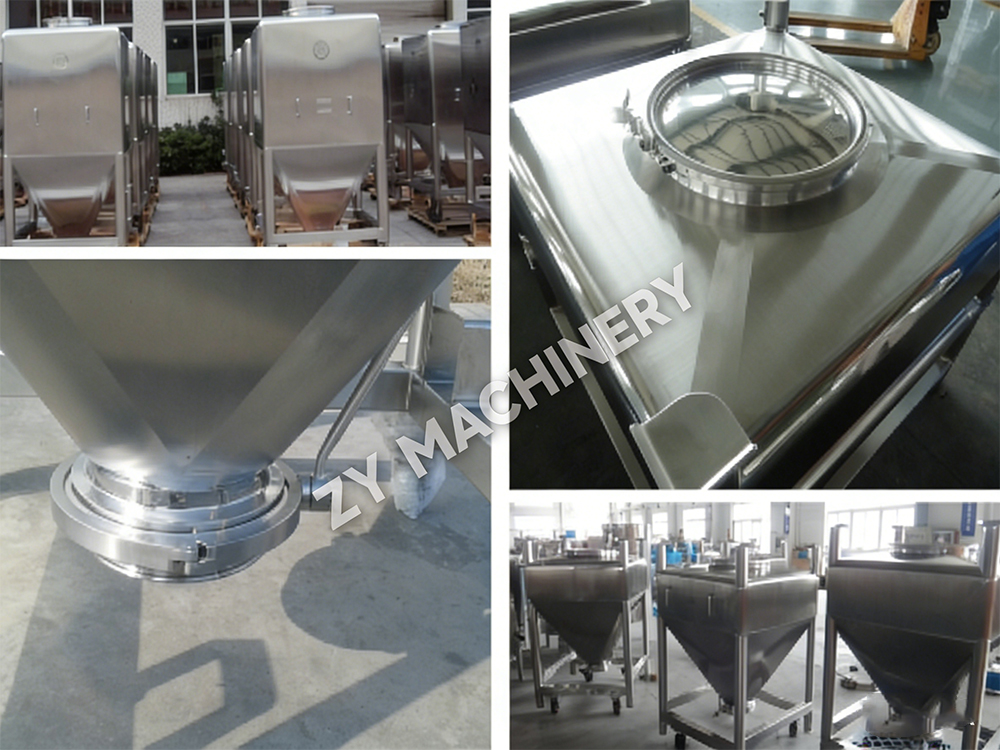
The suitable batch size is determined by material behavior and mixing results, not only by bin capacity. At ZY, we use formulation characteristics and target capacity together when considering an appropriate small-batch mixing configuration.
Establishing Mixing Time and Rotational Speed During Process Trials
Mixing time and rotational speed should be evaluated as linked process parameters. Increasing speed does not always shorten the required mixing time. For powders with large density differences or poor flow characteristics, excessive movement can encourage segregation after a satisfactory blend has already formed.
Useful Trial Sequence for Small-Batch Verification
- Select an initial loading sequence based on the proportion and characteristics of the minor ingredients.
- Run short mixing intervals at a moderate rotational speed and collect representative samples.
- Compare uniformity results across time points to identify when the blend reaches a stable condition.
- Check whether additional rotation causes improvement, no change, or renewed variation.
- Confirm the selected parameters through repeat batches before transfer to larger-scale equipment.
For pharmaceutical pre-mixing, this approach is particularly useful when active ingredients are present at low proportions. For seasoning powders, meal replacement powders, and additive blends, it can also help limit unnecessary mixing cycles while maintaining batch consistency.
ZY focuses on providing equipment that supports practical process confirmation, allowing customers to examine formulation compatibility and operating parameters before larger production commitments. A reliable endpoint should be supported by repeatable sampling data rather than by mixing time alone.
Loading Sequence for Low-Dose Ingredients and Difficult Powder Blends
A bin mixer may provide suitable tumbling action, but uniformity can still be compromised when a minor component is loaded into the batch without an appropriate distribution strategy. This is common in formulations involving active ingredients, concentrated flavors, micronutrients, pigments, or functional chemical additives.
Loading Considerations That Can Improve Blend Reliability
- Use staged addition or pre-blending when the minor component represents a very small proportion of the total batch.
- Avoid loading fine, cohesive powders in a way that encourages adhesion to one area of the bin wall.
- Evaluate whether density differences between components may cause settling during discharge or subsequent transfer.
- For moisture-sensitive powders, consider handling time and environmental exposure alongside the mixing parameters.
Where powders tend to agglomerate or require binder addition, a wet mixing laboratory machine may be more appropriate for initial process exploration than relying only on dry tumbling. The equipment choice should follow the material objective: dry distribution, controlled granulation, or preparation for a downstream step.
Uniform mixing depends on both equipment motion and the method by which ingredients enter the process. We at ZY consider loading, mixing, discharge, and subsequent handling as connected decisions rather than isolated machine functions.
What Buyers Should Confirm Before Selecting a Laboratory Bin Mixer
Laboratory equipment is often used to produce the process evidence needed for future scale-up. Selection should therefore be based on the tests the buyer needs to complete, the nature of the powders involved, and how closely the trial process should represent later production conditions.
| Selection Point | Why It Matters | Buyer Confirmation |
|---|---|---|
| Working batch range | Determines whether realistic fill ratios can be tested | Provide minimum and maximum trial quantities |
| Speed adjustment capability | Supports parameter development for different formulations | Define the intended trial and repeatability requirements |
| Bin handling and cleaning | Affects changeover time and cross-contamination control | Review product contact areas and cleaning procedure needs |
| Connection with later production steps | Helps preserve process relevance during scale-up | Clarify discharge, transfer, and downstream equipment plans |
A laboratory bin mixer can support more than sample preparation: it can help establish repeatable parameters for product development, pilot verification, and production planning. ZY supplies standalone equipment and process-oriented configurations based on material characteristics, capacity targets, and site conditions. The most useful laboratory trial is one that produces data that can guide the next processing stage.