English
 Español
 русский
 中文简体
中文简体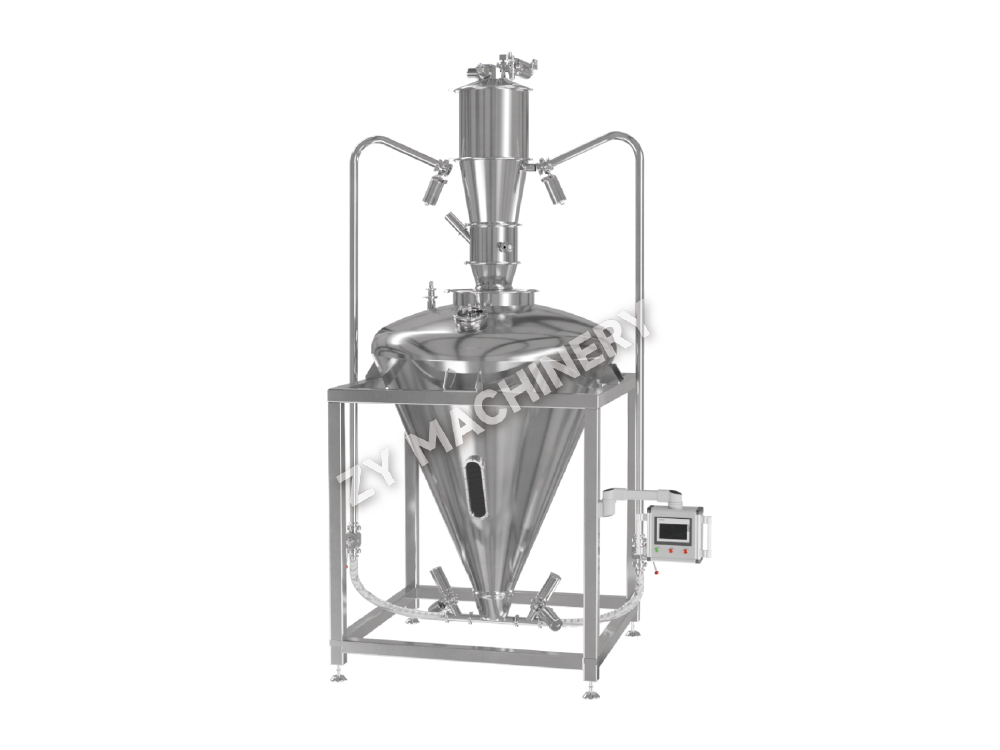





Industry Knowledge
Why Small-Batch Mixing Trials Should Be Designed Around Risk, Not Only Batch Size
A laboratory mixing test is most valuable when it reproduces the difficult parts of the intended process: low-dose ingredient distribution, powder flow differences, sensitivity to overmixing, and the order in which materials enter the vessel. For pharmaceutical powders, seasonings, nutritional blends, and chemical additives, a small batch may reveal segregation or agglomeration risks before these problems become costly at production scale.
When an active ingredient, flavor component, pigment, or functional additive accounts for only a small proportion of the formula, the challenge is not simply to rotate material together. The critical issue is whether that low-ratio component can be distributed consistently without creating concentration peaks or dead zones. Small-batch verification should therefore evaluate both mixing uniformity and the repeatability of the selected process parameters.
Parameters worth recording during initial trials
- Ingredient addition sequence, especially for low-dose powders or materials with significant density differences.
- Mixing time and rotational speed used for each test batch.
- Visual evidence of powder adhesion, lumps, color streaks, or residual material on contact surfaces.
- Sampling results from different positions of the mixed batch rather than from a single convenient point.
At ZY, we use material behavior and process targets as the starting point for equipment selection, so laboratory testing can support a workable later-stage production route rather than remain an isolated experiment.
Uniformity Results Depend on Sampling Design as Much as Mixer Operation
A batch can appear visually uniform while still containing local concentration differences that matter to product quality. This is particularly important when blending active ingredients with excipients, fortification components into meal replacement powders, or concentrated additives into a carrier powder. A useful mixing trial should include a sampling plan that challenges the batch, not one that only confirms an expected result.
| Observed Condition | Possible Process Meaning | Constructive Next Step |
|---|---|---|
| Top and bottom samples differ noticeably | Density-driven segregation or insufficient redistribution | Review filling sequence, speed, and mixing duration |
| Uniformity improves, then declines at longer mixing time | Overmixing may promote re-segregation | Define a validated mixing-time window instead of maximizing time |
| Material remains on vessel walls or corners | Adhesion, static behavior, or geometric dead zones | Assess contact-surface finish and mixer configuration |
A qualified process is not defined by one acceptable sample; it is supported by consistent results across representative sampling locations and repeated batches. We at ZY focus on this practical link between test evidence and equipment configuration.
Choosing Between Bin-Type and Wet Mixing Trials Requires Process Judgment
The correct dedicated mixing machine type depends on what must be proven. A bin-type laboratory mixer is often suitable when the objective is dry powder distribution, low contamination risk during material transfer, and evaluation of free-flowing or moderately cohesive blends. A wet mixing laboratory machine becomes relevant when liquid addition, binder distribution, wet mass consistency, or granulation-related behavior must be assessed.
Practical selection points for trial equipment
| Trial Objective | More Relevant Machine Direction | Key Verification Focus |
|---|---|---|
| Dry premixing of active ingredients and excipients | Bin-type laboratory mixer | Uniformity, segregation tendency, discharge behavior |
| Blending of seasonings or dry nutritional powders | Bin-type or dedicated dry mixing configuration | Color consistency, flavor distribution, powder flow |
| Liquid-assisted powder processing or binder incorporation | Wet mixing laboratory machine | Wet mass uniformity, lump control, endpoint stability |
For wet mixing, more speed or more liquid does not automatically improve quality. Excessive shear or uncontrolled liquid addition can produce uneven granules, difficult discharge, or unnecessary cleaning burden. The best laboratory trial establishes an operating range that can be transferred into later process development. ZY can configure dedicated mixing solutions around these specific verification requirements.
Details That Reduce Scale-Up and Daily Operation Problems
A dedicated mixing machine should be evaluated not only by whether it can complete a blend, but also by whether it supports controlled production habits. In small-batch operations, frequent formula changes, short campaigns, and repeated cleaning can make seemingly minor engineering details highly significant.
Questions buyers can use during technical evaluation
- Can the usable batch range maintain appropriate material movement when the vessel is not filled to its nominal capacity?
- Are product-contact surfaces and discharge areas accessible enough to reduce retained powder and simplify cleaning inspection?
- Can rotational speed, mixing time, and recipe settings be recorded consistently for repeated verification batches?
- Does the equipment layout suit upstream charging and downstream transfer without introducing unnecessary handling steps?
- Can trial data be used logically when progressing from laboratory or pilot work toward production capacity?
In pharmaceutical, food, nutraceutical, and additive processing environments, the cost of inconsistent mixing often appears later through rework, additional testing, product loss, or extended cleaning time. A well-selected dedicated mixer should support stable process parameters, practical sanitation, and a clear scale-up path.
At ZY, we combine standalone equipment options with process integration thinking, helping customers move from formulation verification toward reliable daily operation with fewer avoidable adjustments.