English
 Español
 русский
 中文简体
中文简体

Industry Knowledge
How to Judge Whether an Integrated Lab Process Is Truly Continuous
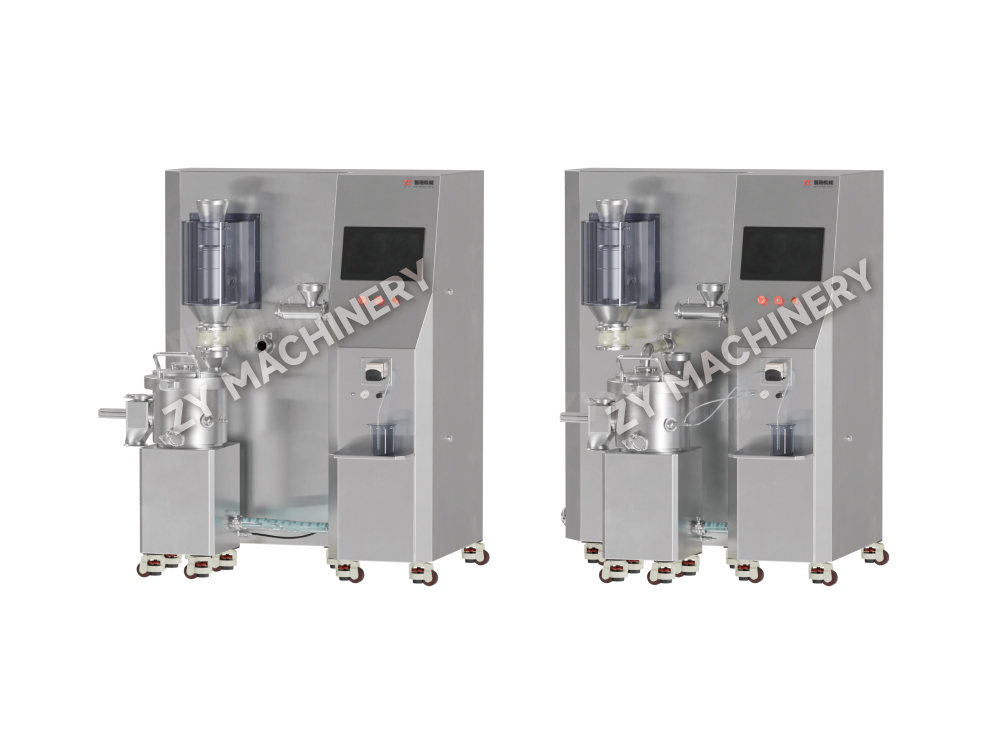
For laboratory unit equipment used in solid dosage development, continuity should not be evaluated only by whether several machines are connected. A useful integrated system must maintain a controlled material path from mixing and granulation through drying and sizing, while preserving traceable process conditions at each stage.
Practical checkpoints during equipment evaluation
- Material should move between unit operations with minimal manual exposure, reducing segregation, moisture variation, and transfer loss.
- The process should allow adjustment of critical parameters such as mixing time, binder addition rate, drying temperature, airflow, and sizing speed.
- Sampling points should be accessible without interrupting the full experimental route unnecessarily.
- Cleaning and product changeover should be considered from the beginning, especially for small-batch formulation screening.
A connected layout becomes valuable only when it produces repeatable process data and representative material quality. At ZY, we focus on creating laboratory routes that support meaningful scale-up decisions rather than isolated test results.
Why Material Transfer Has a Direct Impact on Experimental Accuracy
In small-scale powder processing, intermediate transfer can create larger deviations than expected. Materials with different particle sizes, densities, moisture levels, or flow characteristics may separate during discharge, temporary storage, or manual feeding into the next step. This can distort the interpretation of a formulation or process trial.
| Process Stage | Possible Transfer Risk | Constructive Design Consideration |
|---|---|---|
| Mixing to Granulation | Powder segregation before wetting | Short, controlled transfer route with consistent feeding |
| Granulation to Drying | Moisture drift or agglomerate deformation | Reduced waiting time and gentle discharge handling |
| Drying to Sizing | Uneven particle distribution or dust loss | Enclosed collection and stable sizing conditions |
Reducing unnecessary transfer does more than improve cleanliness. It helps ensure that the measured flowability, bulk density, moisture content, particle-size distribution, and downstream compressibility reflect the intended process rather than handling variation. We at ZY integrate equipment around the real movement of the material, not only the footprint of each machine.
Parameters Worth Recording Before Moving from Laboratory to Pilot Scale
An integrated laboratory trial is most useful when it produces a process record that can guide the next capacity level. Recording machine settings alone is insufficient; buyers should confirm that the equipment supports observation of material response throughout the full workflow.
| Unit Operation | Key Parameters to Record | What the Data Helps Verify |
|---|---|---|
| Mixing | Time, rotational speed, fill level, blend uniformity | Compatibility and distribution of small-batch ingredients |
| Wet Granulation | Binder amount, addition rate, granulation time, wet mass condition | Granule formation behavior and process endpoint |
| Drying | Inlet temperature, airflow, drying time, final moisture | Moisture control and consistency between batches |
| Sizing | Screen selection, rotor speed, yield, particle-size distribution | Granule suitability for downstream filling or compression |
The most valuable laboratory system is one that helps convert trial observations into transferable process parameters. ZY designs modular configurations around material properties, target capacity, and the intended downstream route.
Selecting the Right Mixing Route Within a Multi-Step Laboratory Workflow
Mixing performance influences every later operation. In pharmaceutical powders, poor distribution of active ingredients and excipients may create content uniformity risk. In food powders, inadequate blending can cause uneven flavor or nutrition distribution. In chemical additives, inconsistent dispersion may affect granulation stability or final product performance.
When a bin-type laboratory mixer is often suitable
- Dry powder blending is the main objective before granulation, filling, or further processing.
- Gentle tumbling is preferred for materials sensitive to excessive shear or particle damage.
- Frequent product changes require convenient container handling and efficient cleaning arrangements.
When wet mixing capability becomes more important
- The formulation requires liquid addition to create granules with controlled strength and particle structure.
- The development work must compare binder levels, wet mass endpoints, or granulation time windows.
- The granulated output needs to proceed directly into drying and sizing for a more representative process study.
A buyer should therefore consider not only mixing uniformity, but also how the selected mixer connects with granulation, drying, sizing, cleaning, and batch documentation. For laboratory unit equipment, matching the mixing method to material behavior and downstream requirements is more important than selecting equipment by capacity alone. At ZY, we use this process perspective to help customers assemble practical laboratory and pilot-scale solutions.