 English
 Español
 русский
 中文简体
中文简体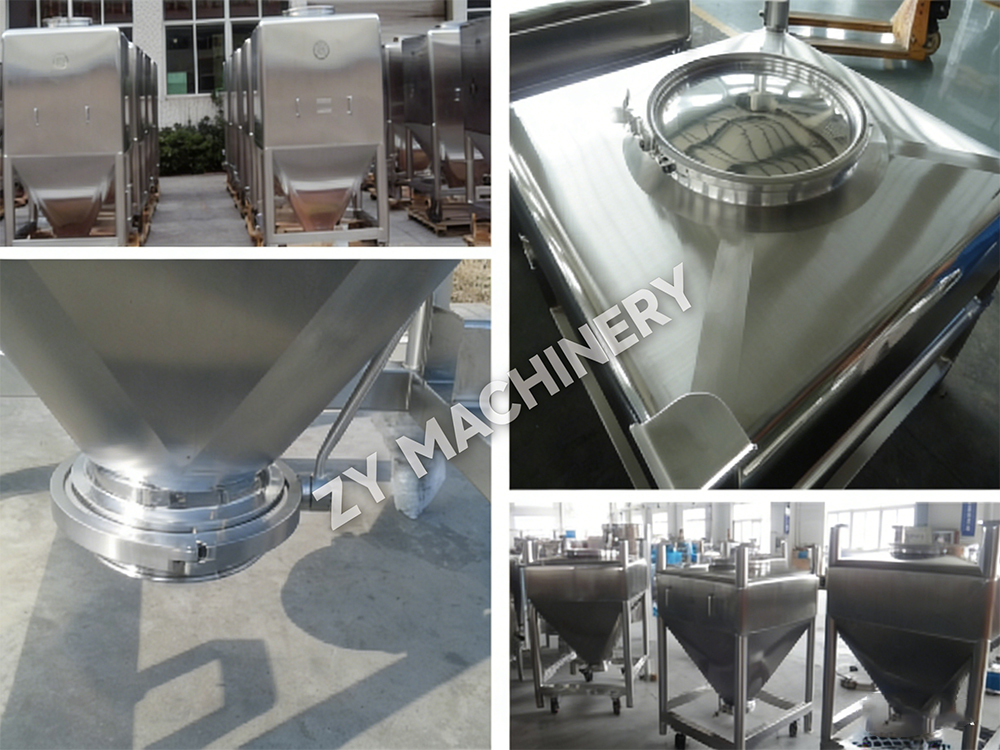
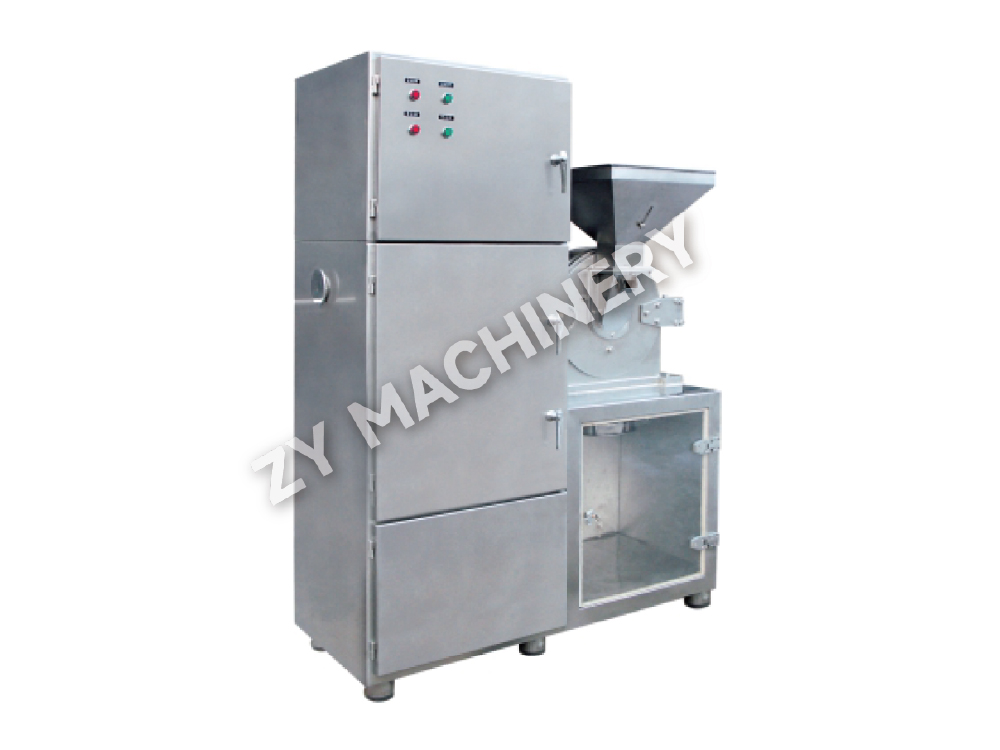
30B Dust-Collecting Crushing Machine
The 30B dust-collecting crushing machine is widely used for pulverizing var.....

Content
In a typical oral solid dose, the active pharmaceutical ingredient (API) may constitute less than 2% of the total tablet weight. Yet every single dose must contain exactly the same amount. The unit operation that makes this possible — and that directly impacts patient safety — is pharmaceutical mixing. A single sub-potent or super-potent tablet can lead to therapeutic failure or toxicity. Achieving a homogeneous blend is not just a process requirement; it is a regulatory mandate enforced by cGMP and USP <905> uniformity standards.
The challenge escalates quickly. As powders differ in particle size, density, shape, and surface energy, they naturally segregate. The mixing step must overcome all these forces to distribute API evenly throughout the excipient bulk. That demands more than just a rotating vessel. It requires an understanding of mixing mechanisms, powder behavior, equipment design, and scale-up principles. The following sections break down each layer, giving you a practical framework to design and troubleshoot pharmaceutical mixing processes.
Pharmaceutical mixing is a unit operation that treats two or more initially segregated components until each particle of one component lies in close contact with particles of the other components. In solid dosage forms, the primary goal is to create a random, uniform mixture that guarantees dose uniformity. The operation can also serve to induce a physical change — such as coating of carrier particles — or to promote a solid-state reaction. Regardless of the mechanism, the end point is always a blend where the API concentration at any sampling point deviates no more than an acceptable range from the target.
The importance of mixing extends far beyond the tablet press feed frame. A failed blend can produce an entire batch of out-of-specification tablets, leading to costly product recalls, regulatory actions, and — most critically — patient risk. When the API loading drops to 1-2% of the total formula weight, even slight inhomogeneity can cause large relative errors in individual tablet potency. That is why regulatory agencies scrutinize blend uniformity data during process validation and require ongoing monitoring through in-process controls. Mixing, in short, is where product quality is built; downstream operations can only preserve it.
All pharmaceutical powder blending can be described through three fundamental mechanisms: convective, shear, and diffusive mixing. Every mixer type deploys a different combination of these mechanisms, and the blend evolves through distinct phases where one mechanism may dominate. Knowing when each mechanism acts allows you to set mixing time and speed correctly.
Convective mixing moves large groups of particles from one region of the powder bed to another — often by a rotating blade, paddle, or the tumbling action of a bin. This macro-level redistribution provides rapid initial blending but leaves smaller-scale non-uniformities. Convection alone cannot achieve the final homogeneity required for pharmaceutical products.
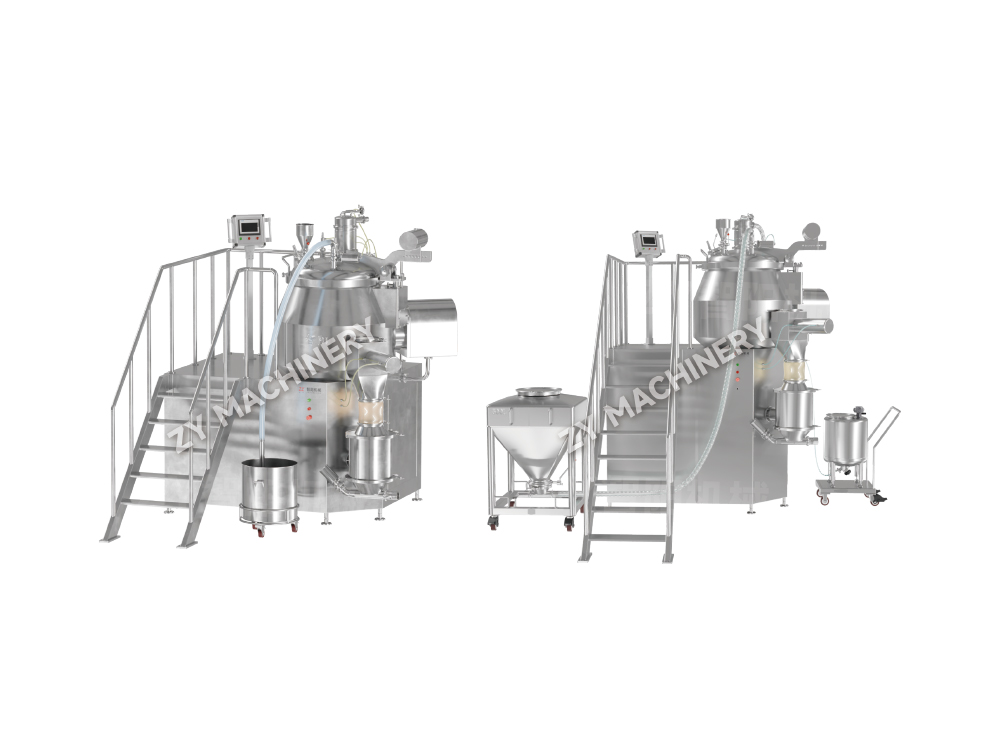
Shear mixing creates velocity gradients within the powder mass, typically through high-speed impellers or intensifier bars. Shear forces break down agglomerates and disperse fine API particles across the excipient surface. In high-shear granulators, shear mixing is intense and essential for distributing low-dose API before granulation.
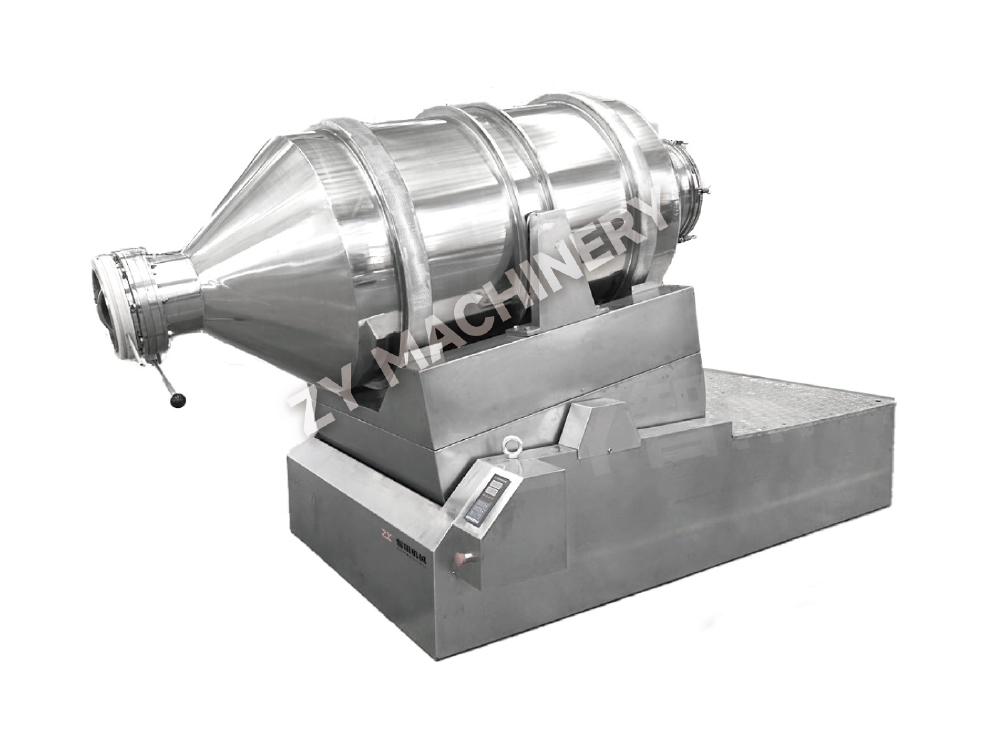
Diffusive mixing arises from the random motion of individual particles in a tumbling bed, such as inside a V-blender or bin blender. As particles cascade over one another, micro-mixing occurs, eliminating the small-scale concentration variations left by convection and shear. Diffusive mixing is slow but indispensable for reaching blend uniformity at the individual dose level.
In practice, a successful mixing cycle harnesses all three mechanisms: convection and shear drive the early fast-blending phase, while diffusion finishes the job, provided the powder properties do not promote segregation.
Even the most advanced mixer cannot compensate for unfavorable powder characteristics. Five powder properties directly determine how easily a blend can be made and how stable it remains after mixing. Characterizing these parameters upstream saves hours of troubleshooting later.
Particle size and size distribution. A wide particle size range is the single biggest driver of segregation. Fine particles tend to percolate through interstices and settle at the bottom, a phenomenon called sifting segregation. When the API and excipient have significantly different median sizes, achieving and maintaining a uniform mix becomes difficult. Sieve analysis or laser diffraction provides the distribution data needed to predict mixing behavior.
Particle shape. Irregular, needle-like, or plate-shaped particles interlock and flow poorly, while spherical particles flow freely but may segregate by size more easily. Microscopy combined with image analysis quantifies shape factors that correlate with mixing performance.
Particle density. Differences in true density between components can lead to separation under vibration or during tumbling. Higher-density particles tend to sink to the bottom, while lower-density particles rise to the top. Density mismatch is particularly problematic in V-blenders and bin blenders operated at low fill levels.
Powder flowability. A cohesive, poorly flowing powder resists the shear and diffusion needed for blending. The angle of repose, Carr’s compressibility index, and Hausner ratio are standard bench tests that classify powders from free-flowing to very cohesive. A compressibility index above 25% signals a strong tendency to agglomerate and segregate.
Electrostatic charge. Triboelectric charging during mixing can cause fine particles to stick to vessel walls or form stubborn lumps. High-shear mixing and low-humidity environments exacerbate charge build-up. Grounding the equipment and controlling ambient humidity are first-line mitigation measures; ionizing bars provide additional control in severe cases.
Pharmaceutical manufacturers deploy a wide range of mixer designs, each with a characteristic blend of convection, shear, and diffusion. The table below summarizes eight commonly used mixer types along with their dominant mechanism, typical batch size range, and primary suitability for different API loadings. The columns highlight where each design excels and where its inherent limitations demand process adjustments. A second decision matrix then maps API concentration directly to recommended mixer types, giving you a quick selection filter.
| Mixer Type | Dominant Mechanism | Typical Batch Size | Best for API Content | Advantages | Limitations |
|---|---|---|---|---|---|
| High-Shear Mixer/Granulator | Shear & Convection | 5–600 kg | <1%, 1–5% | Excellent dispersion of low-dose APIs; short mixing times; integrates with wet granulation. | Risk of over-heating; high energy input; may require post-mixing milling. |
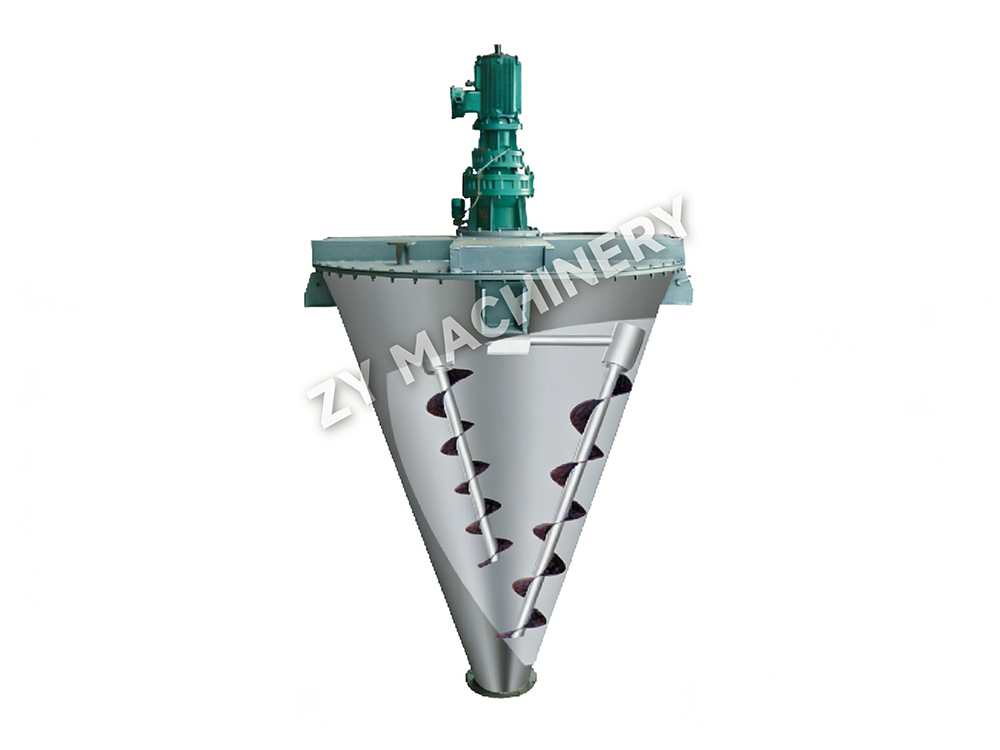
| V-Blender | Diffusion | 10–500 kg | 1–5%, >5% | Simple design; gentle mixing; easy to clean; cost-effective for medium to high-load APIs. | Poor for fine cohesive powders; segregation risk with wide size distribution; long blend times. |
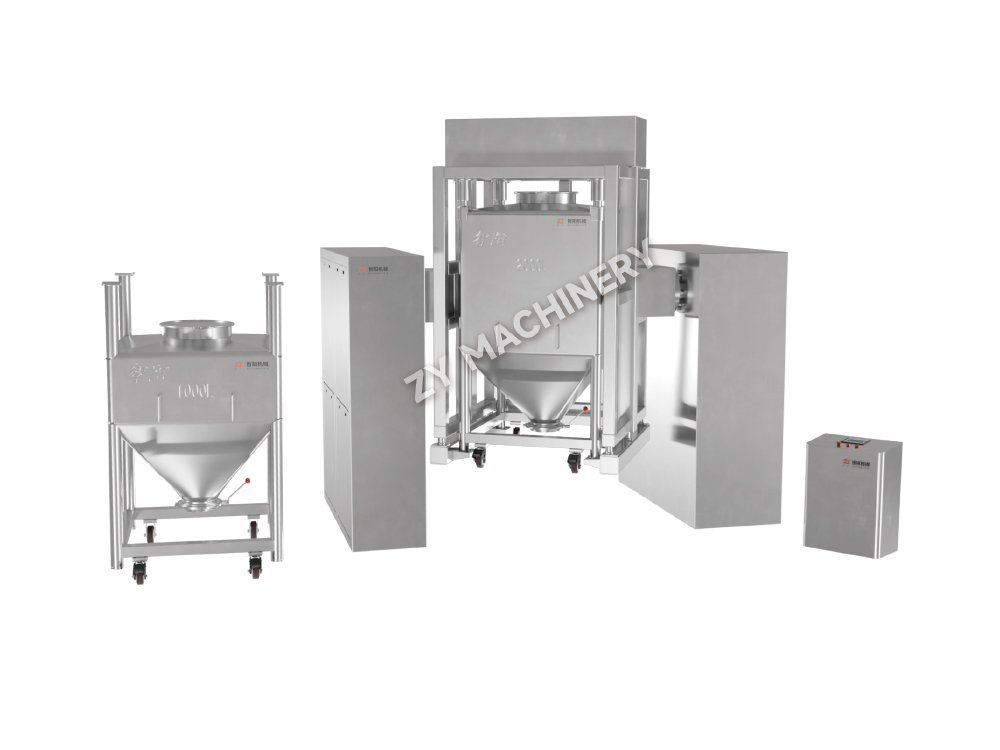
| Bin Blender (IBC) | Diffusion | 50–2000 kg | 1–5%, >5% | Enables closed container blending; reduces product transfer steps; ideal for medium to large batches. | Low shear—struggles with very low-dose APIs; requires free-flowing powders. |
| Double Cone Blender | Diffusion | 20–800 kg | 1–5%, >5% | Gentle tumbling action; simple construction; good for larger particles. | Not suited for sub-1% API unless pre-blended; dead zones possible near the trunnion. |
| Ribbon Blender | Convection | 50–3000 kg | 1–5%, >5% | Handles materials with wide particle size range; consistent discharge. | Difficult to clean fully; high shear at ribbon tips may cause particle damage; not optimal for ultra-low-dose blends. |
| Planetary Mixer | Convection & Shear | 5–200 kg | <1%, 1–5% | High mixing intensity; good for pastes and wet masses; uniform mixing without dead zones. | Limited scalability; typically used for granulation, not dry powder blending alone. |
| Fluidized Zone Mixer | Convection & Diffusion | 20–500 kg | 1–5% | Rapid mixing via fluidization; gentle on fragile granules; easy to automate. | Requires precise air flow control; not suitable for very cohesive materials; dust containment needs attention. |
| Continuous Twin-Screw Mixer | Shear & Convection | Continuous (kg/h) | <1%, 1–5% | Supports continuous manufacturing; scalable from lab to production; excellent for low-dose API. | Higher capital investment; requires feeder consistency; regulatory acceptance still maturing for solid dosage. |
When the primary selection driver is API concentration as a percentage of total formula weight, the decision matrix below gives a clear first cut. Choose a candidate mixer type from the matrix, then refine against batch size, containment needs, and cleaning requirements.
| API Content | Recommended Mixer Types | Key Considerations |
|---|---|---|
| < 1% by weight | High-Shear Mixer, Planetary Mixer, Continuous Twin-Screw Mixer | Require intense shear to deagglomerate API; geometric dilution or pre-blend step often needed. |
| 1–5% by weight | High-Shear Mixer, Bin Blender, Ribbon Blender, Fluidized Zone Mixer, Continuous Twin-Screw | Wide choice; select based on batch size, powder flow, and containment level. |
| > 5% by weight | V-Blender, Bin Blender, Double Cone Blender, Ribbon Blender | Diffusive mixers often sufficient; aggressive shear not required; focus on preventing segregation post-mixing. |
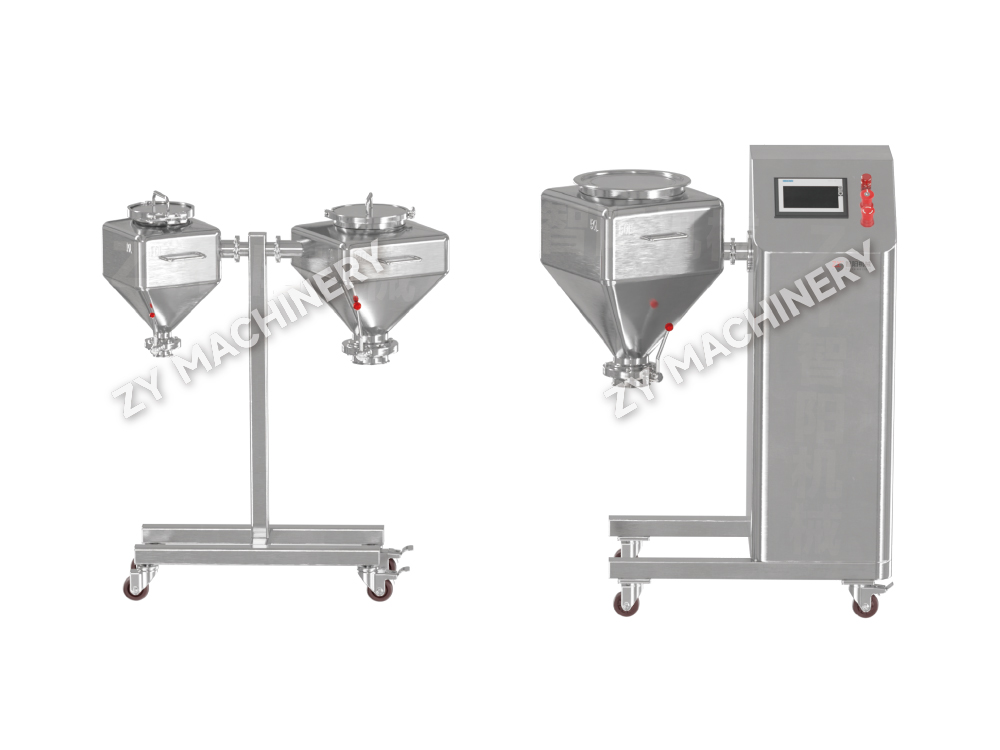
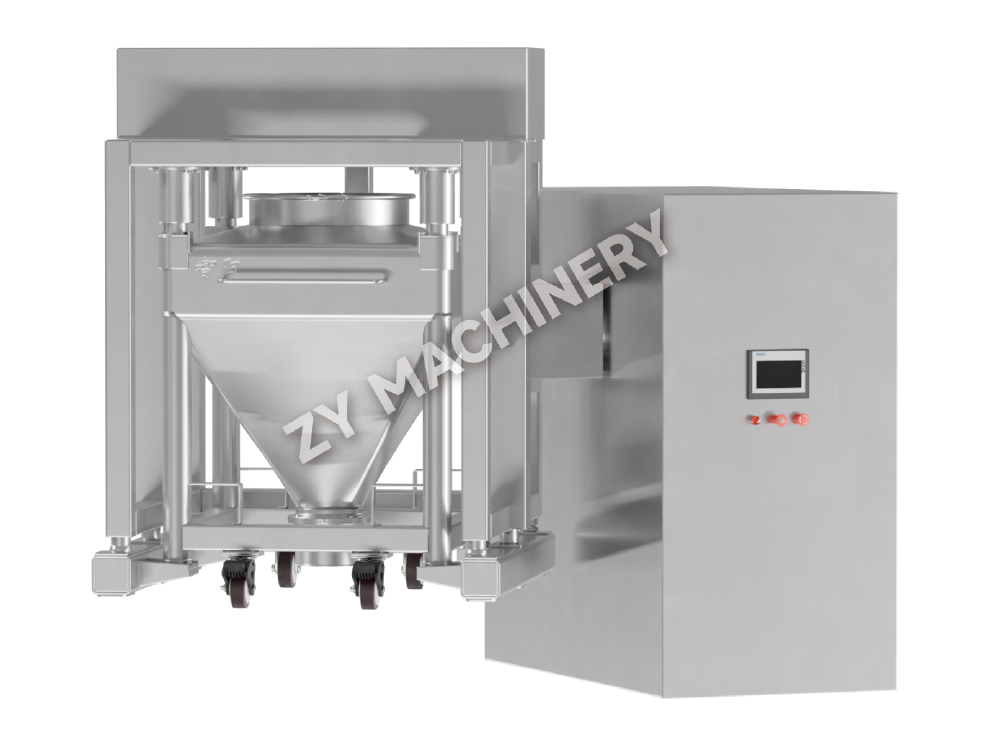
Bin blending systems have become the workhorse for IBC-based solid dose lines because they minimize product exposure and eliminate the need to transfer blend between vessels. Rotating mixing bin systems deliver diffusion-dominant mixing that preserves granule integrity while achieving RSD values well below the regulatory thresholds. To browse a full assortment of production-scale mixers, explore the complete mixing equipment range.
Scaling a mixing process without a systematic approach often leads to blend uniformity failures at pilot or commercial scale. A successful scale-up strategy maintains geometric similarity of the mixer, keeps the tip speed or rotational Froude number constant, and adjusts mixing time based on the relative size increase. The path from a 1-kg laboratory batch to a 300-kg production blend takes three deliberate steps.
Step 1: Laboratory characterization (1–5 kg). Use a small-scale mixer — a laboratory high-shear bowl or IBC-like mini blender — to establish the baseline relationship between mixing time, speed, and blend uniformity. Determine the minimum mixing time that achieves RSD ≤ 5% via stratified sampling. Record the fill level (typically 35–70% of vessel volume) because fill ratio affects powder flow patterns.
Step 2: Pilot confirmation (20–50 kg). Move to a geometrically similar pilot-scale mixer. Keep the tip speed (blade peripheral speed) or Froude number (for tumbling blenders) the same as the lab unit. Extend mixing time proportionally to the increase in vessel diameter if diffusion is the rate-limiting step; for convective mixers, a smaller time adjustment often suffices. Validate that the blend RSD remains under 5% with a 10-point sampling plan covering multiple locations.
Step 3: Production validation (200–1000+ kg). At full scale, confirm that the chosen parameters produce consistent uniformity batch after batch. Pay particular attention to potential dead zones near baffles, trunnions, or the discharge door. The acceptance criterion remains an RSD no greater than 5.0% for the active component, per USP <905>. A stratified sampling protocol with at least 10 sampling points, drawn with a suitable thief, ensures a representative assessment. During scale-up, partner with equipment suppliers that can provide laboratory-scale mixing equipment designed for straightforward scale-up to commercial mixers, reducing the number of variables to adjust.
Even with a well-chosen mixer and validated parameters, deviations happen. The most frequent mixing failures trace back to powder segregation, electrostatic agglomeration, over-mixing, dead zones, or uneven API distribution. Pinpointing the root cause quickly is half the solution. The table below summarizes each problem, its typical cause, and actionable corrective measures.
| Problem | Root Cause | Diagnosis | Solution |
|---|---|---|---|
| Segregation (Demixing) | Wide particle size distribution; density mismatch; vibration during transfer | Top-bottom assay gradient in bin; high RSD after blending | Use narrower excipient particle size ranges; match excipient density; minimize post-mixing handling; consider ordered mixing (carrier particles) |
| Electrostatic Agglomeration | Low humidity; high-shear dry mixing; non-conductive powders | Visible lumps; powder sticking to walls; poor uniformity | Increase RH to 40–60%; install static dissipating bars; add small amounts of fumed silica as glidant |
| Over-Mixing | Excessive blend time; shear forces degrading particles or inducing segregation | RSD increases after optimal mixing time; particle size reduction observed | Determine optimal mixing endpoint via blend uniformity sampling; use timer-controlled stop; avoid mixing beyond needed time |
| Dead Zones (Stagnant Regions) | Poor mixer design; fill level below minimum; inadequate baffle design | Unmixed powder pockets near walls, baffles, or discharge valve | Maintain fill level 35–70% of vessel volume; incorporate sweep bars or redesigned baffles; clean and inspect interior regularly |
| Uneven API Distribution | API agglomerates not broken down; incorrect loading order; insufficient shear for low-dose blends | High RSD at early time points; visible API specks | Pre-blend API with a portion of excipient (geometric dilution); use high-shear step for deagglomeration; extend mixing time moderately |
When the API’s potency requires an occupational exposure band (OEB) of 4 or 5, conventional open mixing operations become unacceptable. High-containment mixing systems protect operators from airborne particles while preventing cross-contamination of the product. The goal is to achieve containment levels below 1 µg/m³ (sometimes as low as nanogram levels) during charging, blending, sampling, and discharging.
High-containment mixer designs integrate several critical features. Isolator technology provides a sealed, negative-pressure environment around the mixer, with glove ports for operator access. Split butterfly valves enable dust-tight transfer of powders from containers to the mixer bowl or bin, eliminating open transfers between processes. Clean-in-place (CIP) systems integrated into the mixer allow washing without breaching containment, which is essential for product changeover in multiproduct facilities. The vessel itself may be equipped with a vacuum-rated housing, HEPA-filtered air inlets, and a reliable exhaust path that keeps the internal pressure lower than the room.
Validation of a high-containment mixing process must demonstrate both product quality and operator safety. Industrial hygiene monitoring using personal air sampling verifies that exposure remains below the established limit. Surface wipe tests confirm there is no residual contamination on external surfaces. Meanwhile, blend uniformity sampling continues as usual, often accessed through an isolator glove port with a validated thief. Investing in high-containment design at the mixing stage is far more cost-effective than retrofitting a production line after a safety incident reveals the gap.
Pharmaceutical mixing is a science of controlled chaos. The interplay of powder properties, mechanical forces, and process parameters must be understood and managed to produce every dose with confidence. A systematic approach avoids the common traps of over-reliance on a “standard” mixing time or copying a competitor’s recipe without considering your own material characteristics.
Five best practices form the core of a robust mixing operation:
When mixing works, it is invisible. Every tablet meets specification, every batch passes QA release, and patients receive the intended dose. That quiet consistency is the result of engineering choices made long before the first powder enters the hopper. By applying the mechanisms, selection logic, and scale-up discipline outlined here, you can build—and sustain—that level of reliability.
Want to stay up to date?
Contact us via the email address below.
Don't worry about spam. We hate it too!
Mobile Client

Video Account
Phone:+86-15161130178
Tel:+86-519-88674267
Email:czzy188@163.com
Phone:+86-15161132798
Email:zy@zy-drying.com

WeChat ID

Copyright 2026 Changzhou Zhiyang Machinery Equipment Co., Ltd. All Rights Reserved  Oral Solid Dosage Equipment Manufacturer