 English
 Español
 русский
 中文简体
中文简体NTD Bin Lifting and Feeding Machine
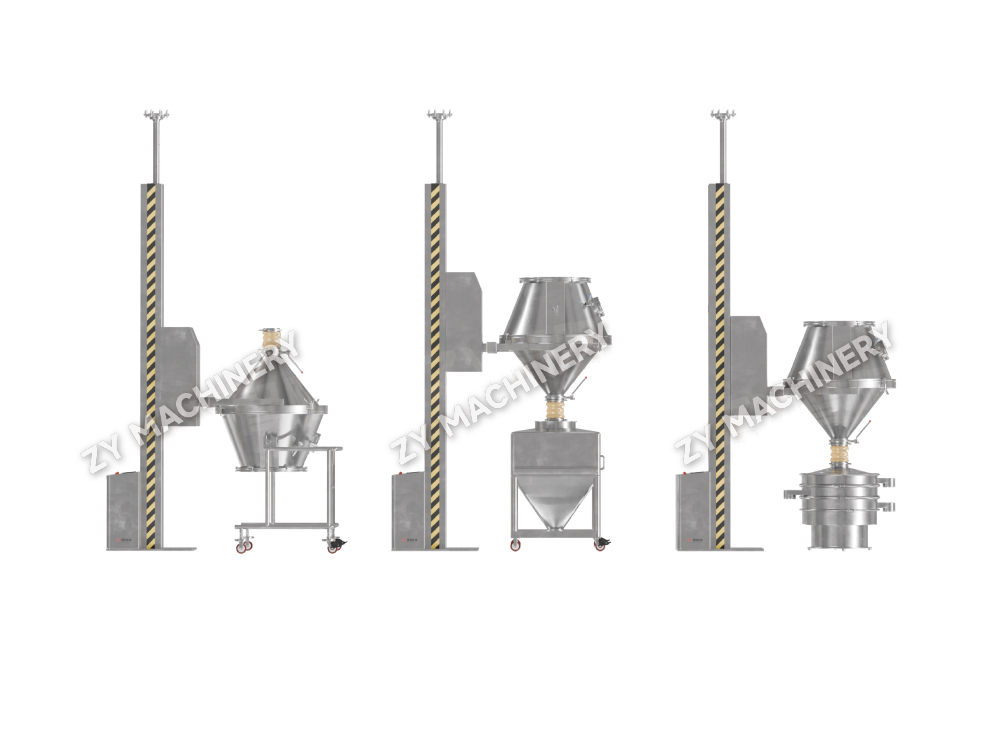
The NTD Bin Lifting and Feeding Machine is used for conveying and feeding s.....

Content
On most oral solid dosage lines, the biggest source of powder exposure and batch-to-batch variability is not the granulator, the dryer, or the tablet press. It is everything between them: the drum tipping, open scooping, and manual lifting that move material from one process step to the next. That is why conveying systems for the pharmaceutical industry should be specified with the same rigor as the core process machines. A well-engineered transfer chain keeps powder closed, protects operators, and preserves the blend uniformity your validation work depends on; a poorly chosen one erodes all three at once.
In a pharmaceutical plant, conveying describes two jobs that look similar but fail very differently. Upstream of compression, the challenge is moving powders, granules, and intermediate blends between unit operations: charging raw materials into mills, feeding granulators, transferring wet granulate to fluid bed dryers, and delivering final blends to the tablet press or capsule filler. Downstream, the challenge shifts to transporting tablets, capsules, and packaged products through inspection, sorting, and packaging. The upstream side carries the higher containment risk, because that is where product stands open to the room and where operators work closest to it.
Because of this split, many solid dosage equipment suppliers organize their machines around the process map rather than a loose catalogue. A coordinated transfer and conveying equipment series that covers vacuum feeders, bin lifters, charging stations, and dosing systems under one engineering logic is far easier to validate, clean, and maintain than a patchwork of machines assembled from unrelated sources. The table below maps the four technologies you will encounter most often to their duties and their main design concerns.
| System | What it moves | Typical position in the process | Primary design concern |
|---|---|---|---|
| Vacuum conveying | Powders and granules | Feeding granulators, mills, tablet presses, and capsule fillers from drums or bulk containers | Containment and preventing blend segregation during transfer |
| Bin and hopper lifting systems | Intermediate bins and IBCs | Linking granulation, drying, milling, mixing, and compression | Safe lifting of heavy loads and clean, repeatable interfaces |
| Dust-free charging stations | Raw powders from sacks and drums | Dispensing and initial charging at the start of the process | Operator dust exposure and cross-contamination control |
| Belt conveyors | Tablets, capsules, packaged goods | Inspection, sorting, and packaging lines | Hygienic surfaces and gentle handling of finished dosage forms |
Vacuum conveying has become the default answer for closed powder transfer, and the reasoning is straightforward. A vacuum feeder draws material through sealed tubing from a drum, container, or bulk bag directly into the receiving machine, so the powder never meets the room air. The practical benefits stack up quickly: operators stop lifting heavy drums to machine inlets, potent or irritating materials stay contained, the risk of airborne cross-contamination between batches drops sharply, and blends arrive at the tablet press without the segregation that open pouring causes.
When you evaluate a vacuum feeder, the details that matter are less about suction power and more about pharmaceutical fitness: filter media suited to your particle size distribution, quick-release clamps for disassembly, crevice-free contact surfaces, antistatic tubing for fine or low-humidity powders, and throughput matched to what the downstream machine actually consumes. Feeding a high-shear granulator, refilling a tablet press hopper mid-batch, and charging a mill each impose different duty cycles on the same machine, so size the system against your most demanding case rather than your average one.
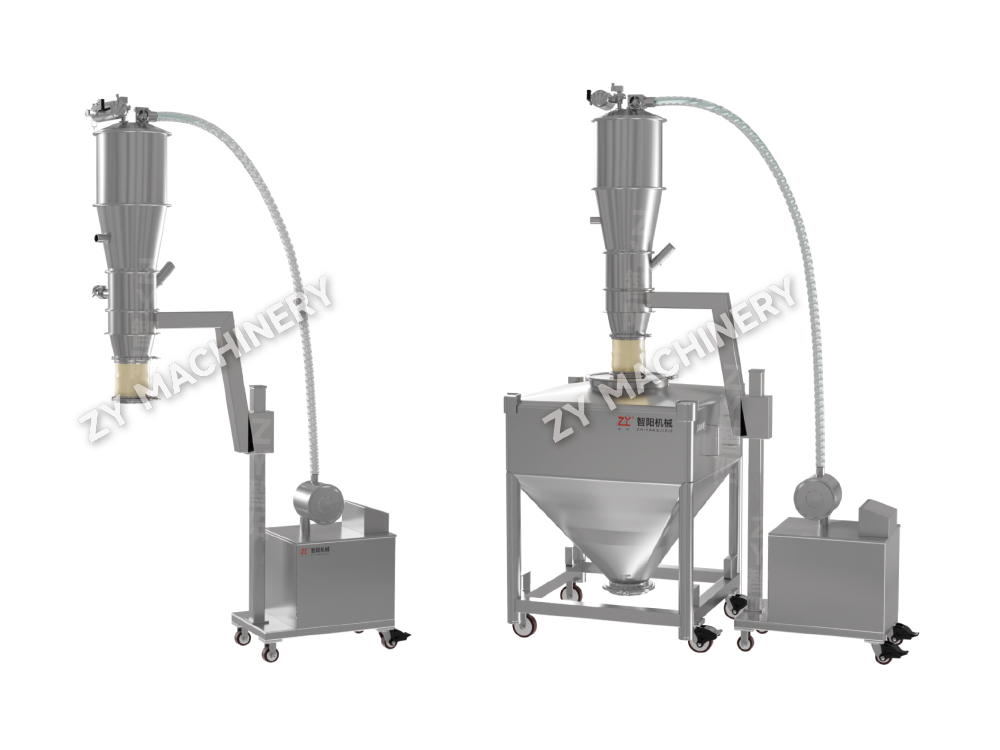 ZKS Vacuum Feeding Machine for Powder TransferThis vacuum conveyor moves powders and granules through sealed lines to hoppers, presses, and mixers with automatic level control. It suits the discussion of feeding duty cycles and sizing against the most demanding downstream case.View Product →
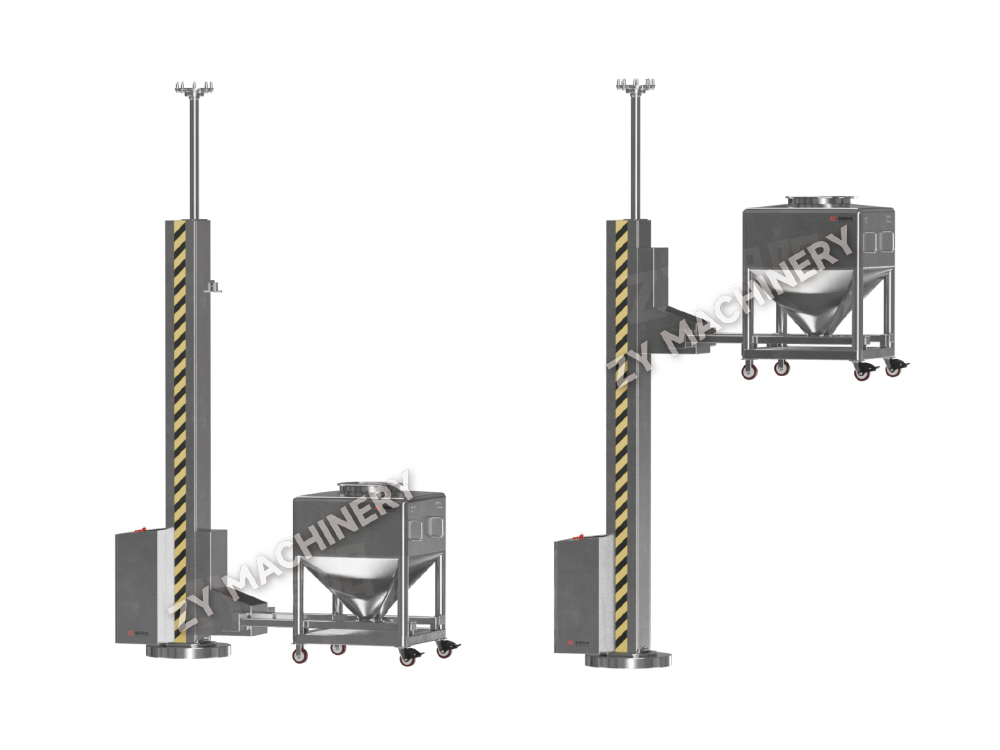
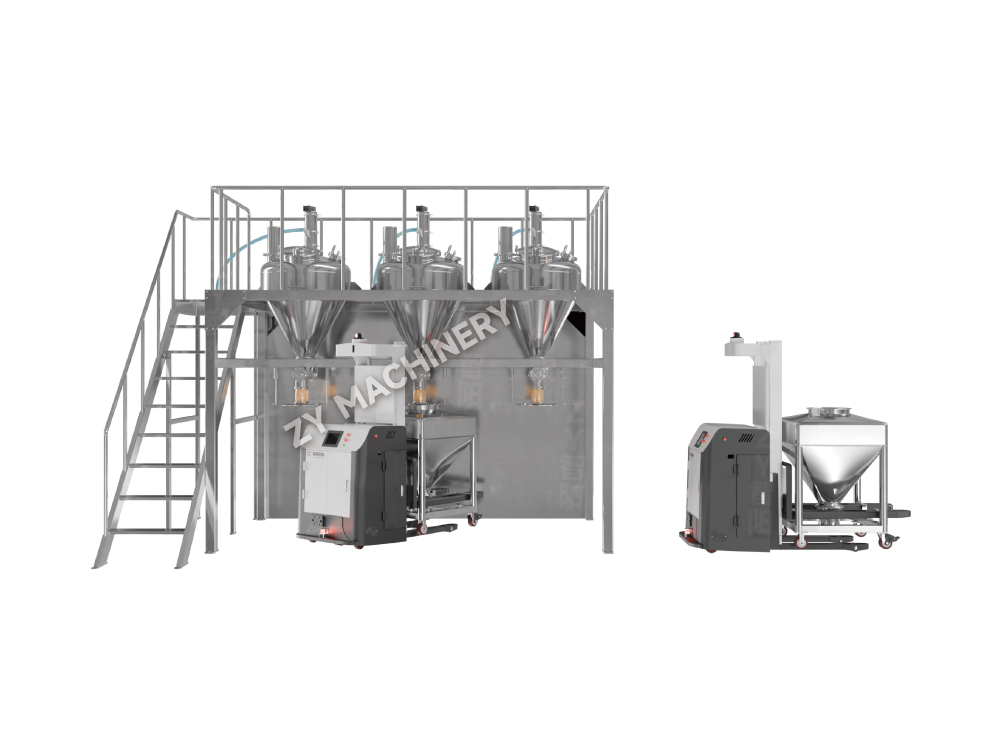
The second upstream job is moving intermediates, wet granulate, dried granule, and final blends, between unit operations, and this is where bin-based manufacturing has replaced the shovel. In a bin workflow, material stays in the same sealed container from the high-shear granulator to the fluid bed dryer to the sizing mill, which means fewer product-to-surface contacts to clean and far less transfer loss. Lifting and feeding machines complete the chain: a fixed lifting feeding machine raises a bin to a tablet press inlet, a mobile telescopic version serves several machines on one floor, and interfloor lifts handle plants where granulation and compression sit on different levels.
The details that decide whether this works in practice are unglamorous. Bin sizes must be consistent across every machine the bin visits, the lifting frame must reach both the bin docking height and the receiving inlet, and the mating interface must close cleanly every time without adapters or improvisation. Specify these interfaces as one family across the line, not machine by machine, and the transfer chain will behave like a single system instead of a collection of exceptions.
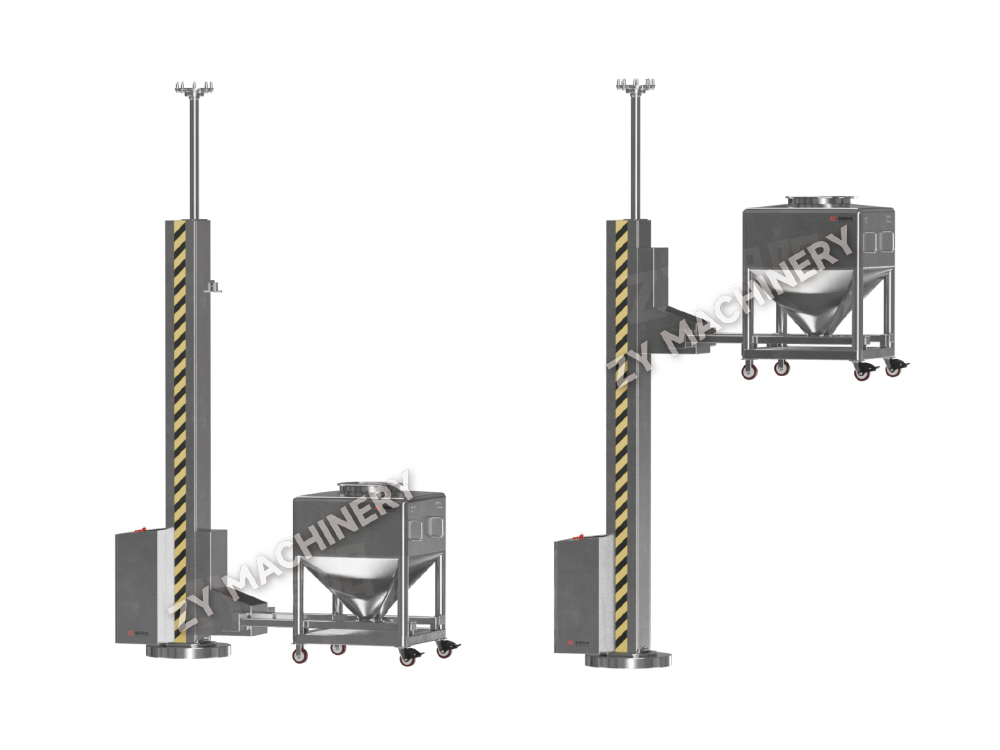 NTD Bin Lifting and Feeding MachineThis lift raises bins and docks them sealed onto mixers, tablet presses, and capsule fillers for enclosed transfer. It fits the point about consistent bin interfaces and clean mating connections across the transfer chain.View Product →
Cross-contamination control usually fails at the first open moment in the process, which is the moment raw material enters it. Emptying sacks and drums into a mill or granulator by hand releases a dust cloud that no downstream control can undo, and it puts the operator in direct contact with the material. Dust-free feeding stations address this at the source: material is charged through a controlled aperture with extraction running where the dust is actually generated, so the operator handles the container without the room handling the dust. Pairing the charging point with integrated weighing folds dispensing accuracy and containment into a single step, which shortens the dispensing route and removes one intermediate transfer entirely.
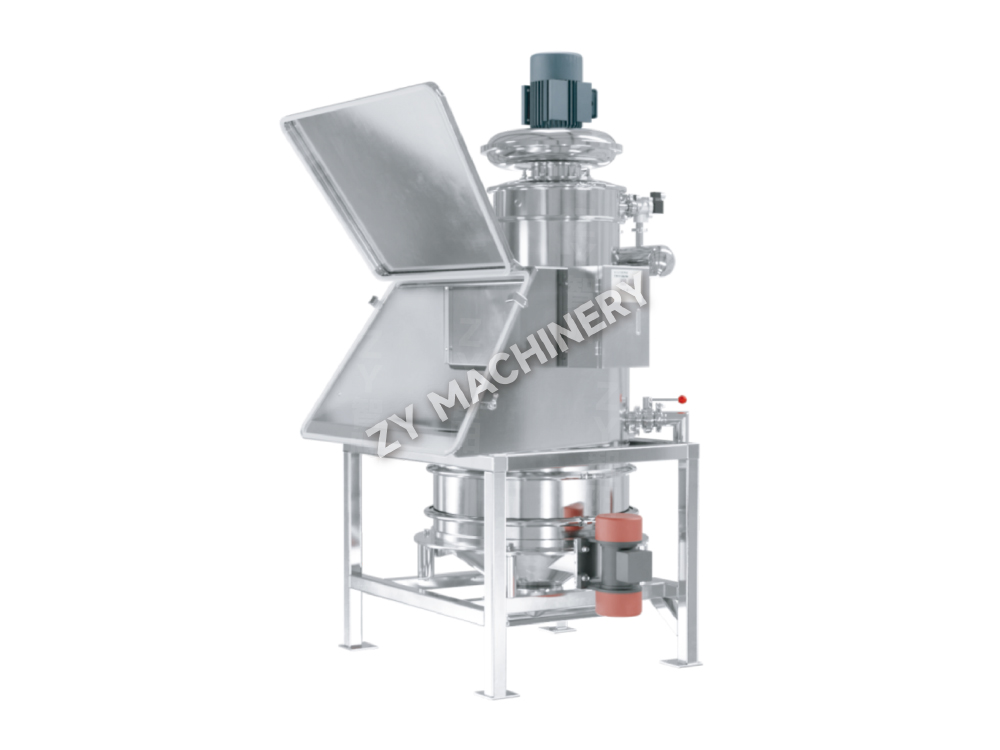 TLZ Dust-Free Feeding Station for Raw Material ChargingThis charging station captures dust at the opening point with unidirectional airflow, pulse-cleaned filters, and optional weighing-related functions, addressing the source-level containment and dispensing accuracy discussed in the surrounding text.View Product →
Whichever technologies you combine, a handful of criteria separate equipment that passes qualification smoothly from equipment that becomes a daily fight. Work through them before you buy:
Most conveying disappointments trace back to a few predictable decisions. The most common is choosing the transfer system last, after the process machines are locked in, which forces the conveying to fit whatever inlets and heights remain. Others include mixing bin sizes between machines, forgetting that every transfer point adds cleaning time to the batch changeover, and accepting equipment that arrives without the documentation your quality team needs for installation and operational qualification. None of these are technical problems; they are sequencing problems, cheap to avoid at the planning stage and expensive to correct after installation.
Treated as a process route rather than a purchase line, conveying becomes one of the highest-leverage upgrades available to a solid dosage plant: it compresses changeover time, removes the dustiest tasks from the operator's day, and protects the blend uniformity you have already paid to achieve. Start from your material characteristics and your material flow map, choose closed transfer wherever product would otherwise meet room air, and insist that every interface in the chain is designed to be cleaned. Those three decisions resolve most of the risk before the first quotation is ever written.
Want to stay up to date?
Contact us via the email address below.
Don't worry about spam. We hate it too!
Mobile Client

Video Account
Phone:+86-15161130178
Tel:+86-519-88674267
Email:czzy188@163.com
Phone:+86-15161132798
Email:zy@zy-drying.com

WeChat ID

Copyright 2026 Changzhou Zhiyang Machinery Equipment Co., Ltd. All Rights Reserved  Oral Solid Dosage Equipment Manufacturer