 English
 Español
 русский
 中文简体
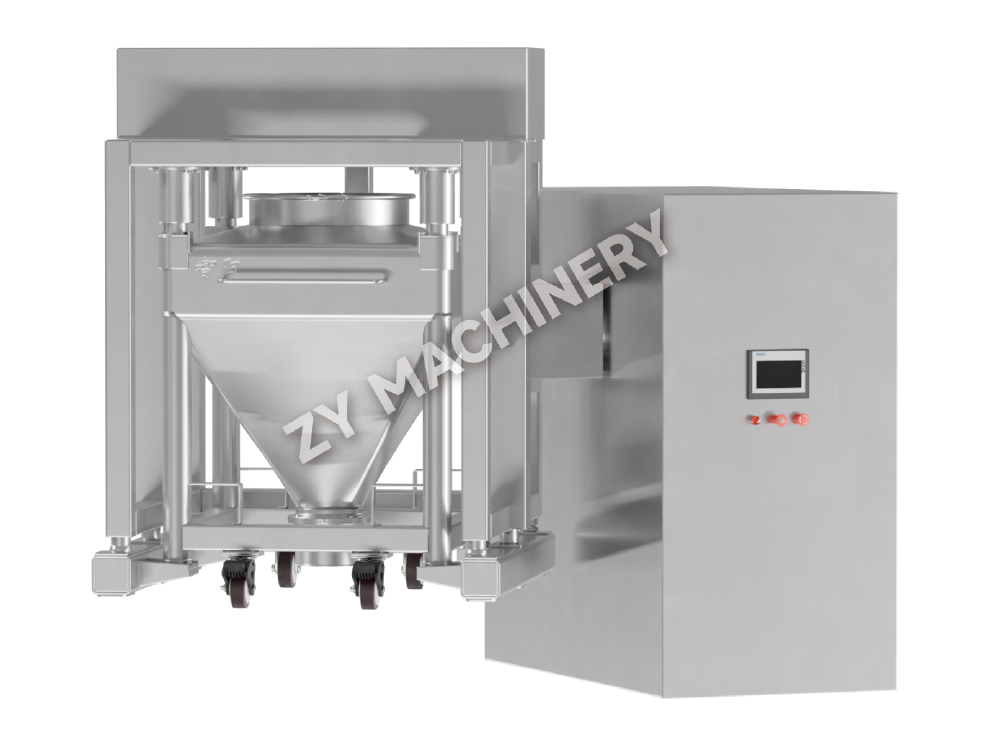
中文简体HDD Single-Arm Bin Automatic Lifting Mixer
The HDD Single-Arm Bin Automatic Lifting Mixer is designed to perform all o.....

Content
When a new tablet batch starts showing orange-peel texture on the surface, chipped edges after coating, or inconsistent gloss from drum to drum, the root cause is rarely the polymer alone. In my years working with solid-dose manufacturers, the pattern repeats: the process is blamed before the equipment is considered. Film coating for tablets is a combined system of core quality, spray pattern, bed motion, airflow, and thermal history. A machine that does not hold a stable spray zone or a uniform tablet bed will amplify every small variation in the coating suspension.
The conclusion I want to give first: a reliable film-coated tablet comes from a properly selected and configured coating machine, not from the coating formulation alone.
A film coating is a thin, uniform polymer-based layer applied to the surface of a tablet core. The suspension is sprayed onto the tablet bed while heated air is drawn through the pan. As the solvent evaporates, the polymer particles coalesce into a continuous film.
The functional reasons are straightforward. A film coat protects moisture-sensitive drugs from degradation, masks bitter or unpleasant tastes, improves swallowing ease, and allows the tablet to carry a distinctive color or logo. Beyond those basics, film coating enables modified release profiles such as enteric protection or sustained release, which would be impossible with an uncoated core.
For a manufacturer, the practical implication is that the coat is not merely cosmetic. It is a functional layer that must meet a defined dissolution, hardness, and appearance specification. This is why the equipment that applies it must produce a consistent coat thickness across every tablet in the batch.
Film coating is usually described in five steps. Each step has a direct effect on the quality of the final coat.
The core must be strong enough to survive tumbling in the coating pan without chipping or creating dust. A weak core will produce an uneven surface before the coating suspension is ever sprayed. Hardness, porosity, and surface roughness all matter. If the core is too soft, the problem will show up as edge damage or a rough final surface.
The polymer, plasticizer, colorant, and solvent are mixed to a defined viscosity and solids content. Insufficient mixing or undissolved particles will transfer directly to the tablet surface as pinholes or speckles. Batch-to-batch consistency in suspension can only be achieved with disciplined preparation and an inline sieve or screen.
This is where machine selection becomes decisive. The spray gun placement, spray rate, atomizing air pressure, and pan rotation speed need to be matched to the tablet core size and bed depth. A machine with a stable, adjustable spray wand and a perforated pan design will give more control than a basic unperforated coating pan.
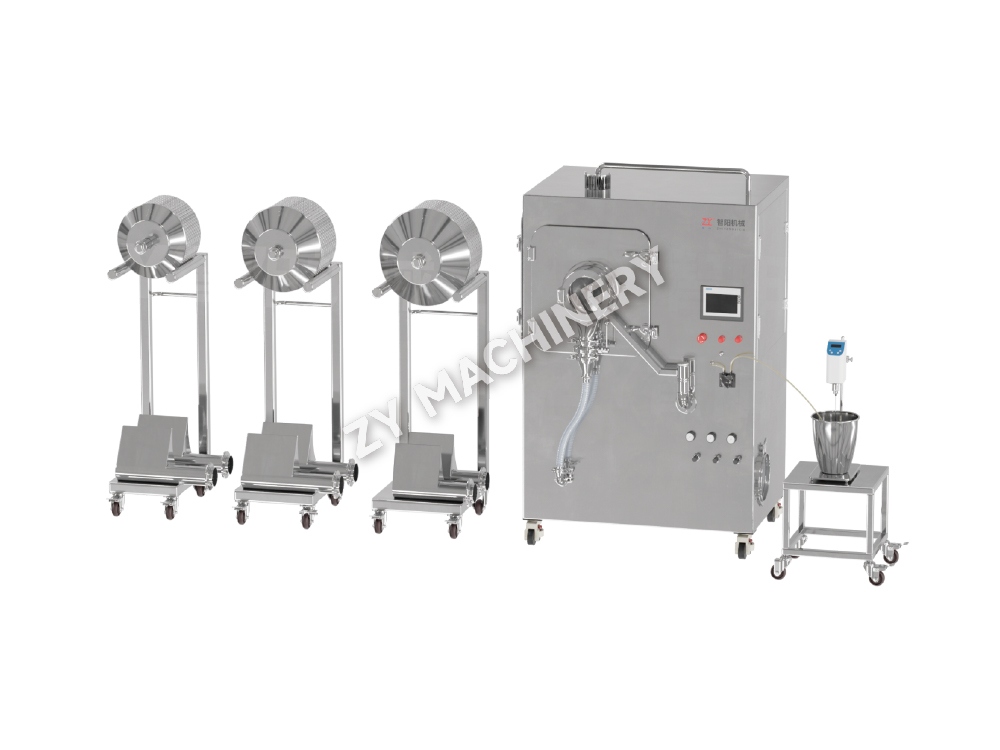
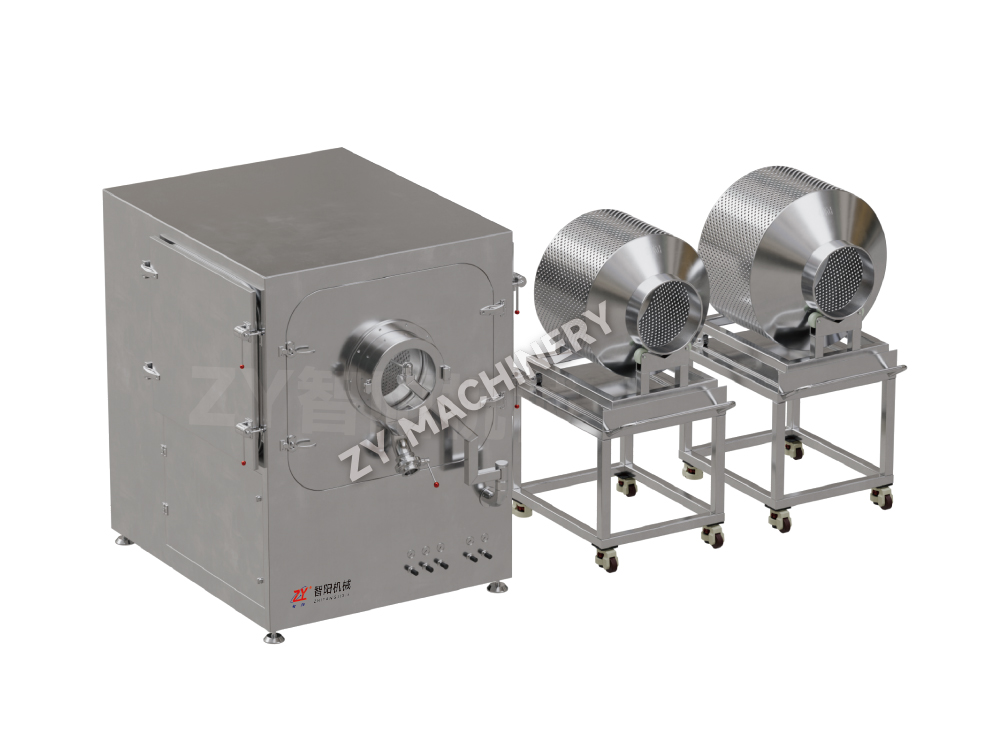 Perforated Pan Coating Machine for Uniform Film ApplicationThis high-efficiency coating machine features a perforated pan design that allows process air to pass through the tablet bed, ensuring even thermal distribution and reducing local overheating. Its adjustable spray wand and stable pan rotation provide precise control over coating parameters, making it suitable for various tablet core sizes and bed depths.View Product →
The BGB high-efficiency film coating machine is one example of a perforated pan design that allows process air to pass through the tablet bed. This creates a more even thermal profile and reduces the risk of local overheating or tackiness.
During the coating phase, the spray and drying cycles alternate or run simultaneously. The inlet air temperature, exhaust air temperature, and spray rate determine whether the tablets stay slightly wet and tacky or become over-dried and crack. The goal is to keep the tablet surface within a narrow temperature window while the polymer forms a continuous film.
After the last spray pass, the tablets are cooled while the pan continues to rotate. This stabilizes the film, prevents sticking, and allows the batch to be discharged without mechanical damage. A properly designed cooling step also reduces the time needed before the next quality check.
There are basically three families of coating equipment available today. The choice depends on the tablet size, batch size, and the level of process control you need.
| Equipment type | How it works | Best suited for | Key limitation |
|---|---|---|---|
| Conventional coating pan | Unperforated pan with a rotating drum and a spray applied to the tumbling bed. | Small-batch trials and simple film coatings where precise airflow control is not critical. | Poor heat transfer and longer process times; high risk of uneven coating when batch size increases. |
| Perforated pan coating machine | Air is drawn through the tablet bed via a perforated drum, giving rapid and uniform drying. | Production-scale pharmaceutical film coating with tight quality specifications. | Requires more rigorous spray and airflow control; a higher initial investment. |
| Fluidized bed coater | Tablets or pellets are suspended in an upward air stream while coating solution is sprayed from nozzles. | Coating of small pellets and granules, not standard tablets. | Not practical for large tablet cores; tablet motion can be erratic. |
For tablet film coating, the perforated pan design is the standard choice in regulated pharma environments because it offers predictable drying and reproducible coat thickness. If you are processing a high-potency compound or need to contain the process, you may also want to consider the containment options available with the coating machine.
Even with the correct machine, the process parameters define the difference between a smooth, uniform coat and a defective one. The following table summarizes the main parameters and what each one influences.
| Parameter | Typical influence | What to watch |
|---|---|---|
| Inlet air temperature | Controls drying rate and the film-forming process. | Too high causes film cracking and adhesion to the pan; too low leads to sticking. |
| Exhaust air temperature | Reflects the actual tablet bed temperature. | Use it as the real control point rather than the inlet temperature alone. |
| Spray rate | Determines the amount of coating liquid applied per unit time. | Too fast makes tablets stick together; too slow extends process time and risks over-drying. |
| Atomizing air pressure | Controls droplet size. | Excessive pressure creates fine droplets that dry before reaching the tablet; low pressure causes a rough surface. |
| Pan rotation speed | Drives tablet bed mixing and exposure to spray. | Too high causes tablet damage; too low leads to uneven coating. |
| Drying air volume | Removes solvent and stabilizes the film. | Insufficient airflow causes tackiness; excessive airflow can cause surface defects. |
In practice, these parameters are interdependent. A change in spray rate usually requires a change in air temperature and rotation speed to keep the bed in the same state. This is why an experienced operator and a controlled automation system matter much more than a high-end machine on its own.
When you are evaluating a tablet coating machine, the machine specification is only one part of the decision. In my experience, the following list captures the questions that actually determine success on the production floor.
One point that often gets overlooked is the interaction between coating and the upstream process. Tablet cores with a high moisture content or weak structure will cause problems that no coating machine can fix. This is one reason why I recommend reading the tablet manufacturing problems guide before you start your next coating validation.
When you are laying out a full production line, the coating suite also needs to be positioned so that materials flow smoothly from the tablet press into the coating pan and then to the final inspection area. The layout choices here are very site-specific, and the same material flow principles that affect upstream granulation should be applied to the coating stage.
The biggest challenge in film coating is not the production-scale machine. It is predictable scale-up from a 2 kg laboratory batch to a 200 kg production batch. A coating formulation developed on one type of equipment may not behave the same way on a different pan geometry. This is why a supplier that offers both a laboratory version and a production version of the same design can save you days of rework.
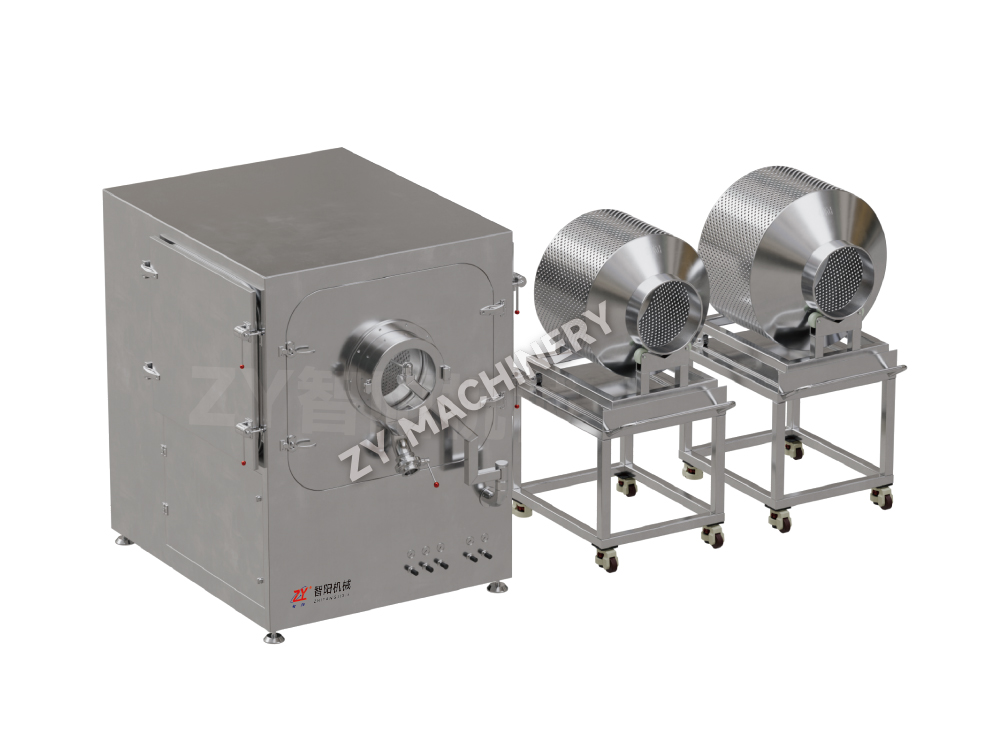
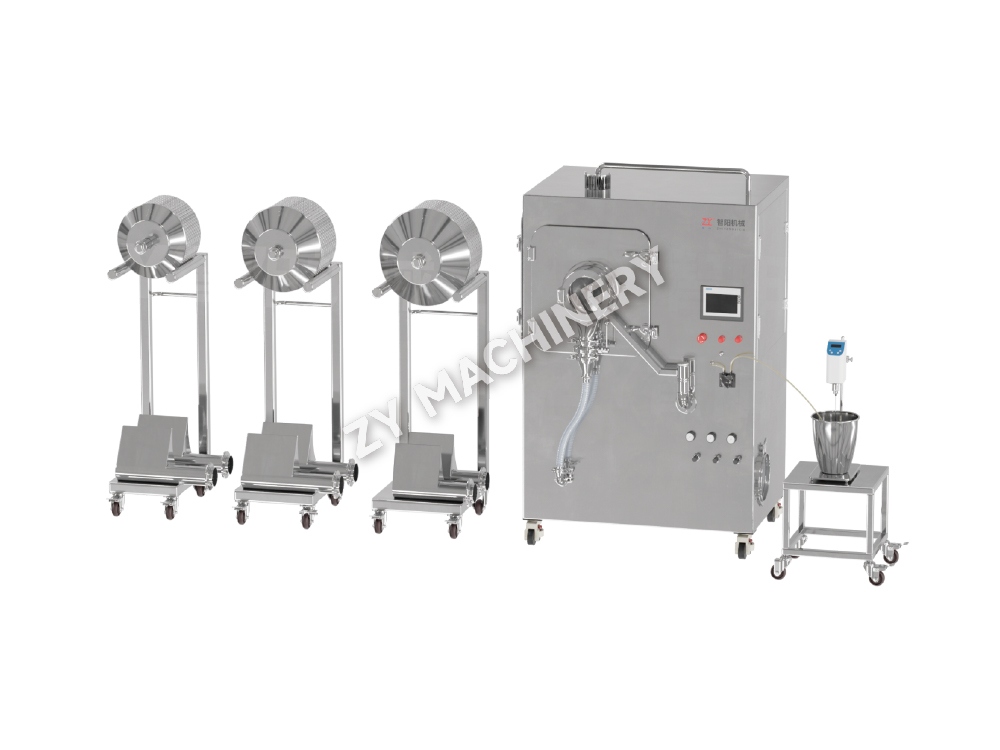 Laboratory Film Coating Machine for Scalable Process DevelopmentDesigned for lab-scale coating, this machine replicates the spray pattern, airflow, and bed movement of production systems. It enables reliable scale-up of process parameters from small batches to production volumes, minimizing rework and optimizing formulation development for tablets, pellets, and candies.View Product →
The BGB R&D high-efficiency film coating lab machine is designed to reproduce the same spray pattern, airflow, and bed movement as the production system. This means that process parameters developed at laboratory scale can be transferred with a much shorter iteration loop.
Before you commit to a coating machine, verify whether the supplier can demonstrate the route from lab to production with your actual tablet cores. That demonstration, more than any brochure, is the real test of an equipment partner.
Film coating for tablets will always require careful balance between the tablet core, the coating formulation, and the machine. But if you start with the right equipment choice, the tuning work becomes easier and the batch results become more repeatable. Ask the right questions, compare the process parameters, and treat the machine as part of the process rather than a standalone piece of metal.
Want to stay up to date?
Contact us via the email address below.
Don't worry about spam. We hate it too!
Mobile Client

Video Account
Phone:+86-15161130178
Tel:+86-519-88674267
Email:czzy188@163.com
Phone:+86-15161132798
Email:zy@zy-drying.com

WeChat ID

Copyright 2026 Changzhou Zhiyang Machinery Equipment Co., Ltd. All Rights Reserved  Oral Solid Dosage Equipment Manufacturer