 English
 Español
 русский
 中文简体
DLP R&D Multi-Functional Fluid-bed Granulation & Coating Lab Machine
The DLP R&D multi-functional fluidized bed machine integrates multiple .....

Content
Fluid bed granulation is the kind of unit operation that looks simple on a process flow diagram and then takes years to master on the production floor. Air is pushed up through a perforated plate, lifting a powder bed until the particles behave like a boiling liquid. A binder solution is sprayed into that turbulent cloud, and the same vessel that builds the granules dries them in place.
Mixing, agglomeration, and drying, three operations that would otherwise need three machines and two material transfers, happen inside one contained bowl. That is why fluid bed granulation became the default route to granules with good flow, a narrow particle size distribution, and predictable compressibility for tablets and capsules.
It is also why the process causes so much frustration. The bed only behaves well inside a fairly narrow window of air velocity, spray rate, and temperature. Push past it and you get either a collapsed bed or a bowl full of dust. This guide covers what happens inside the bowl, which parameters really move the result, how spray configuration shapes granule structure, and how to scale a formulation from a laboratory unit to a full production line.
Fluid bed granulation is a wet granulation route: a liquid binder sticks primary particles together into larger, denser agglomerates. The difference from high shear granulation lies in how energy enters the mass. In a high shear mixer, an impeller and chopper knead the wet mass mechanically. In a fluid bed, energy arrives as moving air and as atomized droplets, so the powder never sits still and is never kneaded.
The powder is fluidized and preheated, binder is atomized onto the moving particles, the liquid bridges are dried as the same air stream keeps flowing, and the granules leave the bowl dry enough to be sized and blended. Because the material never moves between vessels, there is no wet mass to transfer, no tray drying step, and far less operator exposure to the product.
Well-formed granules are roughly spherical, reasonably dense, and low in fines. They flow through a hopper without bridging, compress without capping, and disperse predictably. Those properties come from the balance between droplet size, spray rate, and drying capacity, not from the machine alone.
A batch normally follows six stages, and the transitions between them matter as much as the set points themselves.
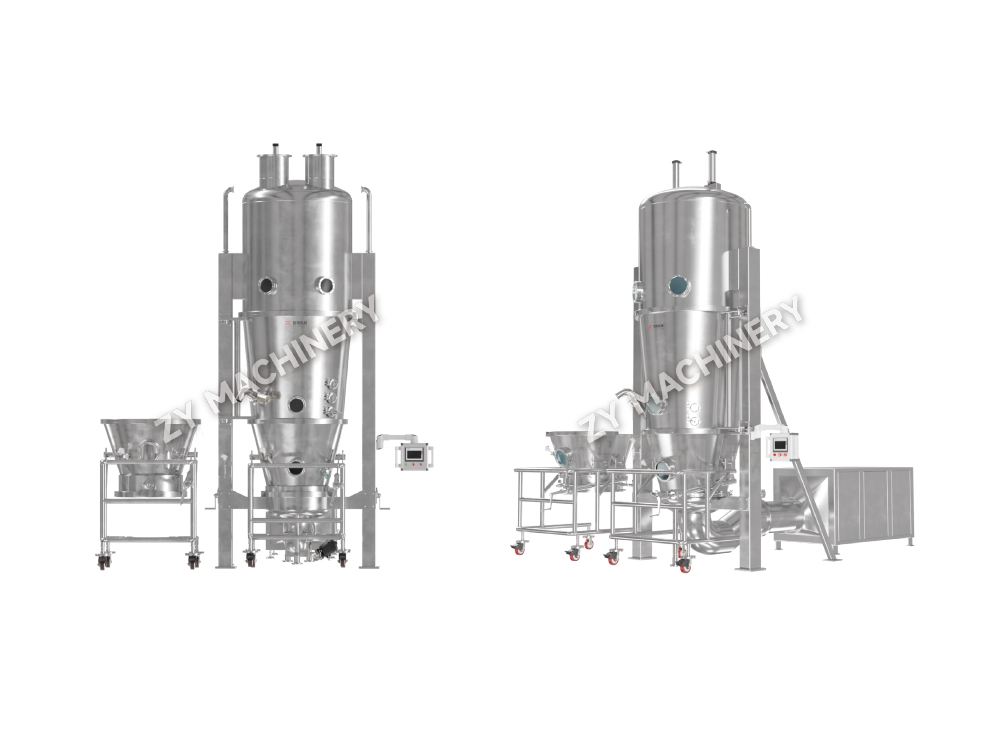
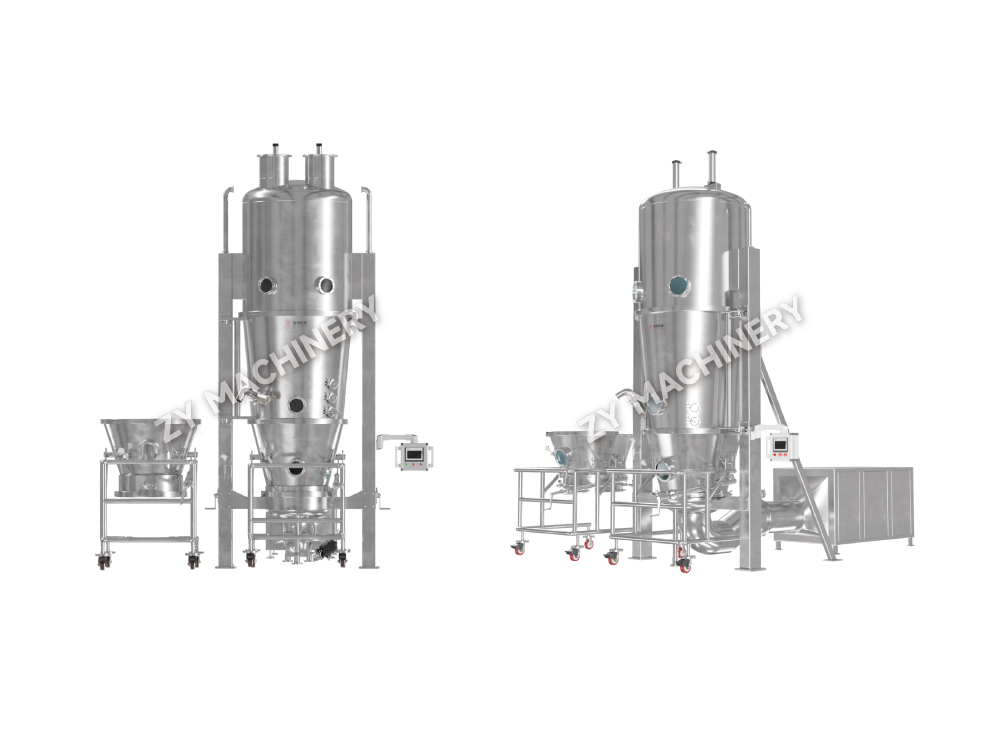
 FL-B Fluid-bed Granulation & Drying Machine (One-Step Granulator)The FL-B Fluidized Bed Granulation Drying Machine is designed for powder handling, granulation, drying, and “top-spray” coating operations in pharmaceutical, food, and...View Product →
The nozzle position relative to the powder bed changes both granule structure and the range of processes a single machine can run.
| Configuration | Spray direction | Typical use | Granule character |
|---|---|---|---|
| Top spray | Downward onto the fluidized bed | Granulation, drying, light coating | Porous, fast dissolving, moderate density |
| Bottom spray | Upward through a draft tube | Film coating, layering, pellet coating | Dense, uniform film, narrow size band |
| Tangential spray | Side entry onto a rotating disc | Pelletizing and spheronization | Spherical, high density, low porosity |
Top spray remains the workhorse of granulation. Bottom spray is chosen when the goal is a film around a particle rather than agglomeration, and tangential spray produces the densest, most spherical pellets. A single machine able to switch between these inserts covers a much wider product range.
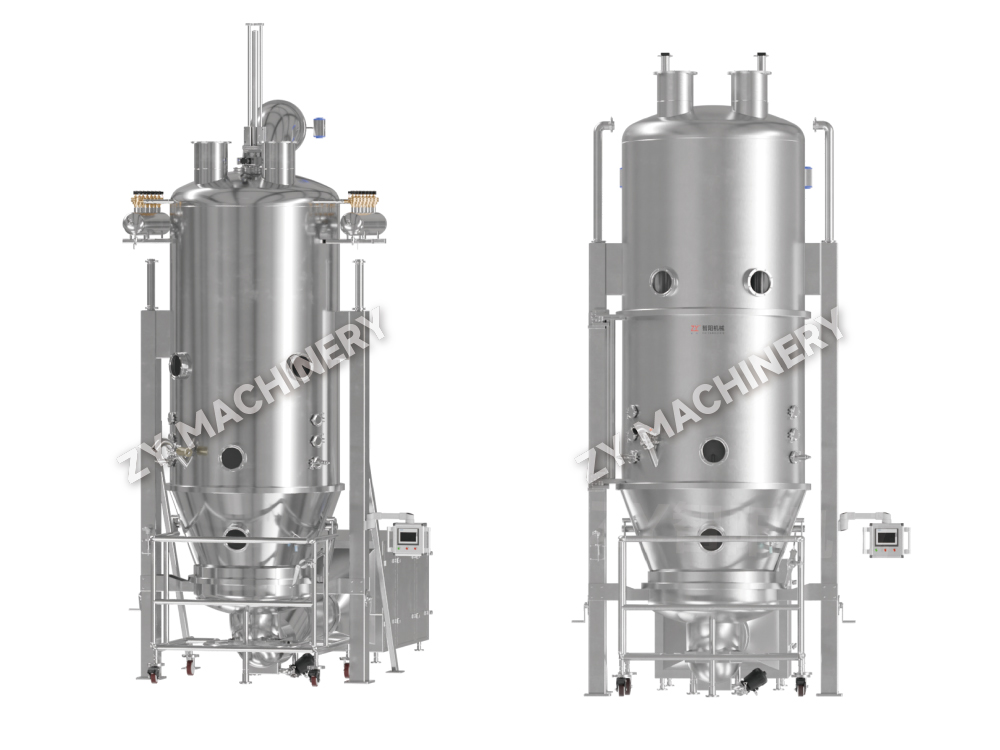
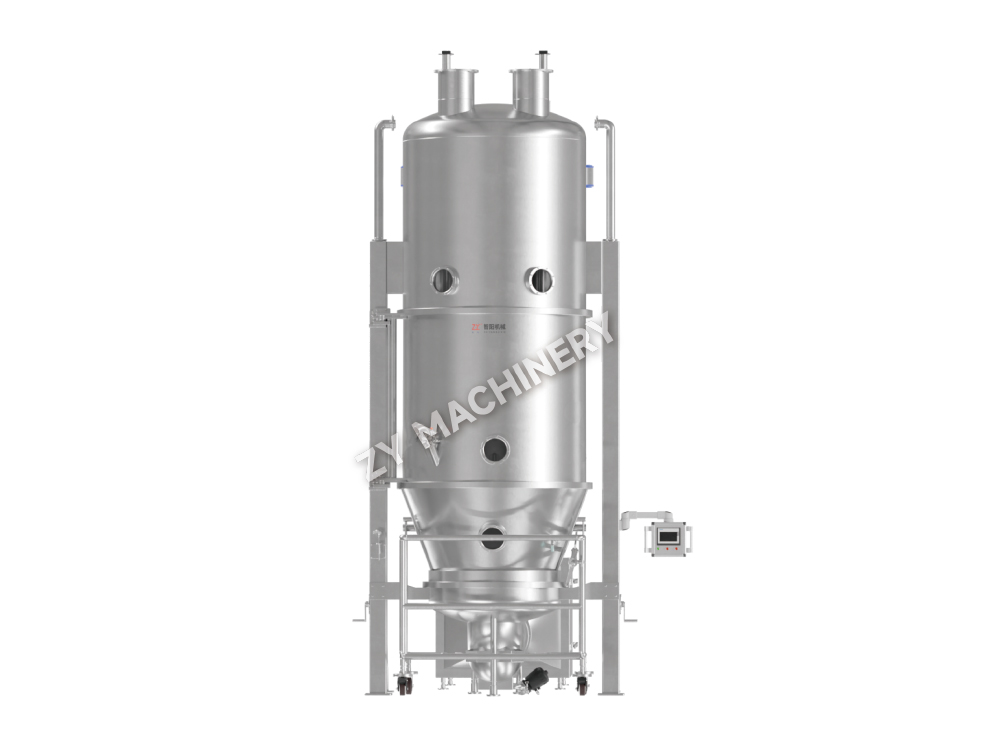
 DLP Multi-Functional Fluid-bed Granulator & Coating MachineThe DLP Multi-Functional Fluidized Bed Granulator Coating Machine combines spray drying, granulation, centrifugal micro-pellet formation, fluidized bed coating, and dr...View Product →
Operators often treat a recipe as a list of set points, yet most fluid bed problems come from the relationships between parameters rather than from one wrong number. These are the variables worth watching together.
Because these variables interact, changing one almost always requires adjusting another. Our note on fluid bed granulation process parameters and spray types walks through those relationships in more detail.
Scale-up is rarely a matter of multiplying every number by the same factor. A small bowl and a large bowl do not fluidize identically, so the reliable approach is to keep the dimensionless relationships as close as possible.
That means matching air velocity per unit of cross-sectional area rather than total air volume, holding spray flux per unit of bed surface constant, keeping product temperature on the same trajectory, and confirming that droplet size does not drift with a larger nozzle. Bowl geometry, the ratio of bed height to diameter, and the freeboard all influence how much material ends up on the filters instead of in the granules.
The safest route is to develop the process on laboratory equipment that mirrors the production unit's geometry and instrumentation, then confirm it at pilot scale before committing a full batch.
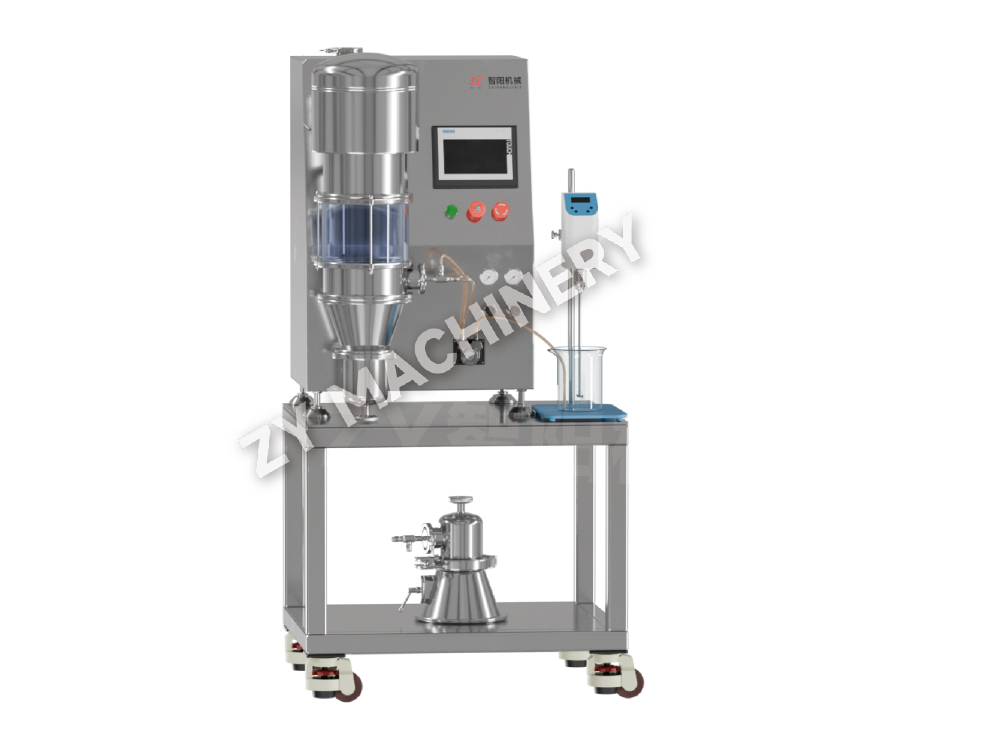
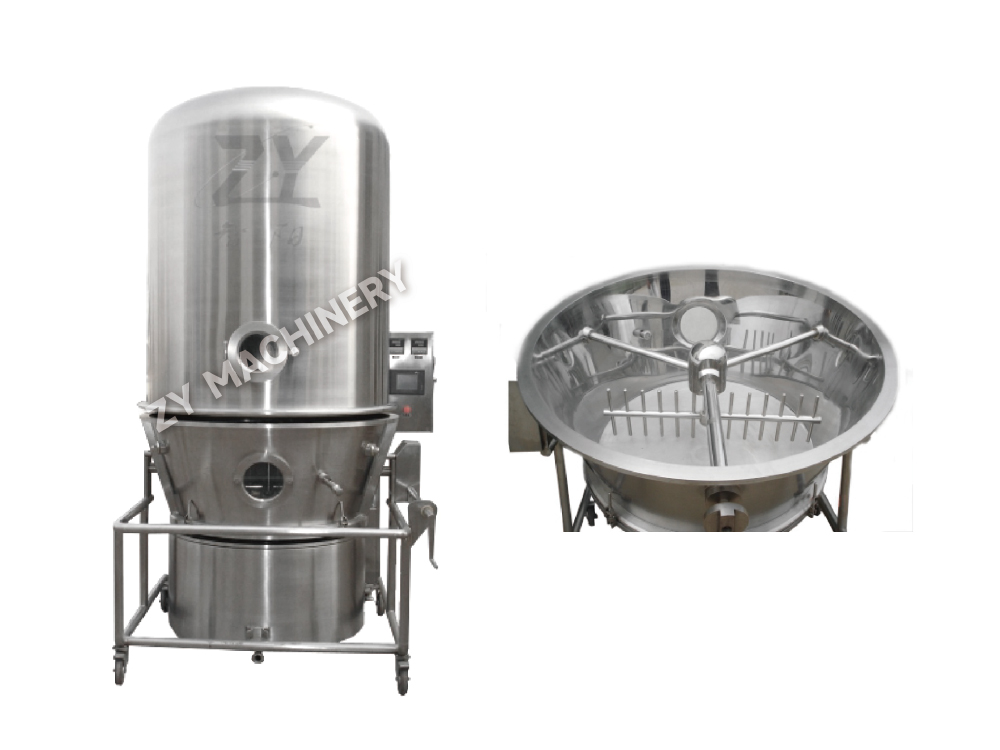
 DLP R&D Multi-Functional Fluid-bed Granulation & Coating Lab MachineThe DLP R D multi-functional fluidized bed machine integrates multiple functions, including top-spray, bottom-spray, and side-spray operations. It combines mixing, dry...View Product →
Most fluid bed problems announce themselves through the product temperature curve, the pressure drop across the filters, or simply the sound of the bowl.
| Symptom | Likely cause | First check |
|---|---|---|
| Bed collapses or stops moving | Air velocity too low or bed overloaded | Air volume, fill level, plate clearance |
| Excessive fines in the bowl | Droplets drying before contact | Atomization pressure, nozzle distance, air volume |
| Oversize lumps and agglomerates | Spray rate too high or droplets too large | Spray ramp, atomization pressure, binder viscosity |
| Product sticking to the wall | Moisture imbalance in the bed | Inlet temperature, spray rate, product temperature |
| Slow, uneven drying | Blocked filters or reduced effective airflow | Filter pressure drop, shaking cycle, plate condition |
| Batch-to-batch variation | Inconsistent nozzle setting or fill volume | Nozzle position, charging volume, calibration |
When specifying a fluid bed granulator, the useful questions concern the processes you intend to run for years, not only the batch you need next month.
Choosing equipment with those answers in hand usually costs less than retrofitting a machine specified for a narrower purpose.
Fluid bed granulation rewards preparation. The technology itself is well understood, so the difference between a robust process and a fragile one usually lies in how carefully the formulation, spray configuration, and air handling were matched to the material in the first place.
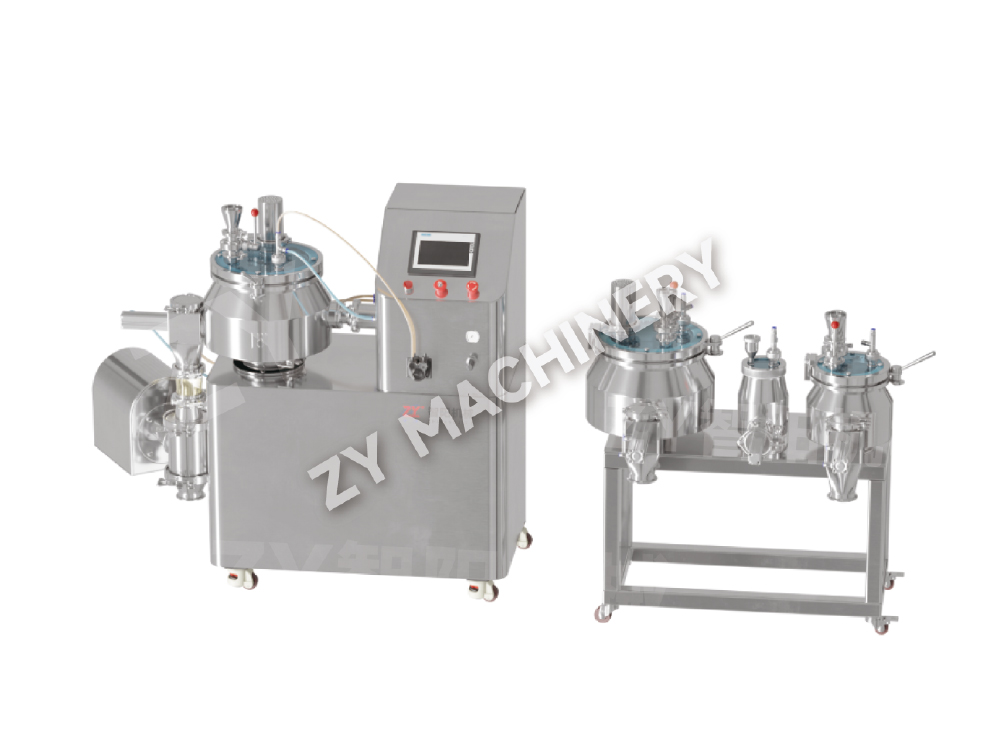
ZY Machinery has focused on powder processing and oral solid dosage equipment since 2010, building fluid bed granulators, dryers, coaters, mixers, and the transfer and cleaning equipment that links them into complete lines. The laboratory range mirrors the production range in geometry and instrumentation, so a formulation developed on a small bowl has a defined path to pilot and commercial scale. If you are working through a granulation project, share the material, the batch target, and the site conditions, and the team will propose a route that fits.
Explore the full equipment range on our homepage.
Want to stay up to date?
Contact us via the email address below.
Don't worry about spam. We hate it too!
Mobile Client

Video Account
Phone:+86-15161130178
Tel:+86-519-88674267
Email:czzy188@163.com
Phone:+86-15161132798
Email:zy@zy-drying.com

WeChat ID

Copyright 2026 Changzhou Zhiyang Machinery Equipment Co., Ltd. All Rights Reserved  Oral Solid Dosage Equipment Manufacturer