 English
 Español
 русский
 中文简体
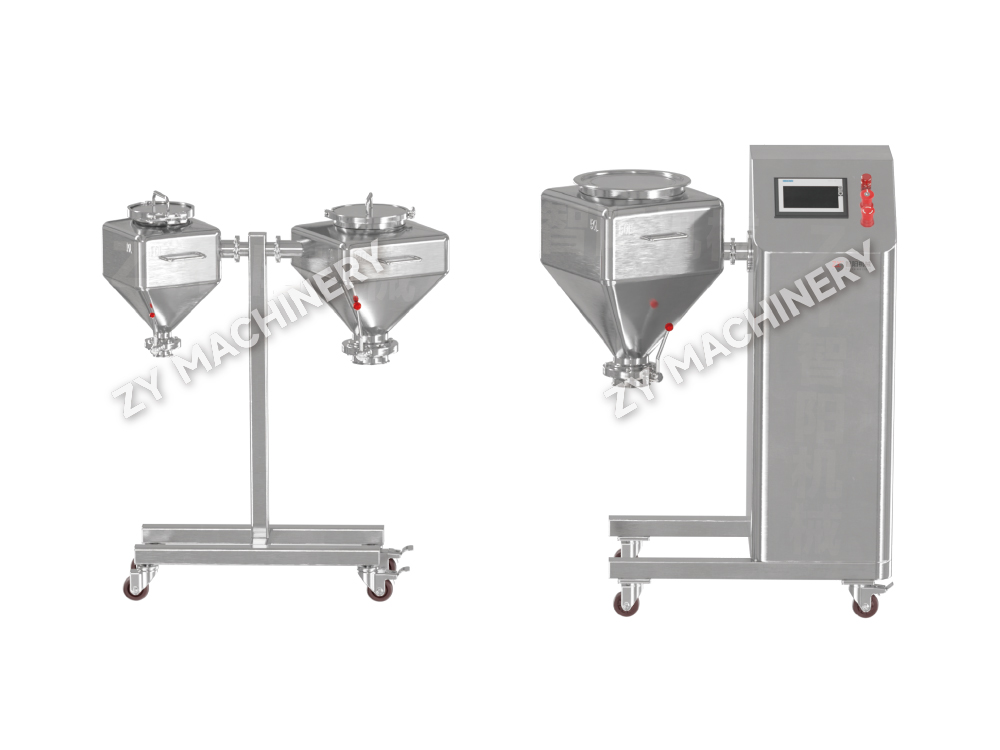
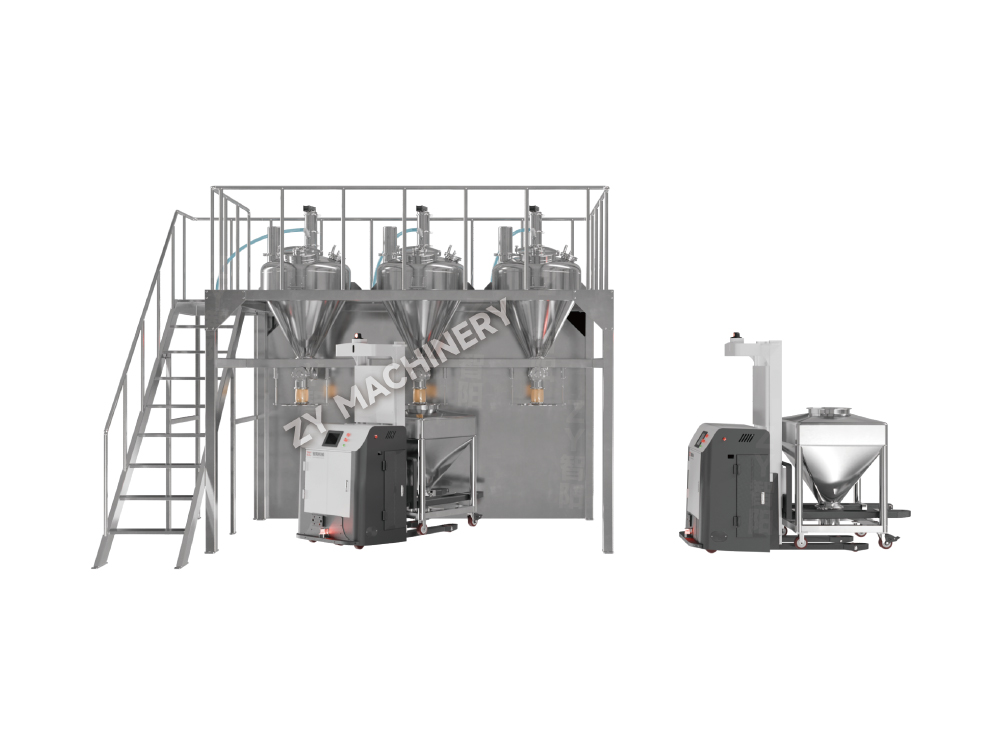
HSD R&D Lab Size Bin Blender
The HSD R&D lab size bin blender achieves efficient mixing of materials.....

Content
Particle size reduction is one of those unit operations that looks simple on paper: feed material in, smaller particles out. In pharmaceuticals, however, the consequences of getting it wrong are anything but simple. A mill or granulator can change dissolution profiles, blend uniformity, flowability, and even tablet strength. That is why choosing particle size reduction equipment for pharmaceuticals is less about buying a machine and more about matching a process to a product.
In solid dosage manufacturing, the goal is rarely "smaller is better." The goal is the right particle size distribution for the formulation and the process that follows. Sometimes that means gentle de-lumping before blending. Sometimes it means fine milling of a poorly soluble API. Sometimes it means sizing wet or dry granules before tableting. Each situation places different demands on the equipment, and those demands should drive the selection.
Particle size affects nearly every step of oral solid dosage production. A smaller API particle generally has a larger surface area, which can improve dissolution rate and bioavailability for poorly soluble drugs. In a blend, particle size and size distribution influence content uniformity, especially when the API is present at low percentages. During granulation and drying, the starting particle size can affect granule growth, drying behavior, and the final granule porosity. Before compression, particle size distribution influences flow, die filling, and the risk of capping or lamination.
At the same time, finer particles are not always desirable. Very fine powders can become cohesive, create dust, stick to equipment surfaces, and flow poorly in tablet presses. Heat-sensitive materials may degrade during milling if the equipment generates too much energy in the grinding zone. Highly potent compounds require containment to protect operators and prevent cross-contamination. These trade-offs are why pharmaceutical particle size reduction is a process development task, not just an equipment purchase.
Pharmaceutical manufacturers use a range of particle size reduction equipment, from coarse crushers to fine conical mills and screening machines. The equipment names may sound familiar from other industries, but pharmaceutical versions are designed with specific priorities: cleanability, containment, low heat generation, reproducible results, and compatibility with GMP requirements.
Coarse size reduction is often the first step. It may involve breaking up agglomerated raw materials, reducing large lumps before blending, or preparing material for a finer milling stage. In pharmaceutical production, dust control is critical. A dust-free crushing machine can reduce material while keeping fine particles contained, which helps protect operators and maintain a cleaner production environment.
 WF Dust-Free Crushing Machine for Pharmaceutical and Food ProcessingEnclosed crushing module for controlled dust reduction, with stainless steel heads, temperature monitoring, and optional cooling for pharmaceutical and food lines.View Product →
Equipment in this category is typically used for materials that do not require extremely fine grinding. The focus is on gentle size reduction, minimal heat, and easy access for cleaning between products.
Fine grinding is used when the formulation needs a smaller particle size to improve dissolution or to achieve a specific particle size distribution. Hammer mills, pin mills, and conical mills are common choices. Conical milling is especially popular in pharmaceutical solids because it combines size reduction with de-agglomeration, generates less heat than some high-speed mills, and produces a relatively narrow particle size distribution. The screen and impeller selection has a direct effect on the final particle size, throughput, and heat buildup.
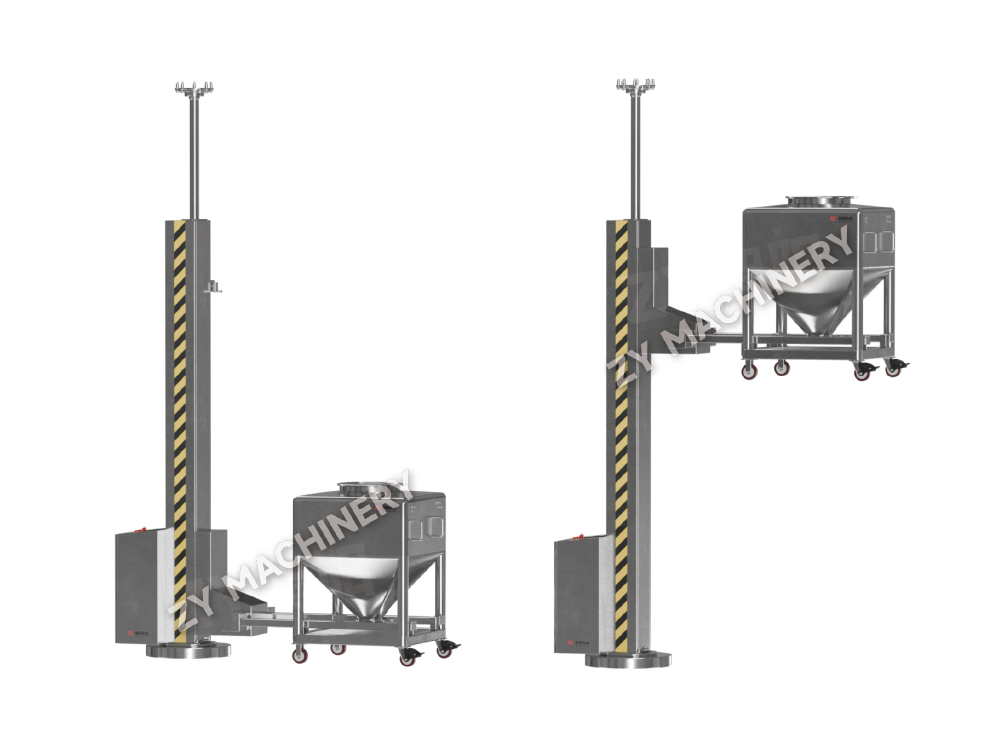
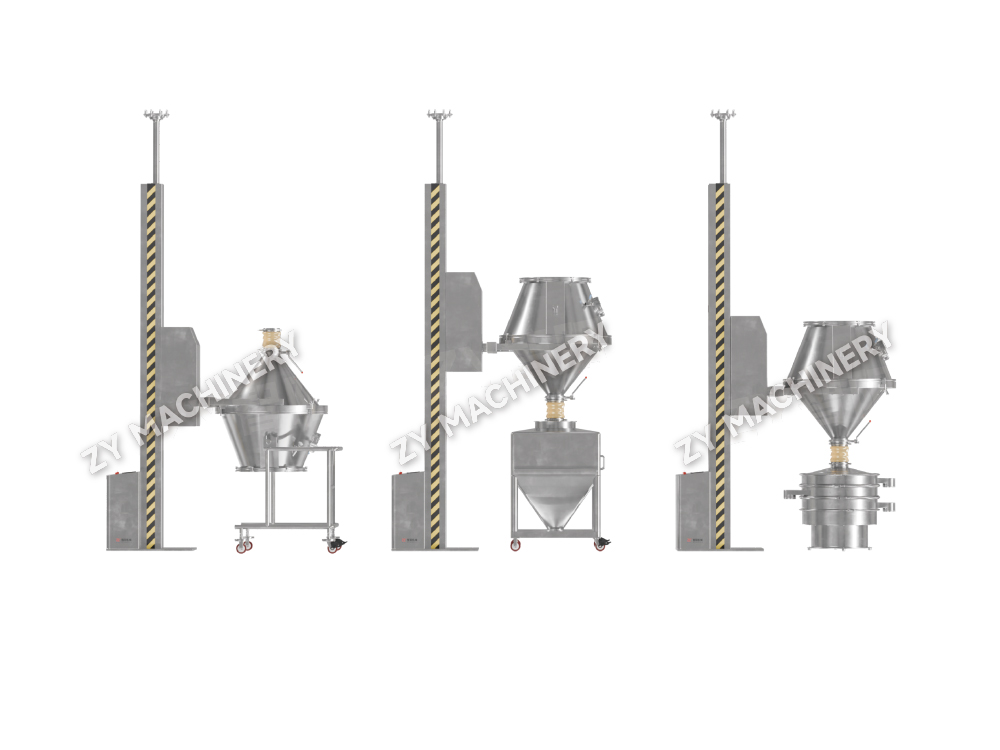
After wet or dry granulation, the material often needs to be sized before drying, blending, or compression. A milling and sizing machine can break down oversize granules, narrow the particle size distribution, and prepare a uniform feed for the tablet press. In a wet granulation line, the sizing step may be integrated with a hopper lifting and transfer system to reduce manual handling and dust exposure.
 GZL Rapid Milling and Granulating Machine for Granule SizingCombined milling and sizing unit for dry or wet granules, with low heat generation and adjustable rotor-screen gap for uniform particles.View Product →
For dry granulation, the sizing step after roller compaction is equally important. The goal is to produce granules with good flow and compressibility while minimizing fines that can cause segregation or sticking.
Screening is often paired with milling. A vibrating sieve or centrifugal sifter can remove oversized particles, break up soft lumps, and classify material into a consistent size range. Screening also protects downstream equipment from foreign objects and helps ensure that only material within specification reaches the next process step. You can read more about precision separation in this article on sieving machines and refining equipment.
 ZS Centrifugal Vibrating Sieve Machine for Continuous ScreeningContinuous centrifugal sifter for grading powders and granules, with steady discharge, easy cleaning, and use in milling and screening lines.View Product →
A centrifugal vibrating sieve is a practical option when you need reliable classification of powders and granules with easy cleaning and minimal maintenance.
| Equipment type | Working principle | Typical target size range | Common pharmaceutical use |
|---|---|---|---|
| Coarse crusher / de-lumping mill | Impact and compression | Coarse to medium | Breaking lumps, pre-milling, raw material preparation |
| Hammer mill | High-speed impact | Medium to fine | Milling APIs and excipients, de-agglomeration |
| Conical mill | Low-speed cutting and compression | Fine, narrow distribution | Wet and dry milling, granule sizing, heat-sensitive products |
| Vibrating sieve / sifter | Vibration and centrifugal force | Classification by screen aperture | Final sizing, lump removal, foreign object screening |
No single mill works well for every pharmaceutical powder. The material itself often decides which equipment can deliver a stable, reproducible result. Before selecting a particle size reduction machine, it helps to review the following material characteristics:
A useful rule of thumb is to test the material in a laboratory or pilot-scale mill before committing to production equipment. Small-scale trials reveal how the product behaves, what screen or impeller works best, and whether heat, dust, or static electricity will be a problem. The results also provide a baseline for scaling up.
In pharmaceutical manufacturing, particle size reduction equipment must do more than reduce particles. It must support containment, cleaning validation, and GMP compliance. Open milling systems may be acceptable for low-potency, non-hazardous materials, but high-potency APIs and highly active compounds usually require enclosed designs. A contained mill may include glove ports, continuous liner systems, or integrated transfer interfaces that connect to the next process step without exposing operators to dust.
Cleaning is another critical factor. Equipment should be designed with smooth surfaces, minimal dead corners, and easy access to the milling chamber, screen, and impeller. For multi-product facilities, cleaning validation is not optional. The equipment must allow reliable, repeatable cleaning so that cross-contamination risks are controlled. Related guidance on CIP and cleaning validation can help teams plan equipment selection with those requirements in mind.
Material of construction also matters. Product contact parts are typically stainless steel, with surface finishes selected according to the product and cleaning method. Non-product-contact parts should be easy to wipe down and resistant to cleaning agents. When a mill is part of a larger solid dosage line, its design should consider how it connects to feeding, discharge, and dust extraction systems.
Particle size reduction is rarely a standalone operation. It sits between material handling, blending, granulation, drying, and tableting or encapsulation. If the mill is selected in isolation, it may create problems upstream or downstream. For example, a mill that produces too many fines can cause flow problems in the tablet press, while a mill that generates heat can alter a moisture-sensitive formulation.
A process-driven approach looks at the whole line. How will material be fed into the mill? Will it be manually loaded, vacuum transferred, or lifted by a bin system? How will the milled product be discharged and transferred to the next step? What level of dust control is required? How will the equipment be cleaned, and how often? Answering these questions early helps avoid rework later.
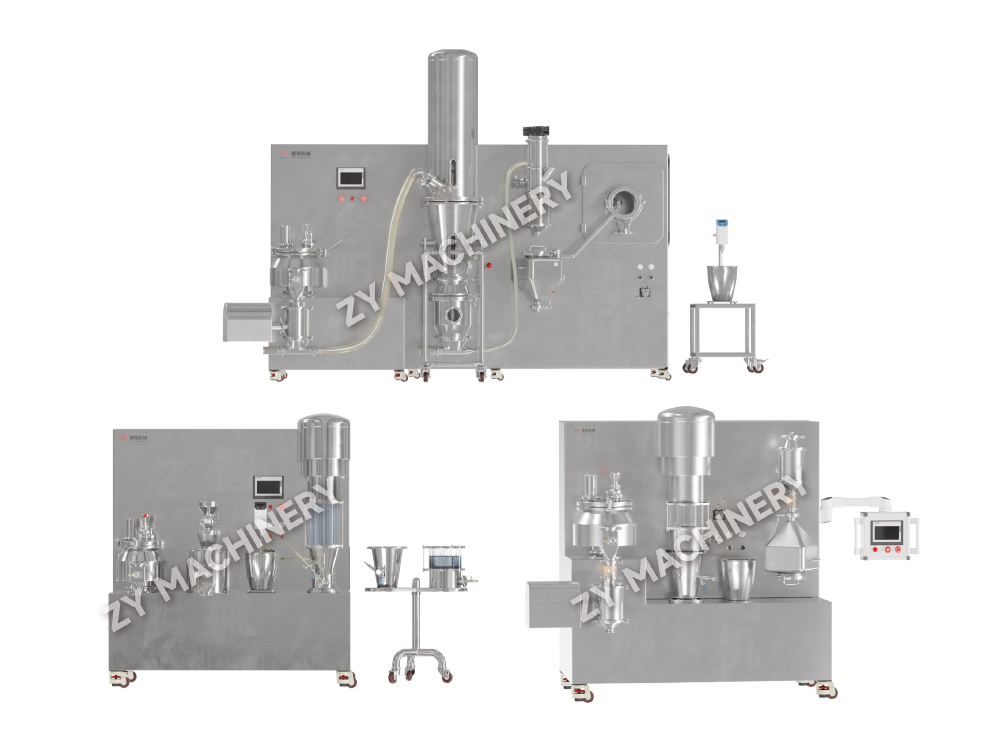
In many solid dosage lines, a milling and sizing machine works alongside bin mixers, fluid bed dryers, and coating equipment. The interfaces between these machines, including valves, hoses, and transfer systems, deserve as much attention as the mill itself. Good integration reduces manual handling, improves operator safety, and supports consistent product quality.
Scale-up is one of the most challenging parts of pharmaceutical process development. A milling process that works well in a laboratory mill may behave differently in a production mill because of changes in residence time, tip speed, screen area, and heat generation. To reduce risk, equipment suppliers often design laboratory and production machines with similar geometry and operating principles. This makes it easier to transfer process parameters from small scale to commercial scale.
When evaluating a supplier, ask how they support scale-up. Can they provide laboratory mills, pilot-scale units, and production models that share the same milling principle? Can they help with trial runs and process parameter recommendations? Do they understand the material characteristics that affect milling, such as hardness, moisture, and thermal sensitivity? These questions matter more than a simple price comparison.
Before requesting a quotation for particle size reduction equipment, it helps to prepare a clear process brief. The following checklist can guide internal discussions and supplier conversations:
It is also wise to test the material at laboratory or pilot scale. A trial run can reveal whether the selected mill produces the desired particle size distribution, whether heat buildup is acceptable, and whether the equipment is easy to clean. The data from those trials become the basis for a robust production process.
Choosing particle size reduction equipment for pharmaceuticals is a balance between product needs, process demands, and regulatory expectations. The right machine is not necessarily the fastest or the most powerful; it is the one that delivers a consistent particle size distribution, protects the product and the operator, and fits smoothly into the rest of the solid dosage line.
At ZY Machinery, we approach particle size reduction as part of a larger powder handling and oral solid dosage process. From dust-free crushers and conical mills to screening and sizing equipment, the goal is to help manufacturers select equipment that matches their material, their scale, and their GMP requirements. If you are planning a new line or improving an existing milling step, start with the process, then let the equipment follow.
Want to stay up to date?
Contact us via the email address below.
Don't worry about spam. We hate it too!
Mobile Client

Video Account
Phone:+86-15161130178
Tel:+86-519-88674267
Email:czzy188@163.com
Phone:+86-15161132798
Email:zy@zy-drying.com

WeChat ID

Copyright 2026 Changzhou Zhiyang Machinery Equipment Co., Ltd. All Rights Reserved  Oral Solid Dosage Equipment Manufacturer