 English
 Español
 русский
 中文简体
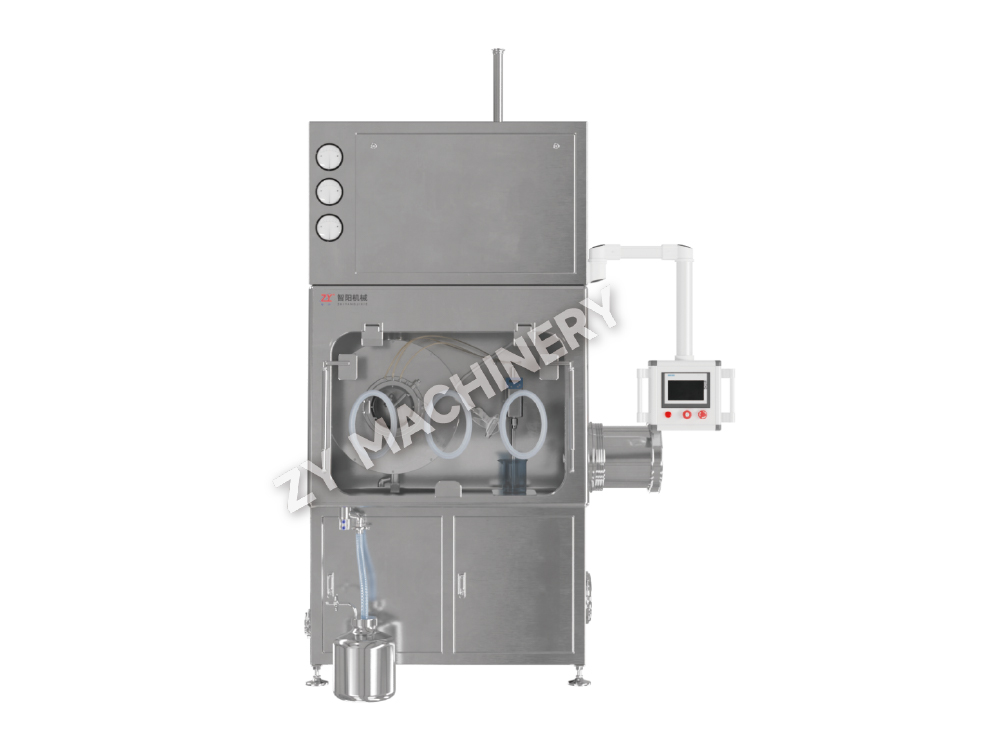
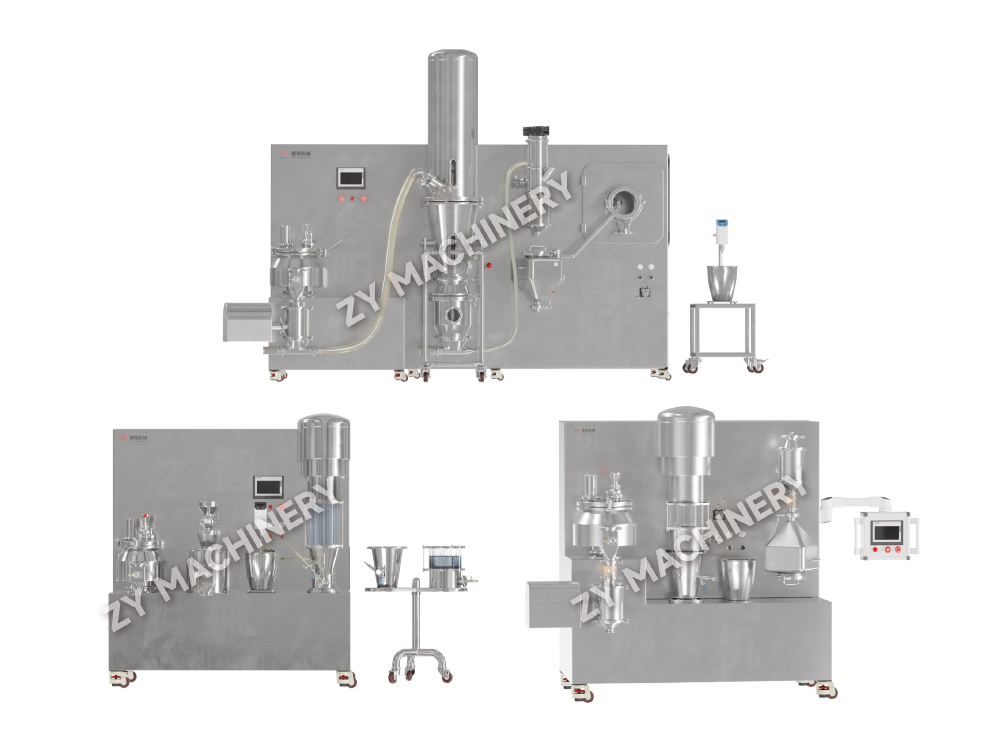
GFH R&D High-Containment Solid Dosage Production Line
The GFH R&D High-Containment Solid Dosage Production Line is designed f.....

Content
Containment rarely arrives as a project of its own. It shows up quietly: a new molecule with a much lower occupational exposure limit, an audit observation about dust settling on a corridor handrail, an operator who mentions that a powder still tastes bitter an hour after the shift. Once you start looking, the whole line — from the weighing room to the bin wash station — looks a little different.
We design and build powder handling and solid dosage equipment in Changzhou, and containment comes up in almost every conversation we have with process engineers. What is interesting is that the conversation almost never begins with "we need an isolator." It begins with a product, a batch size and a much more practical question: how much of this material is allowed to reach the people running the line?
In pharmaceutical manufacturing, containment protects in three directions at once: the operator from the product, the product from the operator and the environment, and the product from other products through cross-contamination. Most containment programmes split this work into two layers.
Both layers are expressed in the same language. The occupational exposure limit (OEL) describes how much airborne material is considered acceptable over a working shift, and the occupational exposure band (OEB) groups products into a small number of practical categories. Every equipment decision downstream — seals, filter type, transfer method, cleaning validation — flows from that band, so it is worth agreeing on it before the technical specification is written.
In our experience, a line is seldom lost to one dramatic breach. It leaks at the small, repeated moments where material is open to the room for a few seconds. The usual suspects are consistent:
Each of these is an equipment and interface question, not a discipline question. Operators work around a badly designed transfer point; they do not work around it safely.
The table below is the kind of orientation we use in early project discussions. It is deliberately coarse, because the precise measures depend on the product's toxicity, potency, physical form and the way the line is operated.
| Band | Typical OEL (µg/m3, 8-hour TWA) | What it usually takes |
|---|---|---|
| OEB 1 | 1000 and above | General ventilation, local exhaust at dust generation points |
| OEB 2 | 100 to 1000 | Enclosed transfer, dust-free charging, basic local exhaust |
| OEB 3 | 10 to 100 | Sealed equipment, contained charging, validated cleaning |
| OEB 4 | 1 to 10 | Closed transfer valves or glove ports, isolator charging, CIP with validation |
| OEB 5 | Below 1 | Fully contained lines, isolator or robotic handling, dedicated cleaning validation |
A common mistake is to specify the room for the highest band on the site while leaving the equipment open. The reverse — heavy equipment in an uncontrolled room — is just as common and just as expensive.
Most of the containment work on a solid dosage line is done by a surprisingly short list of devices, and the good news is that they can be added to an existing line in stages.
Dust-free charging stations and vacuum conveying replace the bucket and the open lid. Material is drawn from a contained container, transferred through a closed line and discharged directly into the mixer, granulator or hopper. When dosing accuracy matters, a combined weighing and feeding station lets you dispense by weight without opening the process.
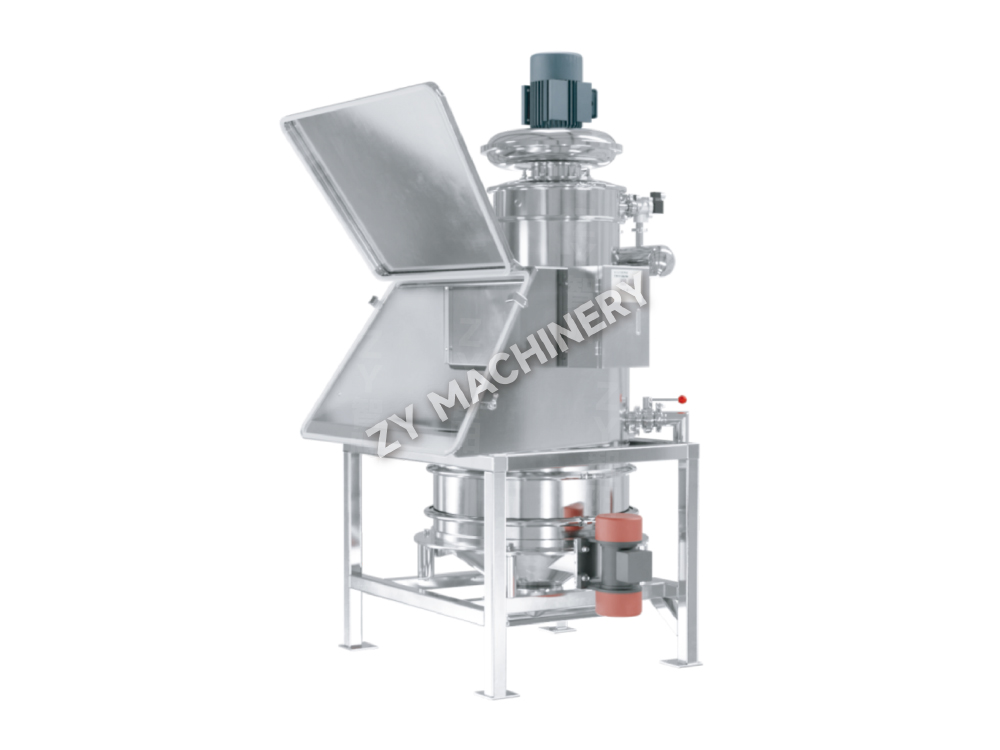 TLZ Dust-Free Feeding Station for Powder and Granule LoadingControls dust during powder and granular material loading in pharmaceutical, food, and chemical production, with pulse-reverse filter cleaning and optional iron removal, sieving, or crushing.View Product →
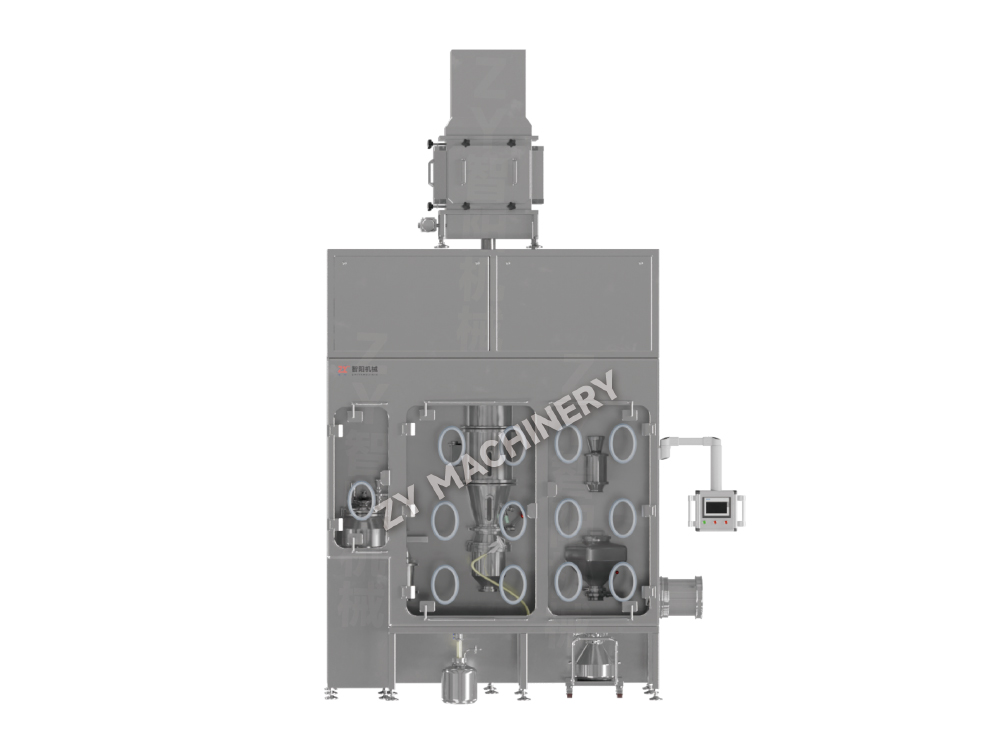
For higher bands, the equipment itself has to be the barrier. Sealed granulation bowls, contained sampling ports, glove ports and split-valve interfaces all reduce the number of times the process is open. Where the product demands a genuinely closed environment, a high-containment solid dosage production line brings mixing, granulation, drying and coating into one contained envelope.
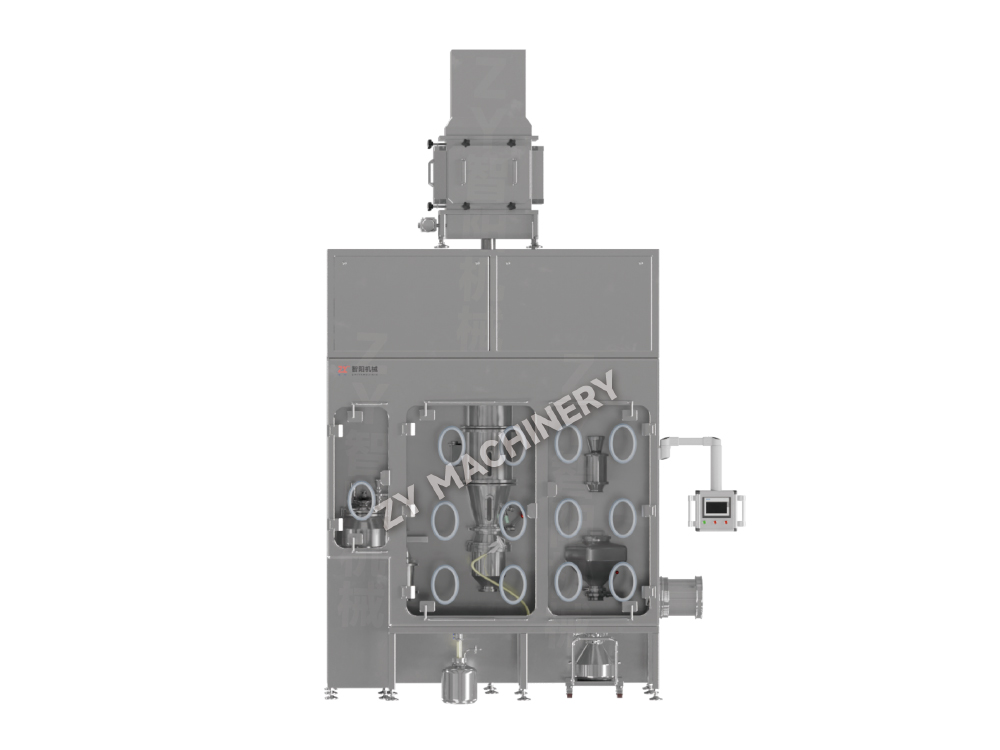 GFH R&D High-Containment Solid Dosage Production LineIntegrated contained line for highly potent tablets, capsules, and granules with OEB4/OEB5 protection and models from 1 to 20 kg/batch.View Product →
Containment that cannot be cleaned is not containment — it is accumulation. Bin washing machines and mobile CIP stations let containers and equipment be cleaned in a closed circuit with validated parameters, instead of being scrubbed by hand in an open room. The difference shows up in cleaning validation as much as in operator exposure.
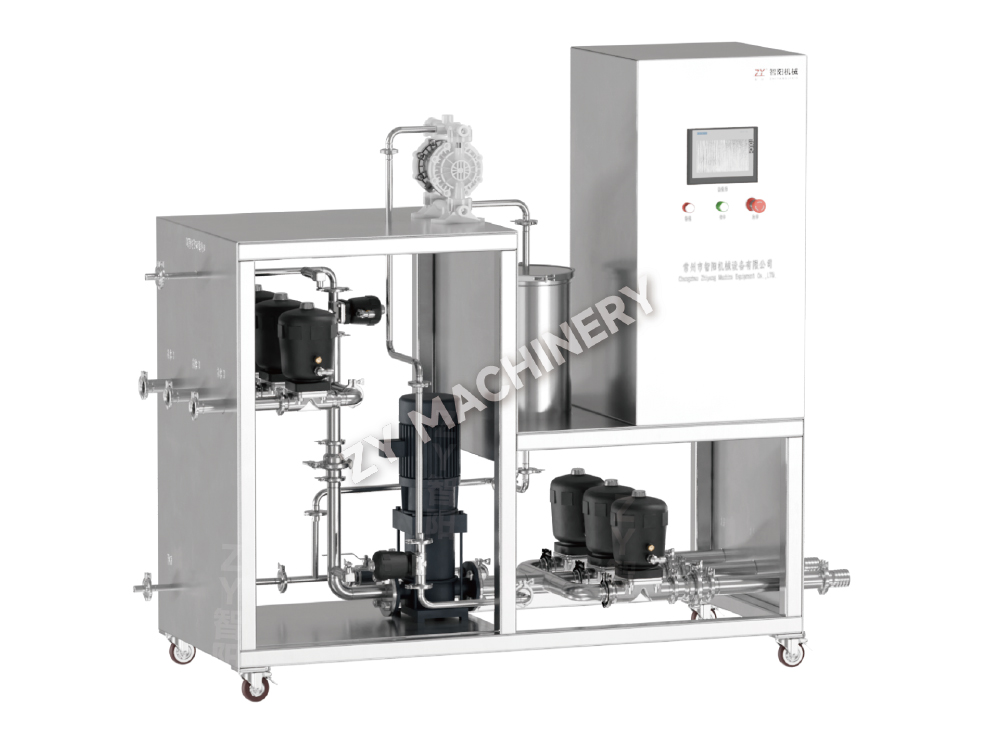 QWQY Mobile CIP Cleaning Station for Solid Dosage EquipmentProvides automated in-place cleaning of mixer, granulator, and coater chambers, with models from 5 to 15 m³/h and manual high-pressure cleaning.View Product →
If you are still comparing secondary containment options, this buyer's guide to isolators and downflow booths covers the room-side decisions that sit alongside the equipment.
Containment habits are formed during development. A method that works in a fume hood at gram scale often has no direct equivalent at 200 kg, and the gap is where projects lose time. The practical answer is to keep the same process logic at both scales: the same charging method, the same transfer principles, the same sampling approach, simply sized differently.
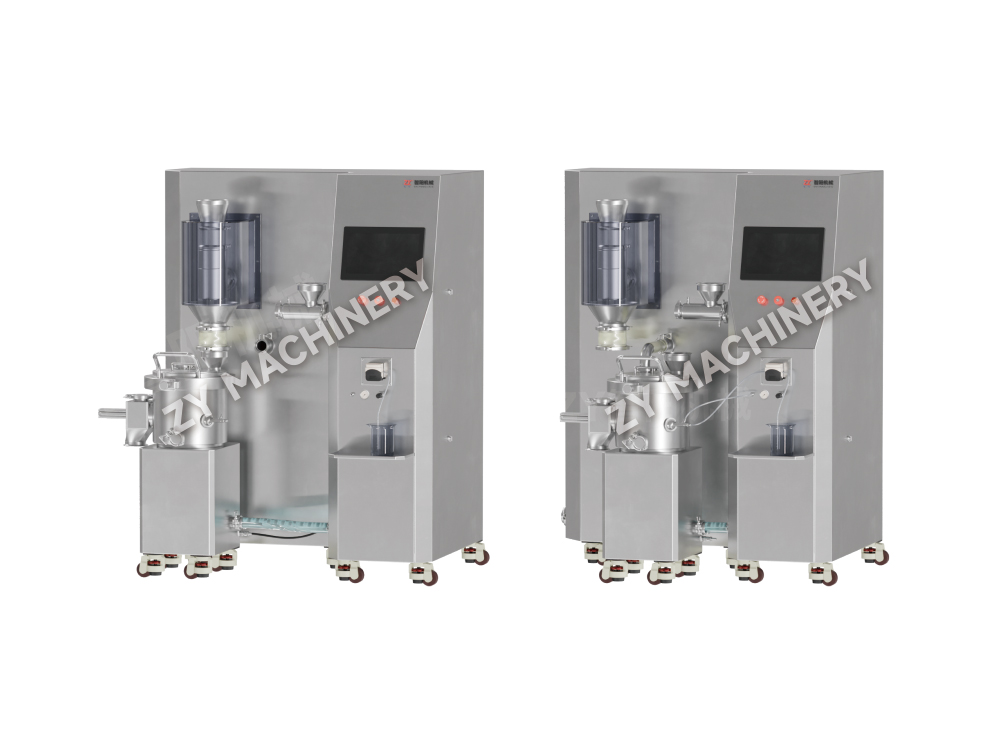
This is why we build laboratory units that mirror their production counterparts — bench-scale high-shear granulation, fluid bed processing, coating and contained production units. When the bench method and the production method follow the same sequence, technical transfer becomes a sizing exercise rather than a redesign.
Whatever the supplier, these questions tend to separate a workable containment concept from a brochure:
Containment is not a competition to see who can enclose the most. Over-specified isolation slows a line down, complicates cleaning and often pushes operators into workarounds that are worse than the original risk. The right solution is usually a small number of well-chosen barriers placed exactly where the powder is exposed, supported by a room that does its share of the work.
When we sit down with a process team, the first hour is rarely about equipment at all. It is about the product, the batch record and the people who will run the line for the next ten years. The equipment follows from that — and it usually ends up simpler than everyone expected.
Want to stay up to date?
Contact us via the email address below.
Don't worry about spam. We hate it too!
Mobile Client

Video Account
Phone:+86-15161130178
Tel:+86-519-88674267
Email:czzy188@163.com
Phone:+86-15161132798
Email:zy@zy-drying.com

WeChat ID

Copyright 2026 Changzhou Zhiyang Machinery Equipment Co., Ltd. All Rights Reserved  Oral Solid Dosage Equipment Manufacturer