 English
 Español
 русский
 中文简体
QD Automatic Bin Washing Machine
The QD Automatic Bin Washing Machine is designed for automated cleaning of .....

Content
Pharmaceutical formulation development is one of those disciplines that looks orderly on a flow chart and feels anything but orderly at the bench. You begin with a target dose, a shortlist of excipients, and a dissolution profile someone has promised the clinical team. By the time you finish, every early decision — particle size, binder selection, granulation route, drying method — has turned into a machine setting, a batch record step, and a cleaning challenge.
Having spent years building powder handling and oral solid dosage equipment for teams at every stage from feasibility to commercial supply, we have noticed that the most successful formulation projects are not the ones with the most elegant recipes. They are the ones where the process was designed alongside the formula, with the eventual production equipment in mind from day one. This article walks through what that practical discipline actually looks like.
Before anyone selects a granulator, the material itself has to be understood. Preformulation work answers questions that later become equipment specifications: How does the API flow? Is it cohesive, sticky, or highly electrostatic? What is its particle size distribution, and how does it behave under compression? Is it hygroscopic, heat sensitive, polymorphic, or light sensitive? Does it require containment because of potency or toxicity?
Those answers shape the route. A well-flowing, highly compressible blend may go straight to direct compression. A poorly flowing, low-density API often needs wet granulation to build density and improve content uniformity. A moisture-sensitive or heat-labile compound may point toward dry granulation by roller compaction. Each route implies a different sequence of unit operations, and each unit operation brings its own variables that must later be reproduced at scale.
This is why we encourage formulators to treat process selection as part of formulation development rather than something that happens afterward. A formula that only works in one specific bowl, at one specific impeller speed, in one specific lab, is not yet a formula — it is an experiment.
The table below is the mental map we use in early technical discussions. It is deliberately simple, because most scale-up problems trace back to a step where the function of the unit operation was never clearly defined.
| Unit operation | What it contributes | What to watch |
|---|---|---|
| Blending | Content uniformity before granulation or compression | Segregation, fill level, bin geometry |
| Wet granulation | Density, flow, compressibility | Binder distribution, endpoint, venting |
| Dry granulation | Densification without moisture or heat | Ribbon density, fines recycle, roll force |
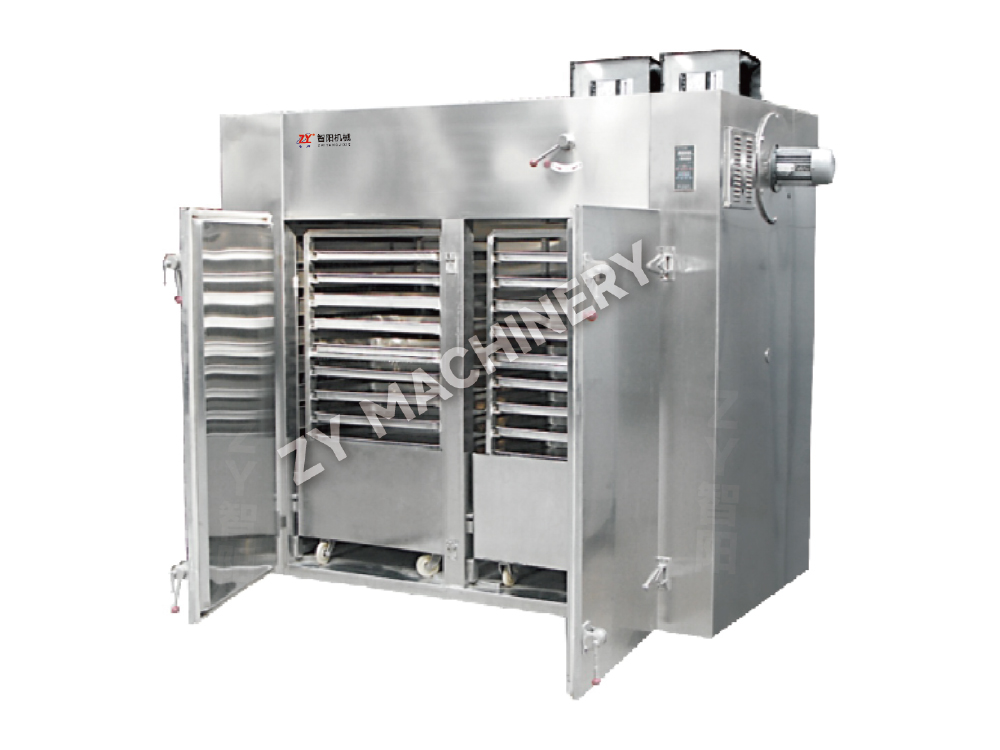
| Drying | Moisture control without degradation | Inlet temperature, LOD target, drying curve |
| Milling and sizing | A narrower particle size distribution | Heat generation, screen wear, dust |
| Coating | Release modification, taste masking, protection | Spray rate, pan load, air balance |
| Transfer and containment | Material movement without exposure or segregation | Containment level, closed transfer, cleaning |
Laboratory work is where the formula is born, and it is also where many scale-up headaches are quietly created. If the lab granulator has a different bowl geometry, a different impeller-to-bowl ratio, or a different airflow pattern than the production unit, the "scaled" process may behave like a completely new formulation.
Our preference, developed over many projects, is to keep lab and production equipment in the same process family. A small interchangeable-bowl wet granulation machine lets a formulator test several bowl sizes and binder additions within a single trial session, which shortens the path to a workable endpoint.
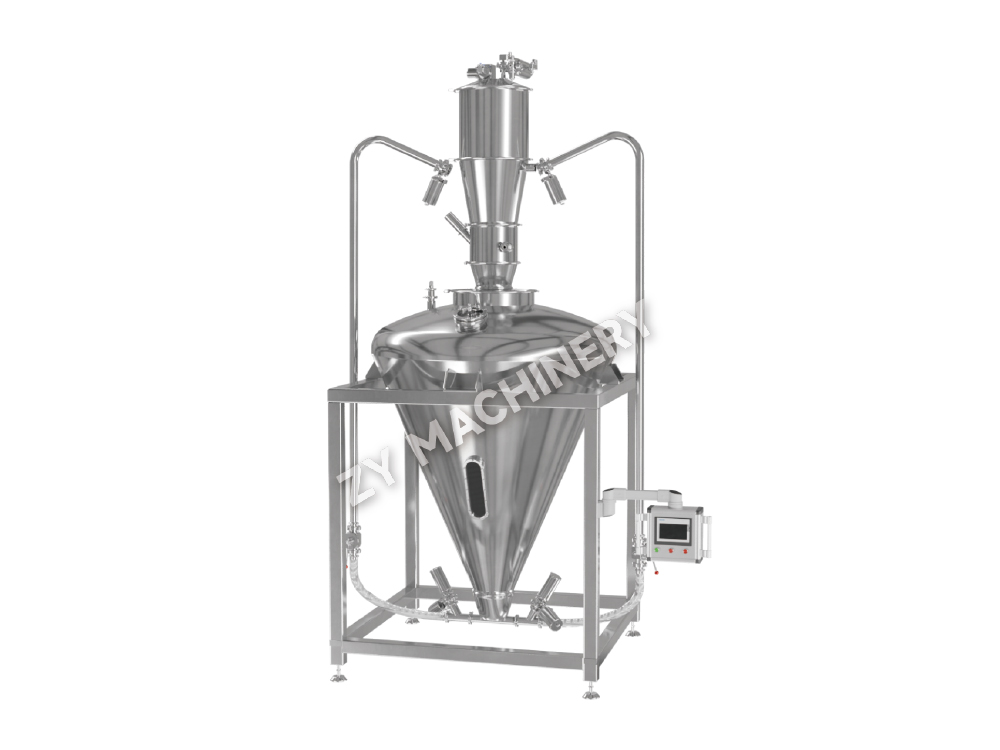
 GHL Interchangeable-Bowl Wet Granulation Lab MachineA lab-scale granulator with multiple interchangeable bowls and combined mixing/granulation, suited to testing bowl sizes and binder additions before scaling a process sequence.View Product →
For teams that need to evaluate a full sequence rather than a single step, a compact solid dosage production unit can carry material through mixing, granulation, drying, and sizing in one connected flow. It is not a substitute for a pilot plant, but it answers an important early question: does this process chain actually work with this material?
 GFL Modular Lab-Scale Solid Dosage Production UnitA modular lab unit linking wet granulation, drying, and other solid-dosage steps to test whether a full process chain suits a given material.View Product →
Scale-up is rarely a matter of multiplying numbers. Spray rate per kilogram of material, airflow per kilogram, tip speed, fill volume, and drying kinetics all change at different rates. A wet granulation that reaches its endpoint in four minutes in a 10-litre bowl may need a very different control strategy in a 600-litre bowl, where the mass behaves less like a fluid and more like a set of interacting zones.
The practical answer is to define the process by its outcome rather than its settings. If the target is a specific granule size distribution, density, and moisture content, then the equipment should be controllable enough to reach that target repeatably, and instrumented enough to show what happened during the batch. This is the thinking behind the process development guidance we publish for solid dosage manufacturing, where endpoint definition matters more than a fixed recipe.
process development for solid dosage manufacturingIt also helps to ask uncomfortable questions early:
Cleaning is usually the last thing added to a development timeline and the first thing to delay a launch. Residue limits, recovery studies, and cleaning validation all depend on equipment design decisions made much earlier: surface finish, dead legs, removable parts, drainability, and whether the equipment can be cleaned in place.
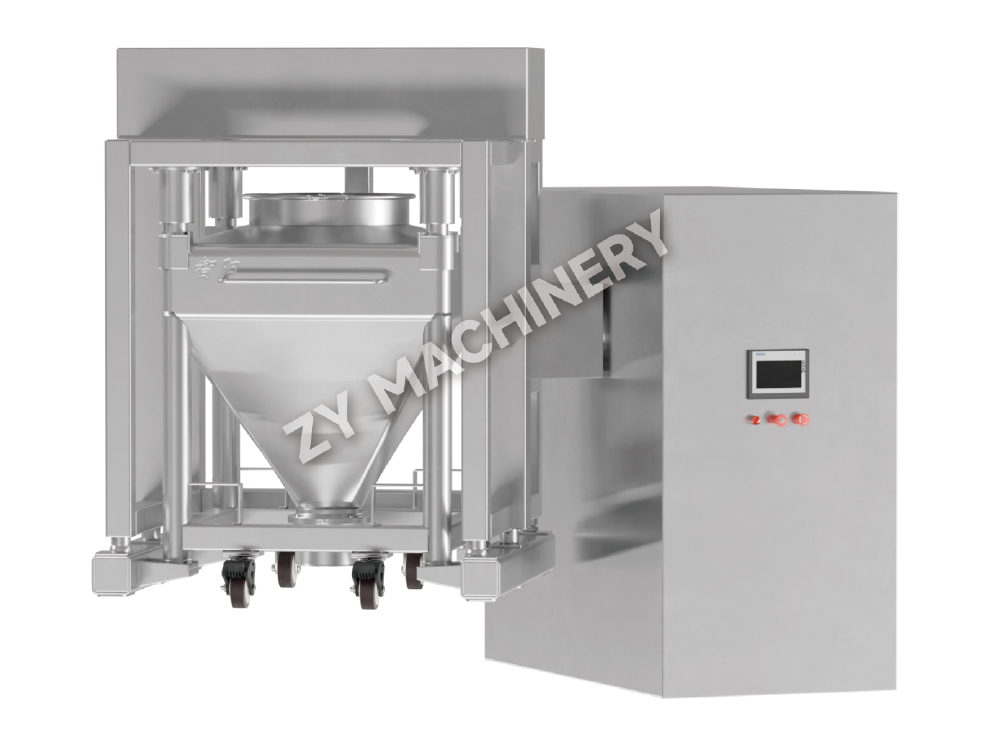
For bins, bowls, and product-contact containers, a dedicated washing system is often the difference between a two-shift cleaning cycle and a twenty-minute turnaround. Mobile cleaning stations give smaller facilities flexibility without committing to a fixed installation.
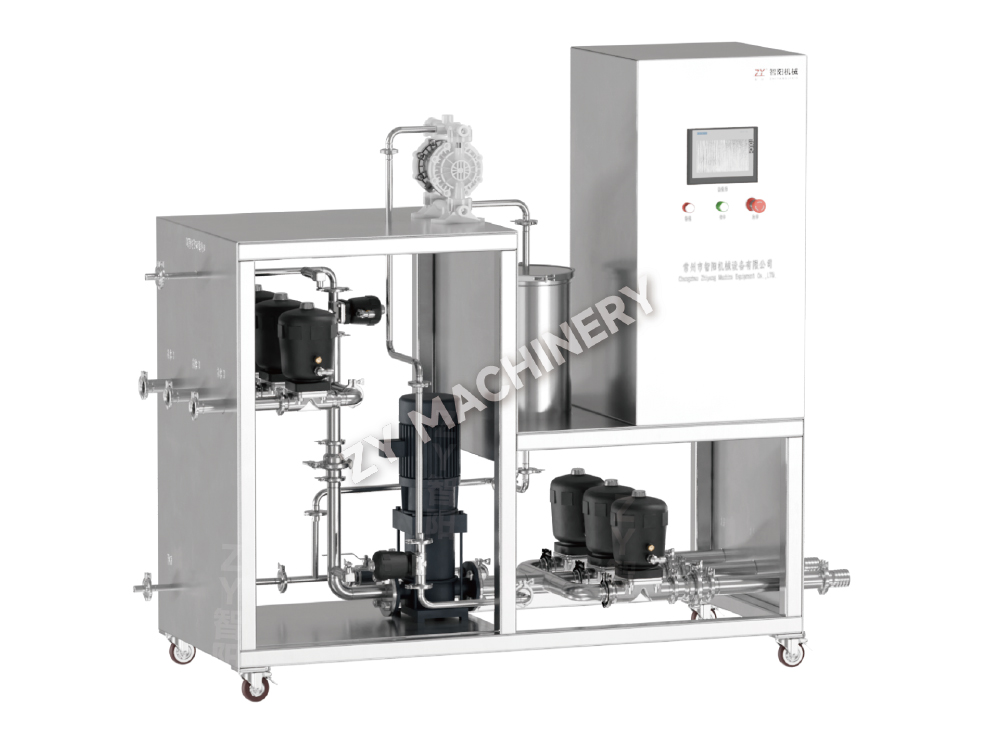 QWQY Mobile CIP Cleaning Station for Solid Dosage EquipmentA mobile clean-in-place system for connecting to wet granulators and coating equipment, offering flexible automated cleaning of process chambers without fixed installation.View Product →
Containment deserves the same early attention. If the compound carries a meaningful occupational exposure band, the question is not whether to contain it but where: at the weighing station, the granulator, the dryer discharge, or the entire line. Answering that question during development is far cheaper than retrofitting a production suite later.
Most equipment suppliers can quote a machine. Fewer can explain why a particular impeller speed, bowl shape, or airflow path suits your material. During your next evaluation, ask for the reasoning behind a design choice, request a trial with your actual formulation rather than a placebo blend, and check how the supplier handles the handover between lab results and production specifications.
We built our own approach around that principle: start from the material and the target output, then work backward to the equipment. Our powder handling and solid dosage equipment range reflects that sequence, from lab-scale units through to full production lines with transfer, dosing, and cleaning integrated into the same process logic.
powder handling and solid dosage equipmentFormulation development rewards teams who treat the process as part of the product. A few habits tend to pay off:
None of this replaces good formulation science. It simply makes sure the science survives contact with a production floor — which, in our experience, is where most promising formulations are either confirmed or quietly abandoned.
Want to stay up to date?
Contact us via the email address below.
Don't worry about spam. We hate it too!
Mobile Client

Video Account
Phone:+86-15161130178
Tel:+86-519-88674267
Email:czzy188@163.com
Phone:+86-15161132798
Email:zy@zy-drying.com

WeChat ID

Copyright 2026 Changzhou Zhiyang Machinery Equipment Co., Ltd. All Rights Reserved  Oral Solid Dosage Equipment Manufacturer