 English
 Español
 русский
 中文简体
GFL R&D Lab Size Solid Dosage Production Unit
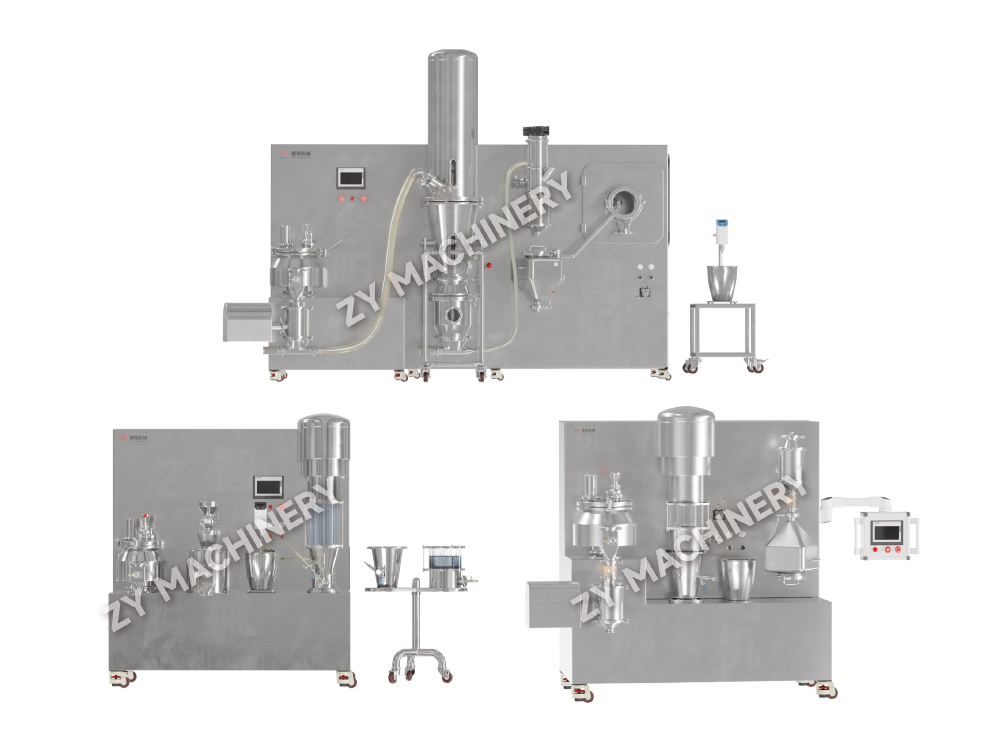
The GFL R&D lab size solid dosage production unit is designed with a mo.....

Content
Oral solid dosage remains the most widely used category of medicine in the world. Tablets, capsules, granules and powders all travel the same road: raw active ingredients and excipients are blended, granulated, dried, sized, and often coated before they ever reach a patient. Because each step shapes the next, the performance of an oral solid dosage line depends far less on any single machine than on how the whole process is designed, connected and controlled. This guide walks through those steps and the equipment decisions behind them.
The term oral solid dosage describes any drug product swallowed as a solid that releases its active ingredient in the gastrointestinal tract. It covers a broad family of presentations, each placing different demands on powder handling and process equipment:
Whatever the final presentation, the upstream work looks remarkably similar. Powders must be blended evenly, granulated or densified for better flow, dried to a stable moisture level, sized to a narrow particle distribution, and frequently coated to protect the active or tune its release.
Formulators quickly learn that a machine that performs beautifully on one formulation can struggle on the next. Particle size, bulk density, hygroscopicity, static charge and flowability all shift the moment an excipient changes. A high shear granulator may produce ideal granules for one product and over-wet, dense agglomerates for another. A fluid bed dryer may run comfortably within its window on one batch and blind its filter bags on the next.
That is why experienced teams treat equipment as one part of a process route rather than a catalogue purchase. They start with material characteristics and the target batch size, then work backwards to the unit operations, the transfer logic between them, and the cleaning strategy that keeps products apart. A line designed this way tends to run with fewer surprises during qualification and scale-up.
Most production lines can be mapped onto a small set of repeatable unit operations. The table below summarises what each one contributes and which equipment families are typically used.
| Unit operation | What it achieves | Typical equipment |
|---|---|---|
| Blending | Even distribution of API and excipients | Bin mixers, V-type and double cone tumble mixers, high shear mixers |
| Granulation | Better flow, compressibility and content uniformity | High shear mixers, fluid bed granulators, roller compactors, extruders |
| Drying | Moisture reduction to a stable target | Fluid bed dryers, vacuum dryers, hot air ovens |
| Milling and sizing | Narrow, reproducible particle size distribution | Oscillating granulators, rotary granulators, cone mills, vibrating sieves |
| Coating | Release control, taste masking, moisture protection | Film coating machines, fluid bed coaters, centrifugal coaters |
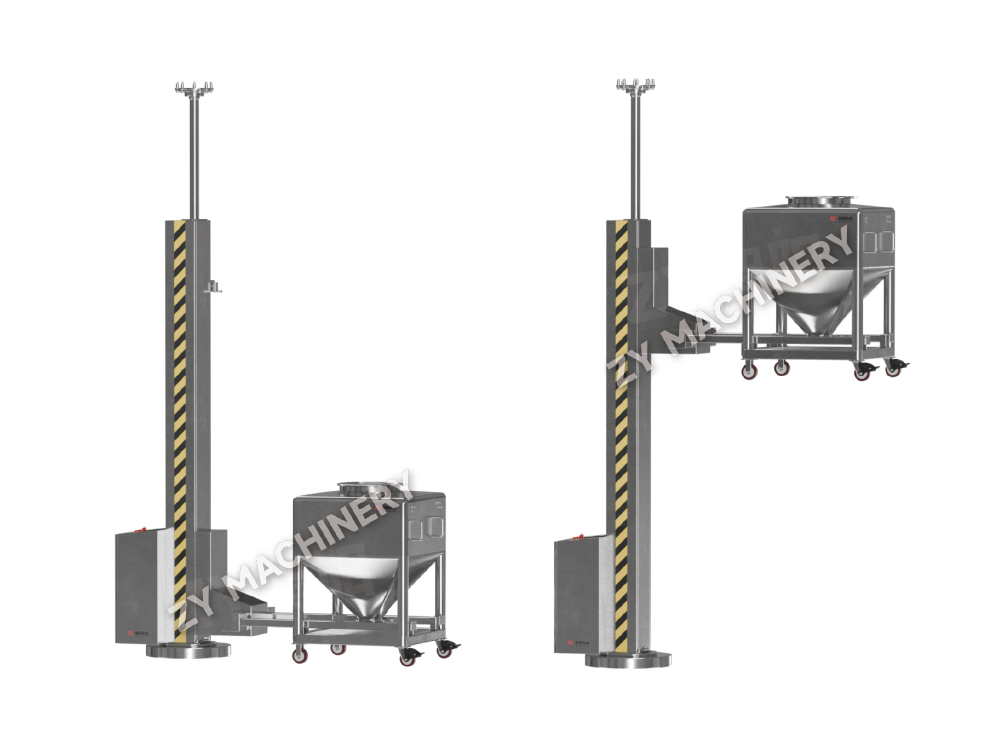
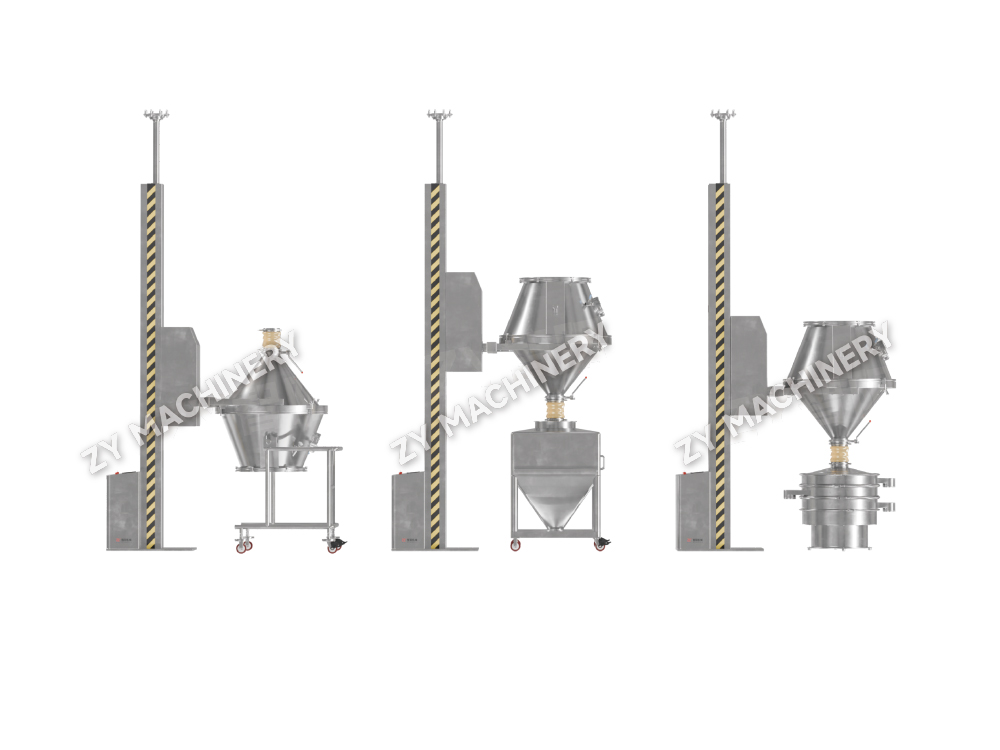
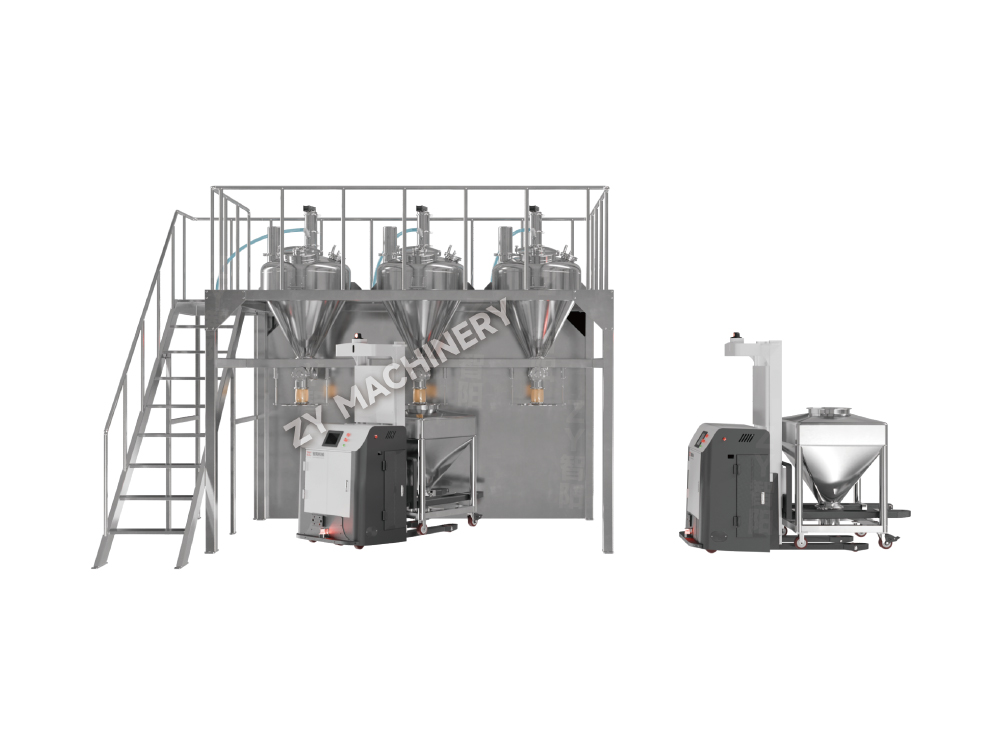
| Transfer and feeding | Dust-free movement with minimal segregation | Vacuum feeders, bin lifting systems, weighing and feeding stations |
| Cleaning | Cross-contamination control between products | Bin washing machines, mobile CIP stations |
Blending is where content uniformity is won or lost. Tumble mixers such as V-shaped, double cone and multi-directional motion units work well for free-flowing blends with modest shear requirements, while bin mixers allow the blended material to be transported and discharged in the same container, reducing handling steps. For cohesive or poorly flowing powders, convective and air-driven designs often produce a more homogeneous result in less time.
The practical questions are batch size, fill level, rotation speed and blending time. Get these wrong and segregation or over-blending can follow, particularly with low-dose actives.
Granulation exists to solve the problems that blending alone cannot. It improves flow, increases bulk density, reduces dust and locks the active into a more uniform matrix. Wet granulation with a high shear mixer remains the workhorse for many products, producing dense, well-formed granules; fluid bed granulation combines spraying, agglomeration and drying in a single vessel and suits heat-sensitive or highly soluble formulations. Dry granulation by roller compaction is the route of choice when moisture or heat would degrade the active.
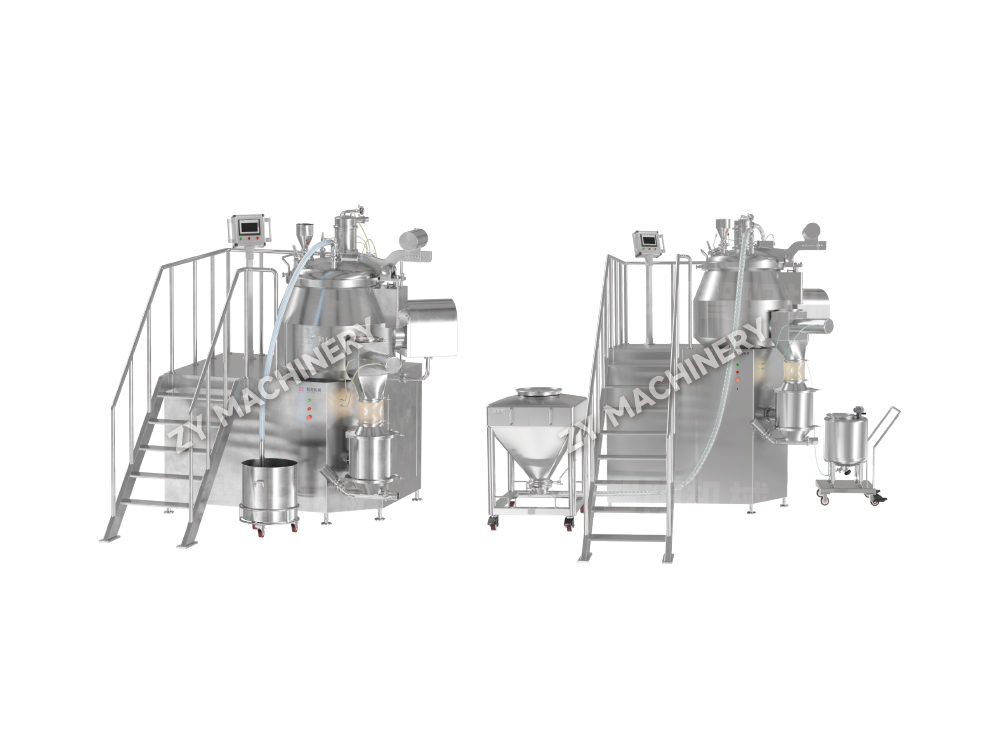 GHL High Speed Mixing GranulatorThe GHL High-Speed Mixing and Granulation Machine is a highly efficient system designed to blend multiple powdered materials and convert them into uniform granules in ...View Product →
Whichever route is chosen, the granulation endpoint largely determines what happens downstream. A granule that is too fine will cause flow and segregation issues; one that is too dense may compress poorly.
Drying is not simply about removing water. The target is a residual moisture range that keeps the product stable, compressible and reproducible from batch to batch. Fluid bed dryers offer fast, uniform drying with good control over inlet air conditions. Vacuum dryers suit solvent-based or oxygen-sensitive products, while tray and belt dryers remain useful for heat-stable materials and gentler throughputs.
 FL-B Fluid-bed Granulation & Drying Machine (One-Step Granulator)The FL-B Fluidized Bed Granulation Drying Machine is designed for powder handling, granulation, drying, and “top-spray” coating operations in pharmaceutical, food, and...View Product →
Inlet air temperature, air volume, dew point and drying time all interact. Over-drying creates brittle granules and fines; under-drying leads to sticking during compression and stability risk over shelf life.
After drying, granules usually pass through a mill or sizing screen to bring the particle distribution into specification. Oscillating and rotary granulators are common for wet granules, while cone mills handle dry, compacted material. Sieving equipment then removes oversized material and protects the downstream process.
Coating follows when the product needs controlled release, taste masking or moisture protection. Film coating in a perforated pan remains the most widely used approach, while fluid bed coating is preferred for pellets and particles that require a uniform layer. Spray rate, pan speed, inlet air conditions and coating suspension solids all influence film quality.
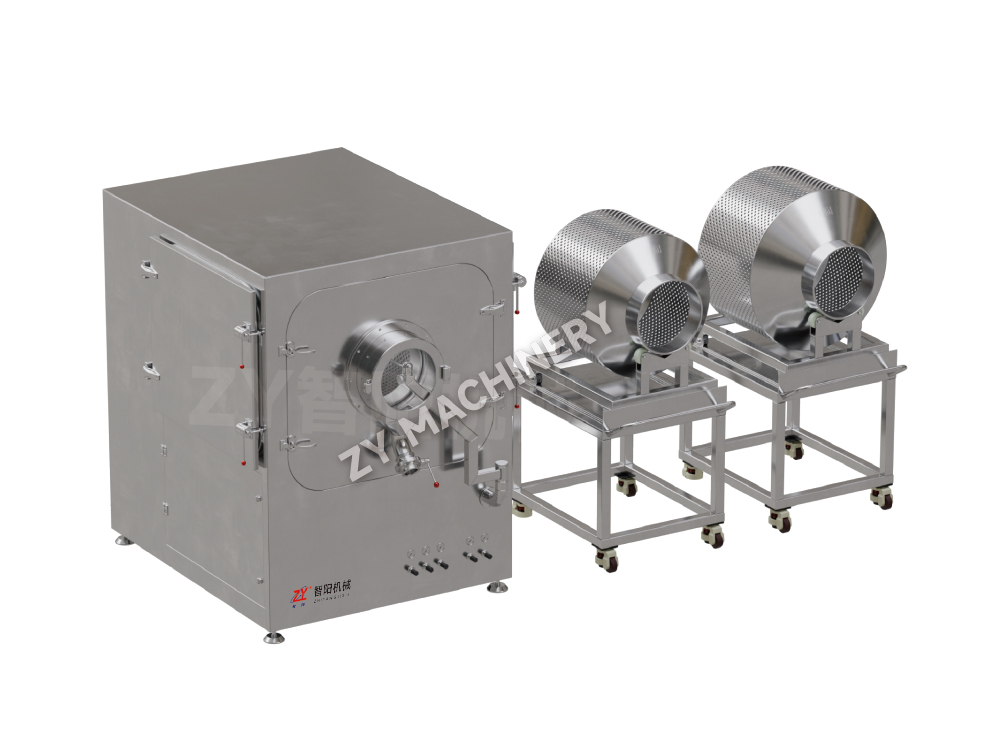 BGB High-Efficiency Film Coating MachineThe BGB R D High-Efficiency Coating Laboratory Machine is designed to meet laboratory-scale coating needs. It is mainly used in the pharmaceutical, food, and bioproduc...View Product →
This is one of the first real decisions in process development, and it deserves more than a default answer. A few practical considerations usually settle it:
Wet granulation generally delivers stronger granules and better compressibility, at the cost of more process steps and drying capacity. Dry granulation is leaner and avoids moisture entirely, but the ribbon and flake quality must be tightly controlled to avoid fines and poor rework behaviour.
Scale-up is where many promising formulations meet reality. A process that works in a 5-litre bowl does not automatically translate to a 600-litre unit, because mixing intensity, spray distribution and drying kinetics all change with geometry. The safest path is to keep the same equipment principle at every stage and to define scale-independent parameters, such as impeller tip speed, spray rate per unit mass, and specific air volume.
Building a laboratory line that mirrors the production line gives development teams a genuine bridge between bench work and commercial manufacturing. Teams that plan this early tend to move through process development in solid dosage manufacturing far more smoothly, with fewer surprises during technical transfer.
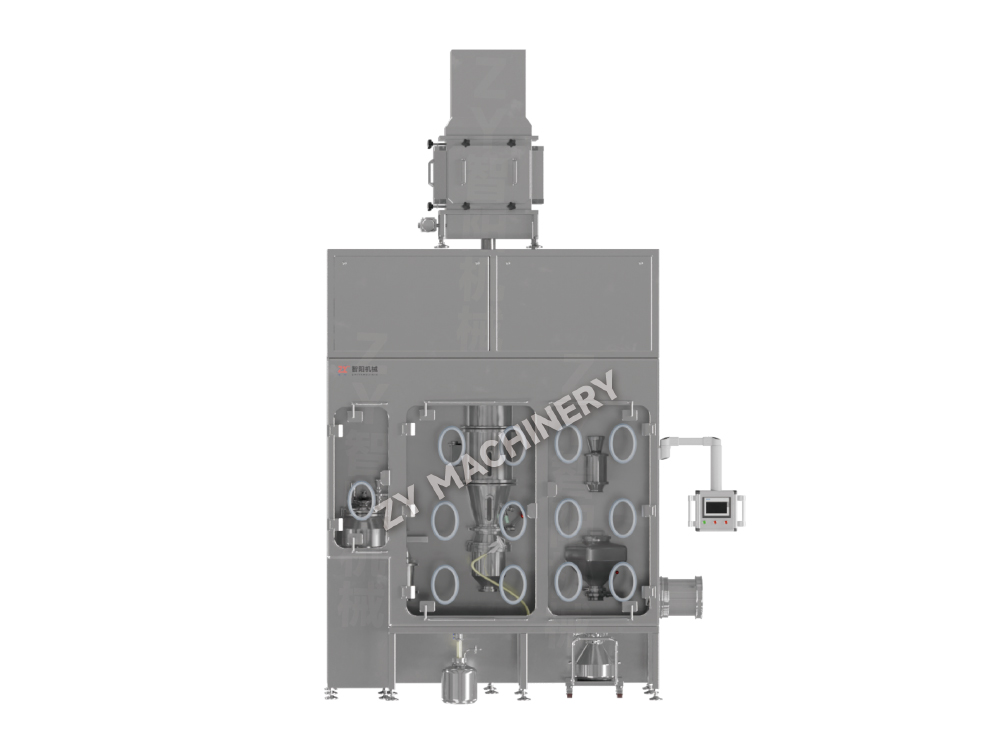
Modern oral solid dosage facilities are judged as much on their ability to keep materials contained and equipment clean as on their throughput. Highly potent actives require closed transfer, dust-free feeding and validated cleaning. Even for conventional products, the expectation is that bins, bowls, filters and transfer lines can be cleaned reproducibly and that the cleaning process itself is documented and verified.
This is where bin washing machines, mobile CIP stations, dust-free feeding stations and vacuum conveying systems earn their place. They reduce operator exposure, shorten changeover time and make cleaning validation and equipment qualification a routine engineering exercise rather than a recurring crisis.
Before requesting quotations, it helps to answer a short list of questions. The clearer the answers, the more accurate the proposed configuration will be.
An oral solid dosage line is a chain of dependencies. Blending determines granulation behaviour, granulation determines drying load, drying determines milling yield, and milling determines coating uniformity and compression performance. When each step is selected in isolation, the gaps show up later as inconsistent batches, longer changeovers and heavier validation work.
Since 2010, Changzhou Zhiyang Machinery Equipment has approached powder processing and solid dosage equipment from the process side first: understanding material characteristics, capacity targets and site conditions, then configuring units, modular systems or complete lines around them. That philosophy applies equally to a single laboratory unit and to a full production line, and it is the reason the same process logic runs from bench-scale development through to commercial manufacturing.
If you are planning a new line, upgrading a bottleneck or scaling a formulation into production, the most valuable first step is a clear process description. From there, the equipment conversation becomes far more productive.
Want to stay up to date?
Contact us via the email address below.
Don't worry about spam. We hate it too!
Mobile Client

Video Account
Phone:+86-15161130178
Tel:+86-519-88674267
Email:czzy188@163.com
Phone:+86-15161132798
Email:zy@zy-drying.com

WeChat ID

Copyright 2026 Changzhou Zhiyang Machinery Equipment Co., Ltd. All Rights Reserved  Oral Solid Dosage Equipment Manufacturer